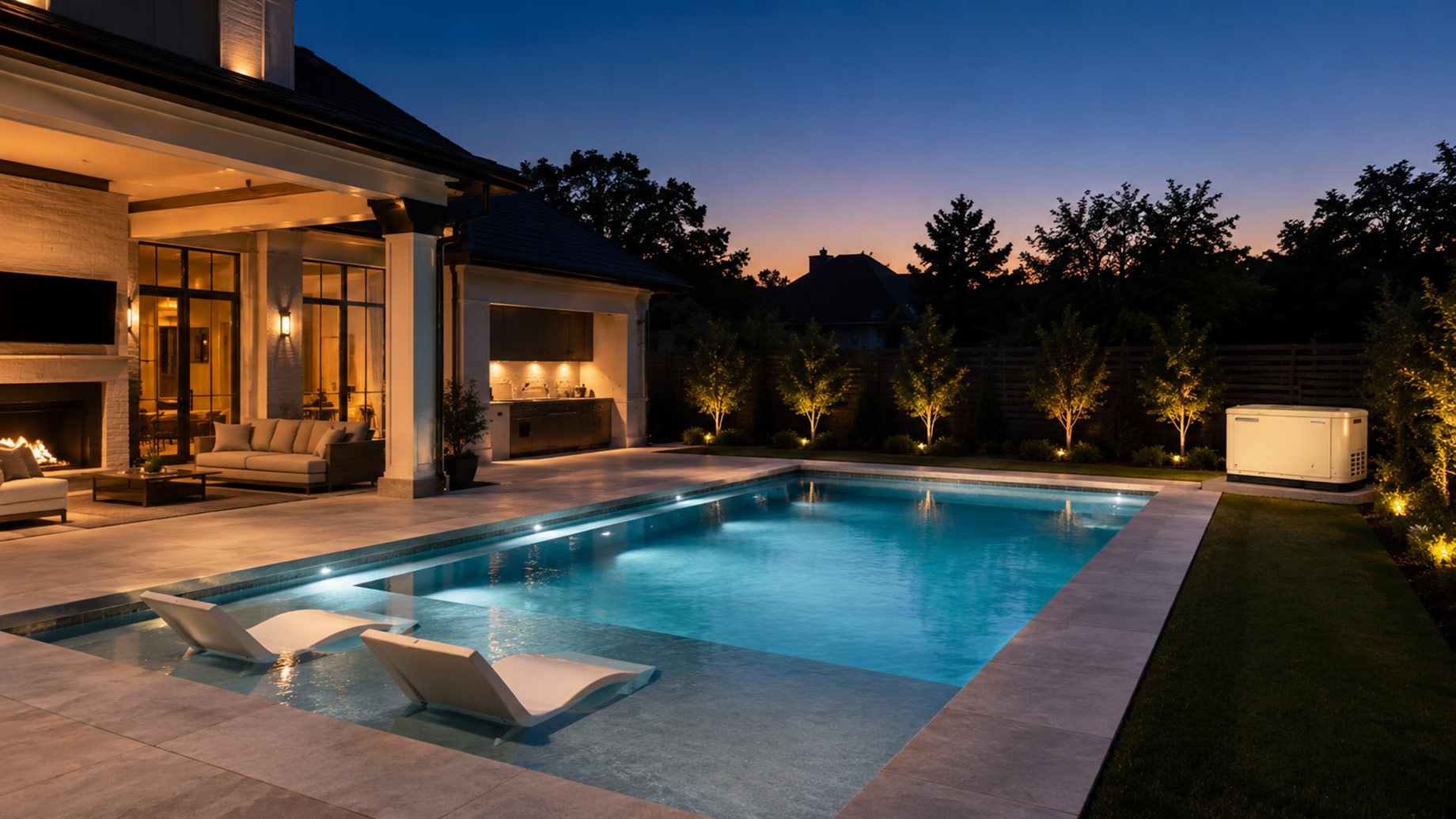
Many backyard projects start with a wish list: a pool here, a kitchen there, and a fire feature somewhere in the middle. That approach can produce a collection of features rather than a comfortable place you will use throughout the week.
A better starting point is the experience. How should the space feel at 7 a.m. with coffee, at 3 p.m. with children in the water, and at 9 p.m. with friends still talking? Once that is clear, decisions about layout, equipment, and backup power become easier. For visual inspiration, The Pinnacle List’s article “What Makes a Luxury Outdoor Living Space?” offers several useful examples.
Start with the experience you want, then let the design follow
Treat the yard as one composition
Plan the pool, kitchen, fire feature, and lounge as a single arrangement instead of four separate projects. Check sightlines from the main indoor rooms. Note where the afternoon sun lands and where the wind carries smoke. Group noisy or functional elements, such as the equipment pad, generator, and waste storage, in a screened area that remains accessible for maintenance.
Plan the pool as the centerpiece
Choose the shape, depth, and in-water seating
Pool depth can influence how the space feels as much as its shape. A shallow tanning ledge encourages lounging and makes the water more social. A deeper section better suits swimmers and active play. Benches, wide steps, and a spa spillover give people places to sit without leaving the water. Decide on these elements early because they affect the shell, plumbing, equipment, and budget.
Leave electrical work near water to licensed professionals
Pool electrical systems require protected receptacles, proper bonding, safe equipment clearances, and ground-fault circuit interrupter protection. The exact requirements depend on the National Electrical Code edition adopted by your local authority and any local amendments.
You do not need to memorize the code. You do need a licensed electrician with pool experience. Include the electrician before the pool deck is installed so conduits, lighting, controls, and receptacles can be placed correctly and inspected without reopening finished surfaces.
Reduce noise with efficient equipment
A loud pump can undermine an otherwise calm space. Variable-speed pumps are generally quieter and use less electricity because they can run at a lower speed when full power is unnecessary. Place the equipment on a stable pad and use code-compliant screening that does not restrict airflow or service access.
Pick the right design and construction partners
A capable pool builder should discuss drainage, sun exposure, access, and equipment placement before focusing on tile or decorative finishes. Ask to see the design process, confirm how permitting is managed, and find out who will serve as your main contact during construction. Coordination between the pool builder, electrician, landscape designer, and other trades can prevent delays and costly rework.
For Florida homeowners seeking design and permitting support, Pool Perfection describes custom pool design and construction services in the Tampa Bay and Orlando areas. Pool Perfection’s process covers design, permitting, excavation, and construction, with 3D planning and estimates available for qualifying local projects. Pool Perfection is one regional example of a full-service approach. Homeowners elsewhere can use the same service categories when comparing local builders.
Choose a backup power strategy that fits your routine
Decide what needs to operate during an outage
You may not need to power the entire backyard. Start with a short list that includes pool circulation, the automation panel, safety lighting, and any essential outdoor refrigeration. A spa heater, large electric grill, or other high-demand appliance can increase the required capacity substantially.
Give the list to your electrician, along with the starting and running wattage for each item. Let the expected loads determine the system size rather than choosing a generator first and trying to make the equipment fit.
Compare portable generators, standby systems, and batteries
Portable inverter generators adjust engine speed to match demand, so they are often quieter and more fuel-efficient than conventional portable models. Standby generators start automatically and can support larger loads, but they require permanent installation and regular maintenance. Home batteries operate silently and can pair with solar, although runtime depends on battery capacity and the connected loads.
A category page where readers can buy a portable generator from Macfarlane can help illustrate how fuel type, output, inverter technology, and runtime vary among models. Macfarlane is an Australian retailer, so U.S. readers should use the catalog for general comparison and confirm local availability, electrical compatibility, warranty coverage, and code requirements with a local supplier. Macfarlane’s power calculator can also provide a rough starting point before an electrician completes a formal load assessment.
Connect and place the system safely
A generator connected to household circuits needs an approved transfer switch or other code-compliant transfer equipment. This prevents electricity from feeding back onto utility lines, where it can endanger residents and utility workers. Installation should be permitted, completed by a licensed electrician, and inspected.
Portable generators must operate outdoors and away from doors, windows, and vents. The CDC recommends a distance of at least 20 feet. Look for models that meet current carbon monoxide detection and shutoff standards, and always follow the manufacturer’s placement instructions. Never run a generator in a garage, shed, covered patio, or partly enclosed equipment area.
After addressing safety, consider sound and appearance. Use a service-accessible pad, manufacturer-approved sound controls, and layered planting where appropriate. Never place a portable generator in a homemade enclosure that could trap heat, restrict airflow, or allow exhaust to collect.
Plan the budget, construction phases, and permits
Schedule heavy work first. Excavation, the pool shell, retaining walls, drainage, gas lines, and electrical conduit should be completed before decorative finishes and planting. Running spare conduit while the ground is open costs less than cutting through a finished deck later.
Expect approvals for the pool, electrical system, gas lines, fencing or barriers, and final inspection. Requirements vary by jurisdiction. Ask the builder who will obtain each permit, coordinate with the electrician, and schedule inspections. Put those responsibilities in the contract.
Bring the plan together
Start with the experience, then build the systems that support it. A thoughtfully placed pool, quiet variable-speed equipment, safe electrical work, and backup power sized for essential loads can keep the yard functional without overwhelming the design. Whether you use Macfarlane for product comparisons or consult a regional builder such as Pool Perfection, settle the layout, load plan, permits, and professional responsibilities before choosing the final finishes.
