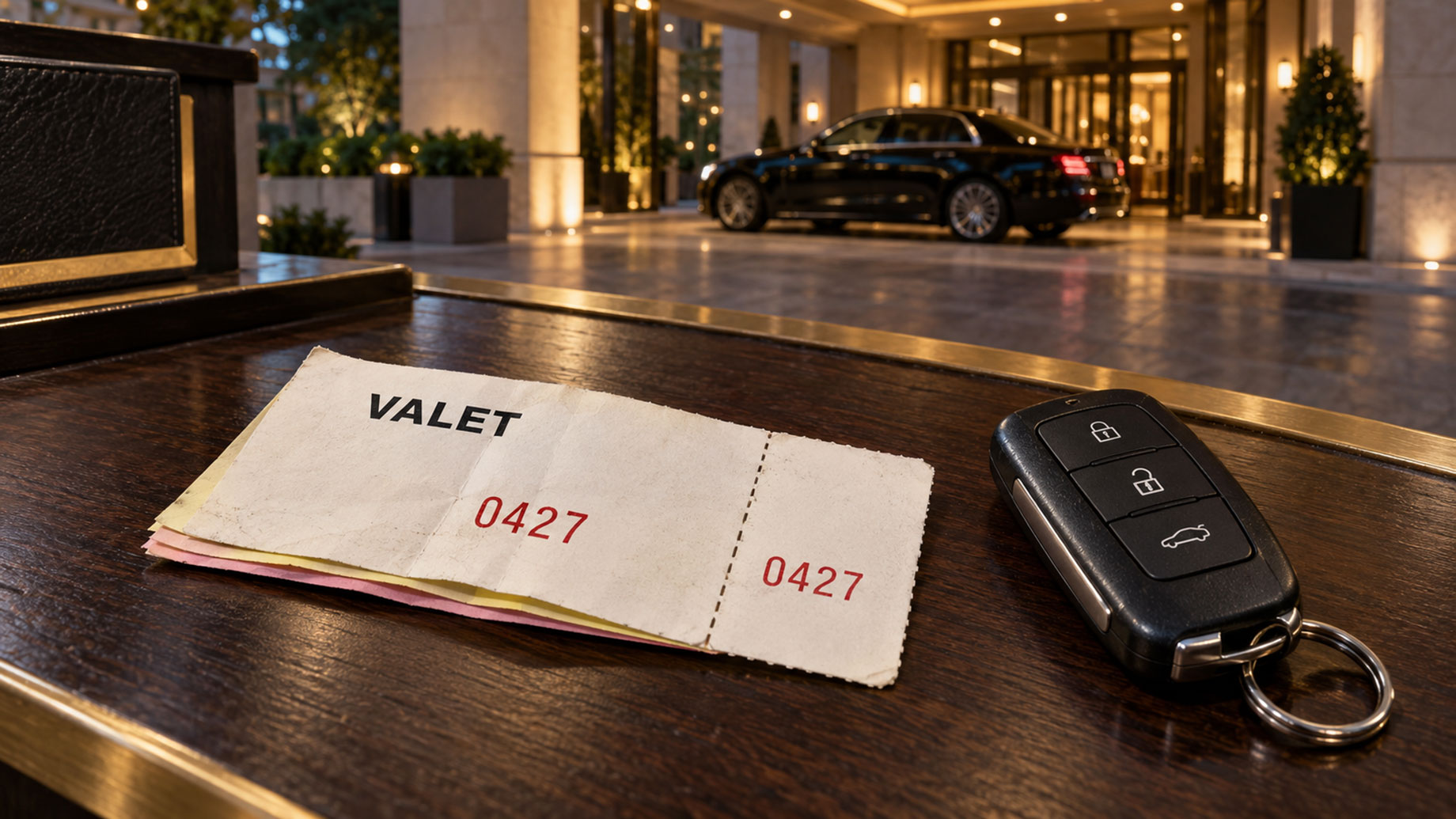
A three-part carbon ticket, folded into a jacket pocket at dinner and forgotten by midnight, can cost a hospitality group seven figures. That is not a hypothetical. Valet tickets, key-cabinet logs, and the surveillance clips tied to them now show up as the first exhibits in drunk-driving injury lawsuits against luxury hotels, resorts, and destination restaurants, because they answer the question every plaintiff’s lawyer opens with: who saw the driver last, and what shape were they in?
The exposure for a property stretches well past the crash itself. A single ticket with a timestamp on the front and a claim number on the back can pull a hotel into a case it assumed belonged to the driver alone. For the injured party on the other side of that crash, an attorney handling drunk-driving injury cases will often treat that same slip of paper as the shortest route to the deep pocket that will actually pay.
The Valet Stand Has Become the Most Interesting Witness in the Building
The valet operation sits at a chokepoint no other vendor occupies. Every guest who drives in passes through it twice: once sober enough to hand over keys, once on the way home. In between, the property has served them. That sequence is the exact story a plaintiff’s lawyer needs to build, and modern valet operations document it in ways their handwritten predecessors never did.
Most premium properties now run some combination of a numbered claim ticket, a digital key-cabinet log, a dispatch app that timestamps the retrieval request, a body-cam or lapel-cam on the runner, and a fixed camera over the porte-cochère. The vehicle’s own telematics fill in the rest. Layered together, they produce a minute-by-minute record of when the driver arrived, how long they were on-property, who returned the car, and how they behaved when they took the keys back.
Courts have noticed. Recent industry analysis of how judges evaluate these claims points out that valets are treated as temporary custodians of the vehicle, and that contract language designating the valet company as an independent contractor rarely ends the inquiry. Judges look at what the property actually knew, what its own logs show, and what a reasonable operator would have done with that information.
What Works on Both Sides of the Case
The workable playbook for hospitality operators is narrow and unglamorous. For an injured plaintiff and the lawyer handling the case, speed is the priority: these records age out quickly, and the demand letter has to name them specifically.
- Preserve the whole stack, not just the ticket. Retrieval-request timestamps, key-cabinet audit logs, dispatch chat, lapel-cam clips, and porte-cochère video all sit on different systems with different retention windows. A preservation letter that names each system by function will hold up through a vendor swap, while one that asks only for the valet records tends to disappear with the old contract.
- Train for the handoff, not the disclaimer. The moment that decides most of these cases is the thirty seconds between the ticket coming out of the pocket and the car leaving the driveway. Written protocols for offering a rideshare, calling a room, or holding keys, applied consistently and logged, are among the strongest defenses a property can build.
- Reconcile the timeline early. Point-of-sale data from the bar, room-charge timestamps, elevator logs, and the valet retrieval time should tell the same story. When they diverge, that is where the case turns, and a property is better off learning it before the deposition than during it.
- Treat the vehicle as a second witness. Modern cars record ignition events, seatbelt use, and pre-crash speed. Lining that data up with the valet timestamp often settles the who-was-driving question before it becomes a fight.
The wider context is why any of this matters. Federal crash data for 2024 recorded 11,904 alcohol-impaired-driving fatalities, and 61 percent of those killed were the impaired drivers themselves. The remaining share are the passengers, other-vehicle occupants, and pedestrians whose families drive the civil docket.
Those cases go looking for a solvent defendant with a duty of care and a paper trail. A luxury property with a valet stand offers all three. The valet ticket used to be a receipt. It has become a timeline. Whichever side of the case a reader sits on, treating it as anything less is the mistake that shows up in the verdict.
