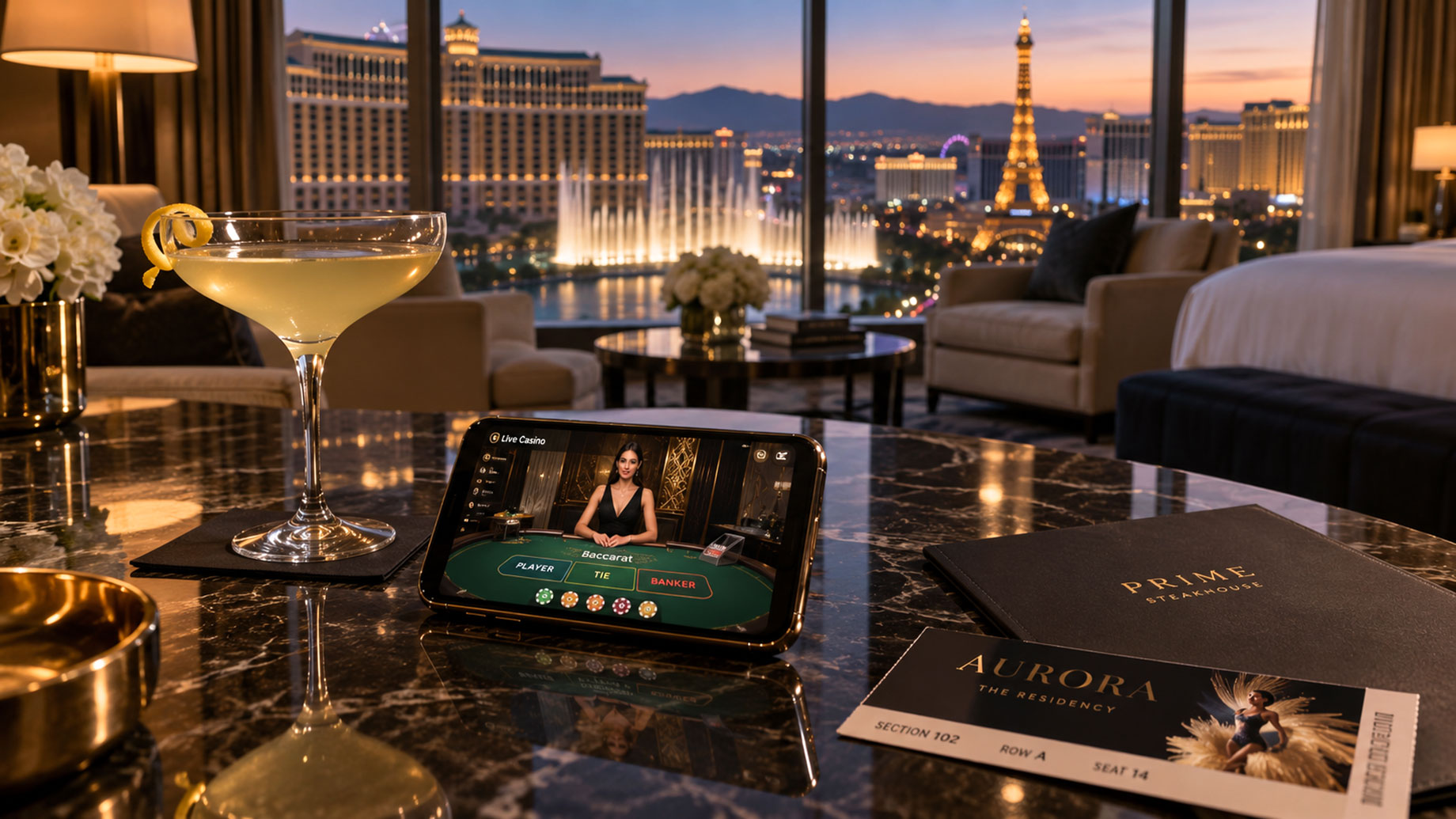
A suite overlooking the skyline, a restaurant reservation, and a theatre ticket can form the foundations of a casino-resort weekend. The appeal lies partly in how these experiences fit together: dinner leads into a performance, a late evening gives way to a quiet breakfast, and the hotel provides a comfortable base for exploring the destination.
Online casinos have changed the role of the gaming floor within that itinerary. Where online gambling is permitted, access to casino games no longer necessarily requires a journey. That gives physical resorts a clear question to answer: what makes the visit worth the traveller’s time?
Luxury casino resorts continue to invest in accommodation, dining, live entertainment, wellness, and service. These have long been part of the resort model. Their importance becomes especially clear when the act of gambling can be separated from the experience of travelling somewhere.
What Online Casinos Have Changed
Online casinos make participation possible through a computer or mobile device. Live-dealer formats can also bring streamed tables, human presenters, and real-time interaction to the screen. Convenience has therefore become a less distinctive reason to visit a physical gaming venue.
The change does not mean that online growth automatically translates into the decline of traditional casinos. In its second-quarter 2026 tracker, the American Gaming Association reported that U.S. commercial revenue from traditional casino games grew 4.5% year over year, while iGaming revenue increased 16.5%. These are commercial gaming revenue figures, not measurements of hotel visitation or proof that individual markets are unaffected by competition.
The more useful distinction concerns what each format provides. A digital platform can deliver games without a hotel stay. A physical resort brings together accommodation, restaurants, performances, meeting spaces, and the atmosphere of a particular place.
There is also overlap between the businesses. Some resort groups participate in online gaming as well as operating hotels and casinos. Their strategy can involve connecting the two experiences rather than treating every digital interaction as a lost physical visit.
The developments below illustrate how resorts are strengthening their hospitality offering. They do not establish that online casinos caused every renovation or investment; tourism demand, regulation, property age, and competition between resorts also shape these decisions.
Suites and Service Make the Hotel Part of the Attraction
For a resort seeking affluent visitors, the room has to justify its place in the trip. Layout, light, acoustics, privacy, and service all influence whether accommodation feels like a destination in its own right.
Marina Bay Sands in Singapore offers a concrete example. Its Paiza Collection was completed in November 2024, according to the resort’s subsequent announcement. The accommodation offering combines suites with dedicated arrival arrangements, private lifts, and round-the-clock butler service. Those features address the experience of staying at the property, independently of what happens on the gaming floor.
The underlying design question is familiar to readers of luxury real estate: how can a large development deliver a feeling of personal space? Separate areas for sleeping, dining, and entertaining allow a suite to support different parts of the day. A discreet arrival route can reduce exposure to busy public areas, while attentive service helps coordinate the practical details of a stay.
The crossover between residential and hospitality design is visible in developments such as Antares Barcelona, with its resort-style amenities. Pools, wellness facilities, dining, and concierge services can contribute to both a desirable home and a compelling hotel experience.
For casino resorts, this broadens the basis of competition. They must earn consideration alongside other luxury hotels on the quality of the accommodation itself.
Restaurants Give Visitors a Reason to Make a Reservation
Dining can anchor an evening before a guest has made any other plans. A distinctive restaurant gives local residents, visiting food enthusiasts, and hotel guests a shared reason to spend time at a resort.
Bazaar Meat by José Andrés at The Palazzo at The Venetian Resort illustrates that approach. Its September 2025 debut introduced a dining space organised around a central open-fire kitchen, with private dining rooms and a covered terrace. The design makes preparation, presentation, and the social setting part of the occasion.
A restaurant of this kind has a different relationship with its audience from a convenient place to eat between activities. Someone may choose the meal first and arrange the rest of the evening around it. Private dining can also accommodate celebrations and business gatherings, extending the reasons people enter the property.
That fits a wider view of luxury travel in which the room is one element of the experience. The same principle runs through culinary and cultural experiences beyond the villa in Cabo: memorable hospitality depends on what visitors can do as well as where they sleep.
For a physical casino resort, the opportunity is to assemble a dining identity strong enough to attract an audience of its own. The chef, menu, room, and standard of service each have to contribute; a famous name alone cannot deliver the evening.
Live Entertainment Creates a Reason to Travel on a Particular Date
A performance gives an otherwise flexible trip a place in the calendar. It can also create a shared experience for guests whose interests differ, making the resort relevant to an entire travelling party.
At City of Dreams in Macau, Melco relaunched House of Dancing Water in May 2025. Its 2025 annual report identifies the production as a central part of the property’s entertainment offering. Melco attributed growth in its group-wide food, beverage, and other revenue category, which includes entertainment, primarily to the show’s return.
That is a specific example of entertainment contributing to the wider business. A purpose-built theatre, specialist staging, and a live audience give the physical venue something distinctive to offer. A performance can also support surrounding activity, including dining and overnight stays, although the effect differs by event and destination.
The Londoner Macao demonstrates the scale of this broader model. Sands reported that the June 2025 opening of Londoner Grand capped a US$2.35 billion redevelopment. The completed resort combines accommodation and restaurants with a 6,000-seat arena, a theatre, shopping, and extensive meeting facilities.
Business events matter within this mix. A conference establishes a reason to travel; restaurants, performances, and leisure facilities can make it practical to extend the stay. The resort is serving several types of visitor whose schedules and priorities do not depend on the same attraction.
This is the commercial logic of an integrated resort: multiple activities can support the same destination, while giving guests more choice over how to spend their time.
Wellness Adds a Quieter Dimension to the Stay
The luxury lifestyle surrounding casinos is often associated with spectacle. A substantial hospitality offering also needs places where guests can step away from it.
Spas, fitness facilities, pools, and comfortable relaxation spaces give a resort more uses throughout the day. They can appeal to a visitor who wants an active morning, someone travelling with a partner attending meetings, or a guest whose main priority is rest.
Bellagio’s current spa project shows continued investment in that quieter side of the experience. In February 2026, the resort announced a remodel of its 55,000-square-foot spa, including upgraded treatment rooms, shared lounges, and expanded food and beverage offerings. The announced reopening is November 2026; as of September, the remodel remains a forthcoming addition.
The wider design considerations extend beyond the treatment menu. Sound insulation, lighting, room temperature, circulation, and the distance between busy public spaces and private accommodation all affect how a stay feels. These are also central themes in hotel design that brings together sleep, spa, and fitness.
Quiet luxury provides a useful way to understand this part of the resort. A visitor can value an unobtrusive service interaction, a well-designed room, or an uninterrupted afternoon as highly as a spectacular public space. Offering both requires thoughtful planning of the whole property.
Digital Technology Can Improve the Physical Visit
Casino resorts are also using technology within the hotel experience. The aim is to reduce the practical effort involved in arrival, communication, and organising a stay.
In its February 2026 investor presentation, MGM Resorts described mobile and kiosk check-in across its Las Vegas properties, together with digital concierge services. These tools address a straightforward hospitality problem: guests who have already travelled to a destination should not have to spend unnecessary time navigating its administration.
This reflects a broader principle of technology that makes luxury spaces feel effortless. The useful measure is how well a system supports the guest’s intentions. A simple arrival process or promptly answered request matters more than the number of screens involved.
The relationship can extend beyond hotel operations. BetMGM’s full-year 2025 business update described closer collaboration with MGM Resorts and connected digital and physical customer experiences. From a business perspective, the online platform and the destination can form parts of the same ongoing relationship.
For the guest, however, connected services still need clear choices about communications and data use. Luxury service should also leave room for human assistance when a request is complicated, personal, or difficult to resolve through an app.
What Makes a Casino Resort Visit Worthwhile?
The strongest reason to choose a physical resort is the quality of the complete stay. That can include the character of the building, the comfort of the room, the restaurants, the performances, and how easily the property connects with the surrounding destination.
The practical details deserve as much attention as the headline attractions. A celebrated show may run only on selected dates. A spa may be undergoing renovation. A restaurant reservation may need to be arranged separately from the room. Large properties can also involve considerable walking between facilities.
For travellers, evaluating accommodation, dining, and entertainment on their own merits creates a clearer picture of value. The cost of a hotel stay should make sense without relying on gambling winnings or spending more to obtain a perk. A guest can appreciate the hospitality of a casino resort without choosing to gamble.
Online casinos have made access to gaming less dependent on place. Physical resorts continue to offer reasons to care about the place itself: a particular room, a live production, a meal shared with friends, or service that makes a complicated trip feel well organised.
The opportunity for luxury casino resorts is to bring those elements together convincingly. Their appeal rests on an experience that holds its value throughout the visit, including the hours spent away from the gaming floor.
