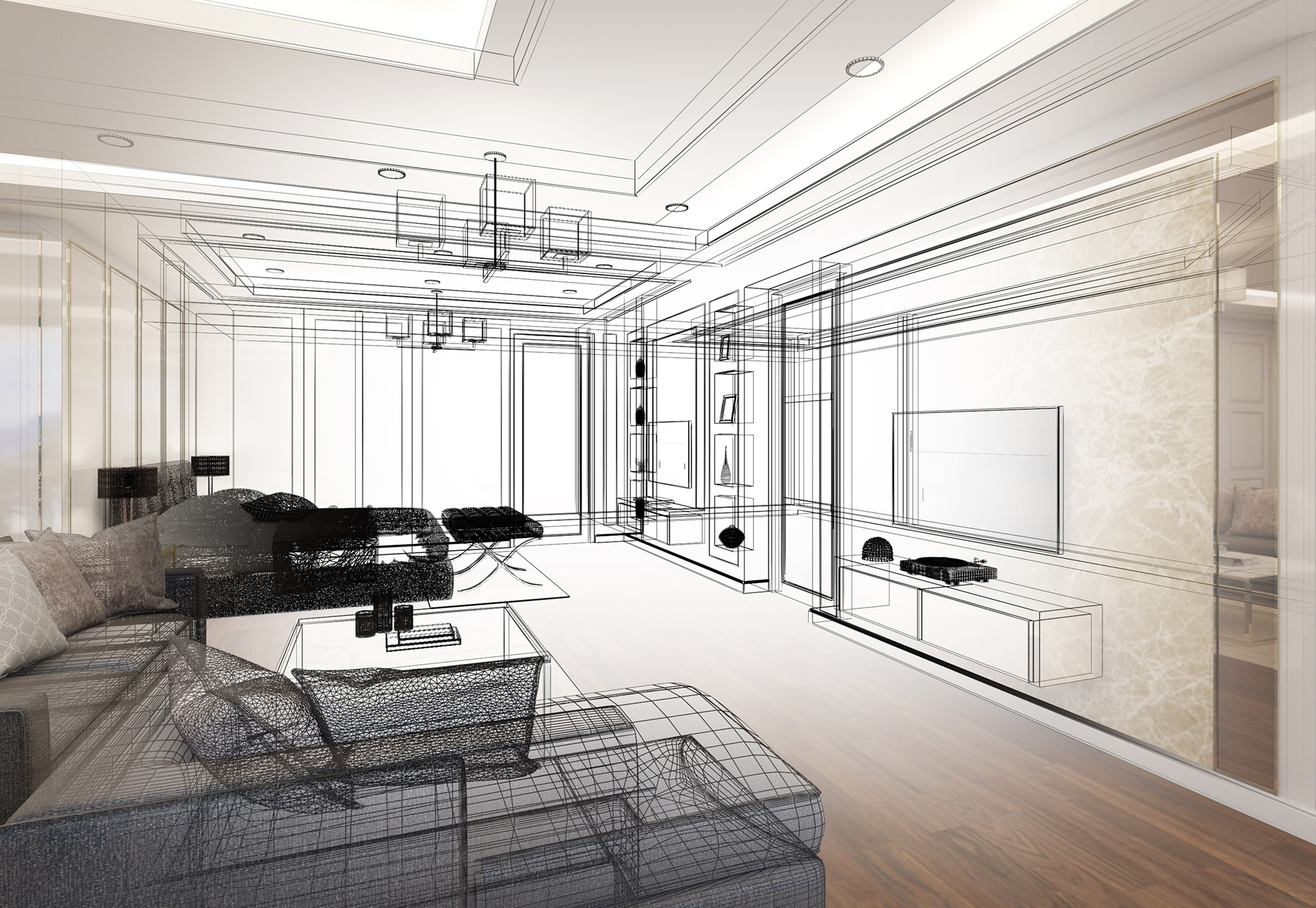
The hardest part of selling an interior design concept isn’t the design itself. It’s the gap between what the designer can see in their mind and what the client can see when they look at a mood board, a floor plan, and a set of material samples. Designers spend years developing the spatial imagination to look at an empty room and understand exactly how it will feel once the furniture arrives, the paint dries, and the light moves through the finished space at different times of day. Most clients haven’t developed that imagination, and it’s not reasonable to expect them to.
This gap creates a specific kind of friction in the client relationship. The designer presents a direction they’re confident in. The client says they like it, or they think they like it, but they’re not entirely sure, and they ask questions that reveal they’re still working from a mental image of the finished space that doesn’t match what the designer has in mind. The project moves forward. Decisions get made. And then, somewhere in the execution phase — when the furniture arrives, or when the paint goes on the walls — the client sees something that isn’t what they were picturing, and the conversation becomes difficult.
That conversation, and everything leading up to it, represents a significant portion of the interpersonal friction that makes interior design projects harder than they need to be. The solution has always been better visualization — showing clients something closer to the finished result before the decisions that are difficult to reverse get made. The challenge has been producing that visualization at a cost and speed that works within the economics of most design projects.
Why Traditional Visualization Has Always Been a Compromise
The visualization options that interior designers have traditionally worked with fall into a few categories, each with its own limitations.
Mood boards communicate aesthetic direction but require the client to do substantial imaginative work to understand how those references translate into their specific space. A beautifully curated board of images that captures exactly the atmosphere the designer is after might be perfectly clear to someone with design training and incomprehensible to a client who’s trying to picture their living room.
2D floor plans communicate spatial organization but not spatial experience. A client who’s looking at a floor plan is seeing an abstract representation of a space, not the space itself. Whether the furniture arrangement will feel open and airy or cramped and cluttered, whether the traffic flow through the room will feel natural or awkward — these things don’t read clearly in plan.
3D renderings have been the closest thing to a solution, but they’ve always carried their own costs. A high-quality 3D rendering of a room takes significant time and specialized software skills to produce. For a full project with multiple spaces, the rendering investment can add meaningfully to the project budget or to the designer’s unbillable time. And even when the renderings are produced, they’re static. A client looking at a still image of a rendered room still has to do imaginative work to understand how the space will feel to move through, how the light changes across the day, how the textures and materials look at different times and from different angles.
The further problem is that design processes are iterative. A client who sees the first rendering may want to explore an alternative direction — different furniture, different color palette, different layout. In a traditional 3D rendering workflow, each significant change means a new rendering, which means more time and more cost. The economics of iteration push toward limiting how many directions get seriously explored before committing to one, which is exactly the opposite of what good design process wants.
Showing the Space in Motion
What’s shifted is the ability to show clients not just how a space will look but how it will feel to be in it — through video that moves through the finished space, that captures how the light changes, that gives the client a sense of the spatial experience rather than a static snapshot of it.
This is a meaningful step beyond even high-quality static rendering, because the experience of a space is inherently temporal. The quality of afternoon light through a west-facing window. The way a room that photographs as intimate feels expansive when you’re actually moving through it. The relationship between adjacent spaces that becomes clear when you walk from one into the other. These are things that a still image, however well-rendered, can only approximate.
Seedance 2.0 allows designers to take reference images of a space — the existing room as it currently looks, or a well-specified visual direction — and generate video that shows the transformed version in motion. The camera moves through the space, the light behaves as it would in the real environment, the materials and textures read the way they would in actual conditions rather than in idealized rendering conditions. Clients watching that video are getting something much closer to the experience of walking through the finished space than any static image can provide.
For the specific challenge of helping clients understand how a space transformation will feel rather than just how it will look, this is a qualitative improvement over what’s been available. The clients who struggle most with traditional visualizations are often the ones with the least developed spatial imagination — the ones who most need to be shown rather than told. Video gives those clients something they can actually evaluate rather than something they have to imaginatively reconstruct.
Managing the Iteration Problem
One of the most practical benefits of faster visualization is what it does to the iteration dynamic with clients. The moment a client sees a rendered version of a space, they often want to explore a variation — different upholstery, a different wall treatment, a different layout. In a traditional rendering workflow, responding to that means going back into the 3D model and producing a new render, which takes time and raises questions about whether the iteration is included in the project fee.
When visualization can be produced and revised more fluidly, a client who wants to see the space with a warmer palette or different furniture can have that exploration happen in the same meeting. The designer can respond to client reactions in something close to real time, which changes the quality of the creative conversation.
This also changes the dynamic around the decisions most expensive to get wrong — paint colors that don’t read as expected, tile patterns that look different at full scale than they did as a sample, furniture that seemed right in a showroom but doesn’t work in the actual space. Showing a client how a tile will look across an entire bathroom floor, in motion and in realistic light conditions, is a more reliable path to genuine buy-in than showing them a four-inch sample.
The Client Communication Dimension
There is a dimension of interior design client relationships that goes beyond visualization and into expectation management. The misalignments that cause the most damage are usually not about aesthetics — they are about the client having one picture of the finished result in mind and the designer having another, and neither party realizing until late in the project that these pictures differ.
Better visualization addresses this problem at its root. When the client has seen a video that approximates the finished space before the major decisions are made, the alignment that’s been achieved is more durable than alignment based on verbal agreement about abstract concepts. “We agreed on a warm, layered atmosphere” can mean different things to different people. “We agreed this is what the space will look and feel like” is a more specific commitment that leaves far less room for the divergence that causes late-project conflict.
This communication benefit extends to the relationship with other project stakeholders — contractors, architects, property developers — who also benefit from visualization that goes beyond floor plans and material schedules. A contractor who can see a video walkthrough of the intended finished result has a clearer picture of what they’re building toward than one who’s working from 2D drawings alone. A property developer presenting to investors can show something more persuasive than renderings. The visualization that designers produce for clients has uses throughout the project ecosystem.
Practical Considerations for Getting Started
The designers getting the most practical value from this kind of visualization workflow tend to start by identifying the specific moments in their client process where the visualization gap causes the most friction. For most designers, this is in the early concept presentation phase — before major decisions are committed to — and in the moments where a client is uncertain about a significant specification choice.
Those are the places where video is most likely to produce the clarity that moves the project forward. Starting with one or two projects where you apply this approach to those specific moments, evaluating whether it changes the client conversation, and refining based on what you learn is more reliable than trying to transform the entire visualization process at once.
The generation workflow at Seedance 2.0 works best for interior visualization when the reference material includes both images of the existing space and images that capture the intended aesthetic direction — the specific quality of light, the material palette, the furniture style. The more clearly that reference package communicates what the transformed space is meant to feel like, the more the generated visualization corresponds to the actual design intention rather than to a generic interpretation of the description.
The designers who’ve integrated this into their practice most effectively treat it as part of the client relationship tool kit rather than as a technical capability to be demonstrated. The goal isn’t to show clients impressive AI-generated video. It’s to close the visualization gap that causes misalignment, and to do that early enough in the project that the decisions made on the basis of that alignment are the right ones.
What Changes for the Business of Design
The business implications of better client visualization extend beyond individual project outcomes. Designers who consistently show clients an accurate preview before major decisions are made tend to have fewer late-project revision requests, fewer difficult conversations about specifications that didn’t land as expected, and higher client satisfaction at completion.
Fewer revision cycles mean more predictable timelines and better margin on fixed-fee projects. Higher satisfaction translates into referrals, which for most design practices is the primary source of new business. A reputation for projects that turn out the way clients expected — because clients were genuinely shown what to expect beforehand — is a meaningful differentiator in a field where the client experience matters as much as the design work itself.
The gap between what designers envision and what clients can understand has always been one of the central challenges of the profession. Closing it earlier is one of the more concrete improvements available to design practices right now.
