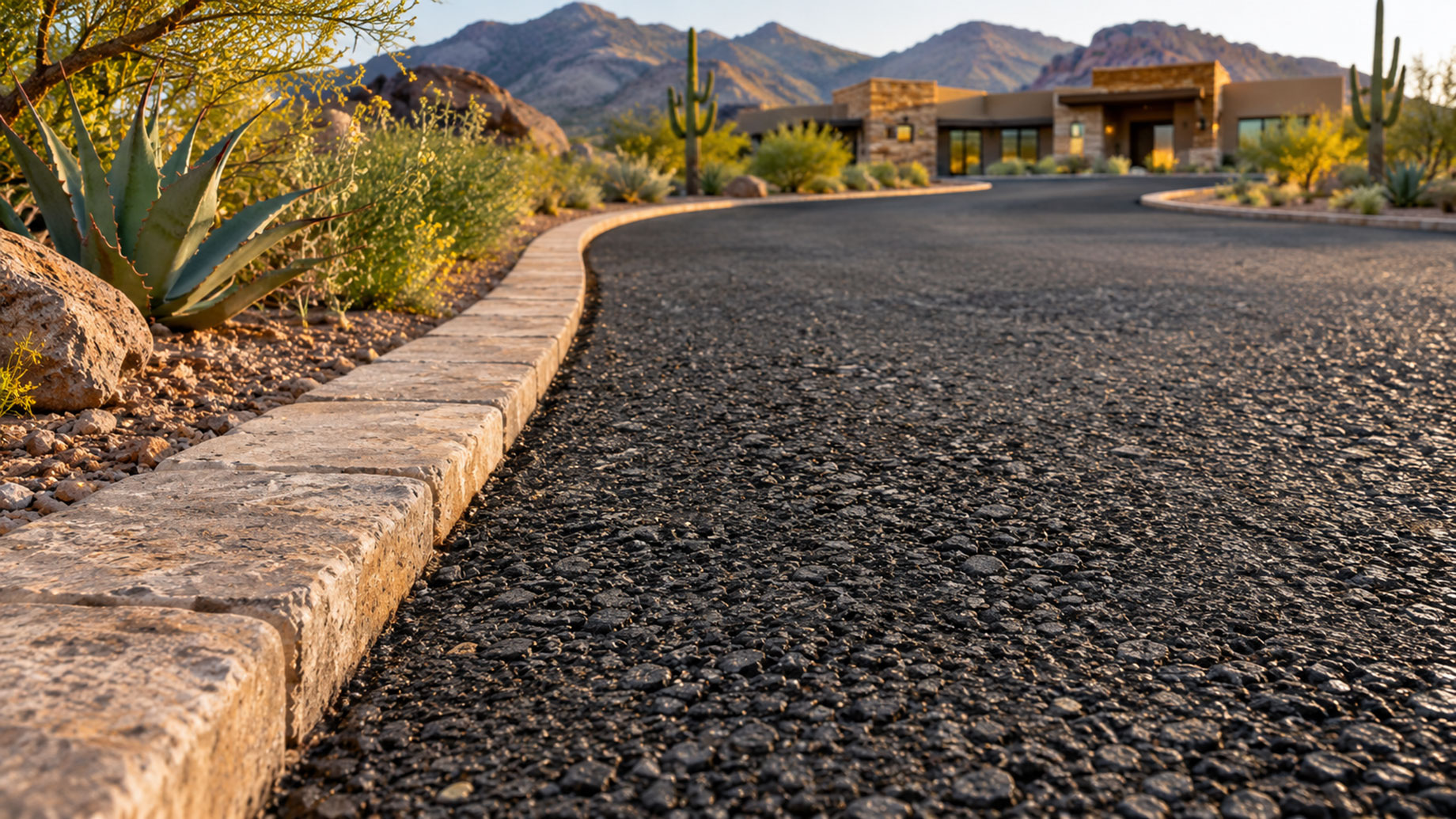
On a summer afternoon in Phoenix, the air can sit above 110 degrees while the asphalt underfoot climbs past 150. That gap explains most of what goes wrong with private drives in the Arizona desert. An estate drive that would last a generation in a mild climate can turn gray, brittle and cracked within a few years here, and the repairs often cost more than building it right the first time.
For owners of larger properties in Scottsdale, Paradise Valley, Carefree and the foothills around the Valley, the drive is the first thing a guest sees and one of the largest surfaces on the lot. A few decisions made before paving, and a short maintenance routine afterward, decide whether it ages gracefully or becomes a recurring repair bill.
Why the Desert Is So Hard on Asphalt
Asphalt is crushed stone held together by a petroleum binder. Heat softens that binder, and intense ultraviolet light oxidizes it. Over time the binder loses its flexibility, the surface fades from black to gray, and small cracks open as the pavement expands in the afternoon and contracts after sunset.
Then monsoon season arrives. Between mid-June and the end of September, sudden storms push water into every crack that has formed. Water that reaches the base layer weakens it, and a weak base is what turns a hairline crack into a pothole or a sunken patch near the garage.
Start With What’s Underneath
The most common reason a luxury drive fails early has nothing to do with the surface. It’s the base. A properly built drive starts with excavation, grading so water sheds away from the home, and a compacted aggregate base sized for the heaviest vehicle that will use it.
That last point matters more on estates than on typical residential lots. Moving trucks, landscaping crews, pool service vehicles, motorhomes and fire apparatus all share the same drive. Many Arizona jurisdictions also set fire access requirements for long private drives, including minimum widths and load ratings. Ask your contractor to confirm what your city or county requires before the design is final, not after the inspection.
Arizona soil adds its own complication. Many lots sit on caliche, a cement-like layer of calcium carbonate that can block drainage and make excavation slower and more expensive. An experienced crew will plan for it rather than discover it halfway through the job.
Grading deserves the same attention. A drive that sits even slightly flat in one spot will hold water after every storm, and standing water is one of the fastest ways to break down asphalt.
Asphalt or Concrete?
Concrete and pavers are common on Arizona estates, and both have a place, especially for motor courts and entry plazas where appearance comes first. Asphalt earns its spot on longer drives for practical reasons. It costs less per square foot to install, it can usually be driven on within days, and it flexes slightly with temperature swings instead of cracking along joints. Repairs are simpler too: a damaged section can be patched or resurfaced without tearing out large slabs.
Many owners use both. A concrete or paver motor court near the house paired with an asphalt approach drive gives the arrival a finished look without paving a quarter mile in stone.
A Maintenance Schedule Built for the Desert
Asphalt in Arizona needs more frequent care than it does in cooler states, but the routine is simple.
Sealcoat Every Two to Three Years
Sealcoating puts a protective layer over the binder, blocking UV and water, and restores the deep black color the sun fades. If you wait until the surface is badly gray, the binder underneath is already breaking down.
Seal Cracks Before Monsoon Season
Spring is the time to fill cracks, before summer storms push water into them. A crack sealed for a modest cost in April can prevent a base repair in October.
Patch Small Failures Quickly
A pothole or broken edge spreads every time a vehicle rolls over it. Fixing it while it’s small keeps the rest of the drive intact.
Keep the Edges Supported
Unsupported edges crumble. Curbing, ribbon borders or well-compacted shoulders protect them, especially where landscaping runs right up to the pavement.
Watch the Irrigation
Sprinklers and drip lines that soak the drive’s edges every day are a common and entirely avoidable cause of early failure. Adjust heads so the water stays on the plants.
Choosing the Right Contractor
The difference between a drive that lasts five years and one that lasts twenty usually comes down to who builds it. Look for a licensed Arizona contractor with experience in desert conditions, a clear explanation of base depth and drainage, and a written maintenance plan. Ask how they handle summer work, since paving in extreme heat requires careful timing of delivery and compaction.
Local crews that work across the Valley every day, such as the team behind copper state asphalt paving, understand how monsoon runoff, caliche soils and summer temperatures affect a drive long after the equipment leaves. That local knowledge is worth more than a low bid from a company that paves the same way in every climate.
The Payoff
A well-built asphalt drive does more than move cars. It sets the tone for the property, cuts down on maintenance headaches and protects resale value. In a market where buyers notice every detail of the arrival, a smooth, dark, cleanly edged drive tells them the rest of the home has been cared for too.
