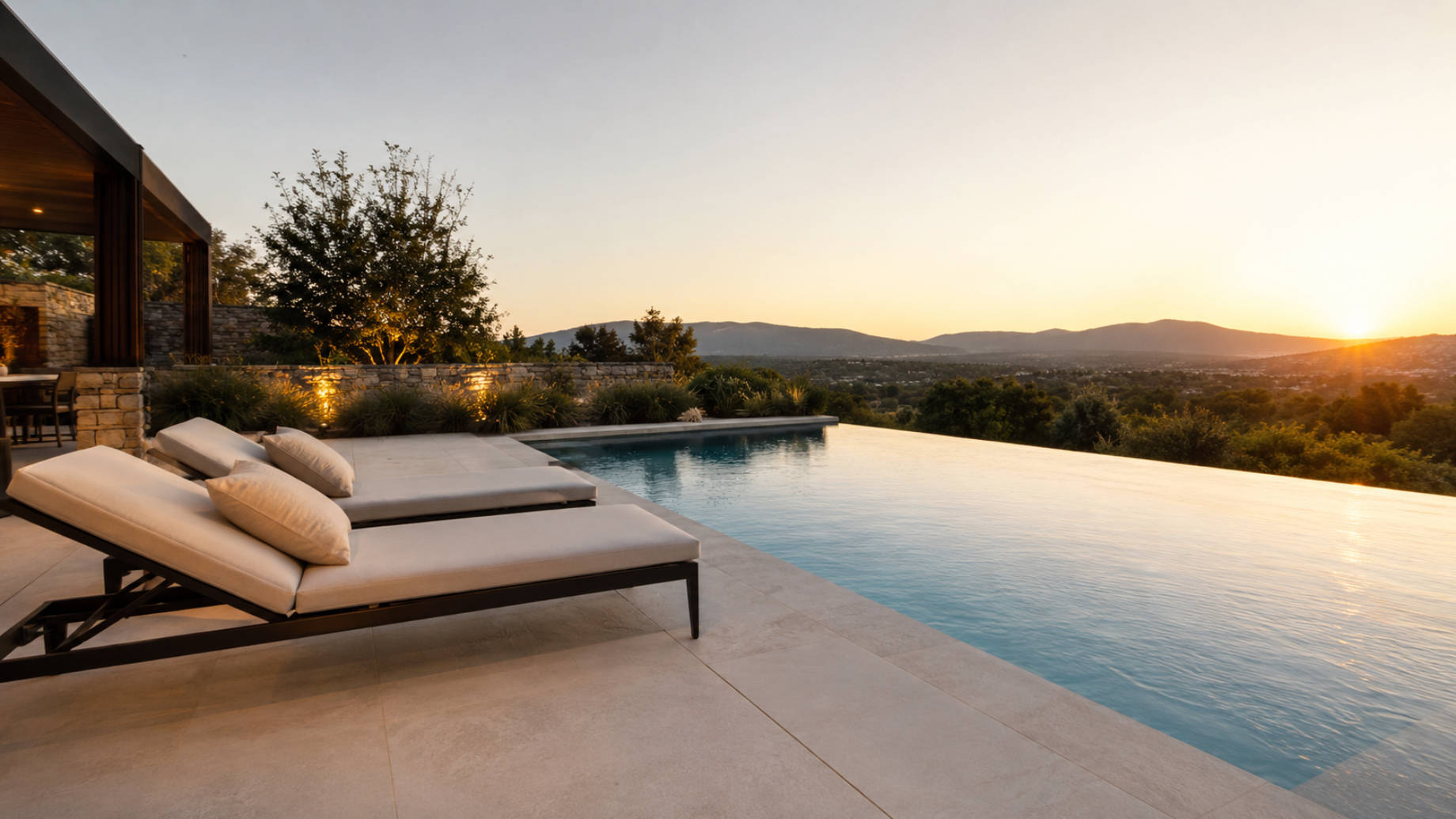
A swimming pool is not where the spending ends. Usually, it is where the real spending begins.
That is the part people often miss at the start of an outdoor living project. They picture the finished space: the water, the stone, the loungers, the late afternoon light, maybe an outdoor kitchen nearby. It all looks calm in the mind. Then the estimates arrive, and suddenly the pool is only one line in a much bigger budget.
There is excavation. Drainage. Pumps. Heating. Lighting. Fencing. Stonework. Furniture. Planting. Electrical work. Sometimes plumbing. Sometimes permits. Sometimes the ground is not as simple as it looked when everyone was standing there with coffee, pointing at where the terrace should go.
So, before the design goes too far, the money needs its own plan. Not a vague idea of “we’ll finance part of it”. A real plan.
For some homeowners, the project is paid for from savings. Others use home equity, a line of credit, contractor financing, or a personal loan. In Norway, a consumer loan, or forbrukslån, may be considered for part of the cost, especially when the borrower does not want to use the home itself as security.
None of these choices is automatically right. The right one depends on the size of the project, the repayment period, the rate, the fees, and whether the monthly payment still feels sensible after the excitement of the design stage has worn off.
First, Stop Pricing Only the Pool
This is the easiest trap.
A homeowner asks, “How much does a bespoke pool cost?” Fair question, but too narrow. The better question is: “How much does the finished outdoor space cost?”
Because a pool without its surroundings can look unfinished. A terrace without shade may sit unused in hot weather. An outdoor kitchen without enough counter space, storage, or seating nearby becomes more of a showpiece than a useful part of the home.
A proper budget may need to include:
- Ground preparation and excavation
- Drainage and grading
- Pool structure and interior finish
- Pumps, filters, heating, covers, and control systems
- Coping, stone, tile, decking, or paving
- Electrical work and outdoor lighting
- Fencing or safety barriers
- Planting, irrigation, and soil work
- Furniture, shade, and storage
- Outdoor cooking or dining areas
- Cleaning, servicing, and future maintenance
This is not “extra”. It is the project.
If the financing only covers the pool shell, the homeowner may be forced to cut the details that make the space work. Lighting gets reduced. Landscaping becomes basic. Furniture is delayed. The result may still be expensive, but not finished.
Decide What Has to Happen Now
Not every part of an outdoor project has the same timing.
Some work should be done early because it affects the structure of the space. Drainage, grading, electrical lines, pool equipment, and hard surfaces are good examples. If these are delayed, the homeowner may have to disturb completed work later. That is annoying, and usually more expensive.
Other items can wait. Furniture can be upgraded later. Decorative planters can wait. Some audio, styling, and accessory choices can be added after the main construction is finished.
A useful exercise is to divide the project into three groups.
The first group is work that must happen now.
The second group is work that would be useful, but could wait.
The third group is the nice-to-have list.
That simple division can prevent two bad outcomes: borrowing too much for details that could wait, or borrowing too little and leaving the important work unfinished.
The Loan Should Fit the Shape of the Project
A fixed, clearly priced project may suit a lump-sum loan. If the contractor has given a detailed quote and the scope is unlikely to change much, the homeowner can borrow once and repay on a set schedule.
A phased project is different. If the pool is being built first, with landscaping, lighting, a pergola, or outdoor kitchen coming later, a more flexible option may be useful. A line of credit can suit that sort of work because money is drawn as each stage begins.
A smaller project may not need a large secured loan at all. Pool heating, new decking, shade structures, garden upgrades, or outdoor furniture may be better matched to a smaller personal loan or forbrukslån, depending on the borrower’s situation.
The important point is not speed. Fast approval can be helpful, but it should not be the reason for choosing a loan.
The numbers still matter.
APR matters. Fees matter. The repayment term matters. Early repayment rules matter. Whether the home is used as security also matters. The Consumer Financial Protection Bureau explains that APR can be more useful than the interest rate alone because it includes the rate plus certain borrowing costs, which makes different loan offers easier to compare.
It is also worth reading general guidance from the Consumer Financial Protection Bureau on APR, the Federal Trade Commission on home equity loans and lines of credit, and the CFPB explanation of home equity loans versus HELOCs before comparing offers.
The Mid-Project Problem
Outdoor projects have a habit of growing.
A larger patio suddenly makes sense. Better stone looks worth it. More planting would soften the pool edge. The outdoor kitchen feels too small. The lighting plan could be improved. A fire feature would finish the space.
Each decision may be reasonable. Together, they change the budget.
This is where financing can become messy. A homeowner who borrows the exact amount of the original quote may have no room for changes. Then, halfway through, the choice becomes uncomfortable: cut the finish, find more money, or delay part of the project.
A contingency is not there for indulgence. It is there because soil, drainage, access, materials, and labour can change the actual cost.
For a luxury outdoor project, cutting the final details can be especially damaging. The last ten per cent often affects how the space feels. Poor lighting, weak planting, cheap furniture, or unfinished surfaces can make the whole project feel less considered.
Where the Planning and Financing Come Together
A good outdoor living company should help the homeowner understand the order of work, not just the design. That includes what needs to be built now, what can be phased later, and where the budget is likely to move.
For homeowners looking at pool and outdoor living payment options, luxuryoutdoorlifestyles.com provides information connected to luxury exterior projects and financing.
For Norwegian borrowers comparing consumer loan options, forbrukslån-no can be used to review lending choices and repayment structures.
Do Not Judge the Project Only by Resale
Resale value matters, but it should not be the only reason to build the space.
A bespoke pool may make a home more attractive to the right buyer. A finished terrace may improve the way the property presents itself. A proper outdoor kitchen may help the home feel more complete. But the daily use matters too.
- Will the family actually swim?
- Is there shade in the afternoon?
- Can people sit comfortably after coming out of the pool?
- Is there privacy from neighbours?
- Is the outdoor kitchen close enough to the house?
- Can the space be used in the evening?
- Is maintenance realistic?
These questions are not glamorous, but they are practical. They decide whether the project becomes part of daily life or simply something that looked good in the drawings.
Keep Maintenance in the Numbers
The spending does not end when the contractor leaves.
Pools need cleaning, chemicals, equipment checks, heating, covers, and sometimes repairs. Landscaping needs water, trimming, feeding, and seasonal attention. Outdoor kitchens need cleaning and protection. Stone, timber, furniture, lighting, and shade systems all age.
A homeowner should not finance the build and forget the running costs. That creates a false budget.
If the monthly loan payment is already uncomfortable, the added maintenance may become irritating very quickly. A better plan is to estimate the ongoing cost before borrowing, then decide whether the project still feels sensible.
The Unfashionable Part: Saying No
Sometimes the best financing decision is to remove something.
Not forever. Just for now.
A bigger terrace can wait. A more expensive furniture package can wait. The second fire feature can wait. The fully built outdoor kitchen can perhaps be started as a simpler dining area first.
This is not a failure of the luxury vision. It is how a project stays controlled.
The strongest outdoor spaces are not always the ones with the most features. They are the ones where the important features were done properly.
Final Thoughts
A luxury outdoor living space should be planned from the ground up, financially as well as physically.
The pool is only one part of the budget. The surrounding terrace, lighting, drainage, furniture, planting, safety, and maintenance all affect the final result. If those items are ignored at the financing stage, the project can become more stressful than it needs to be.
Savings, home equity, contractor financing, and a forbrukslån may all have a place depending on the homeowner and the project. The choice should come after the full scope is priced, not before.
A sensible order looks like this: define the space, price the whole project, separate essential work from optional details, compare borrowing terms, allow for changes, and keep maintenance in mind.
That is not the most exciting part of building a pool or outdoor living area. It is just the part that makes the finished space easier to enjoy.
