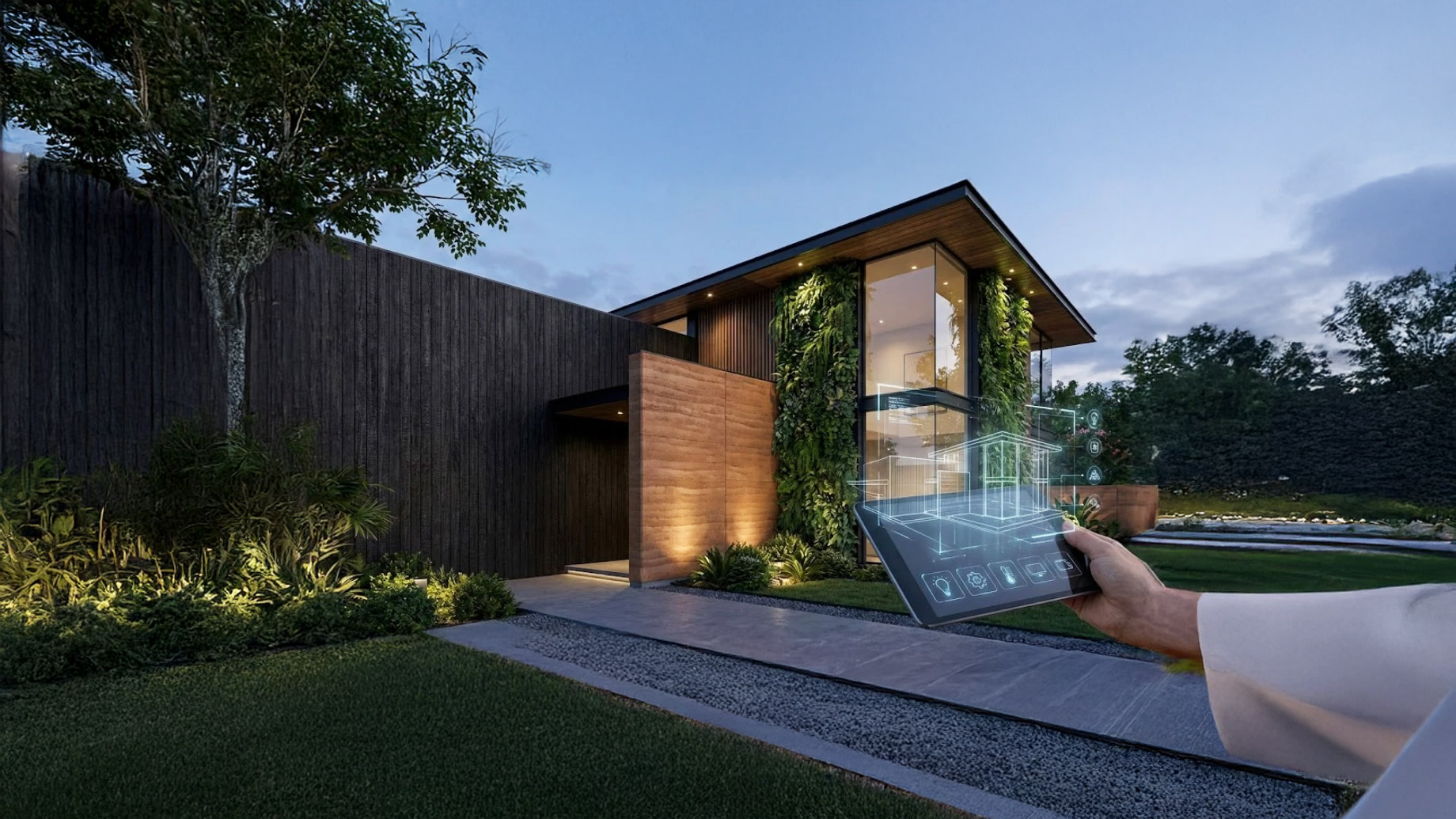
The concept of “luxury” in residential architecture has undergone a radical transformation as we settle into 2026. The era of ostentatious ornamentation and McMansion-style excess is definitively over. In its place, a new design language has emerged-one grounded in authenticity, environmental integration, and “quiet” sophistication. However, implementing these avant-garde trends presents a unique challenge: they are notoriously difficult to visualize using traditional methods.
How does one convey the nuance of “rammed earth” texture or the interplay of shadow on a “charred timber” facade through a 2D blueprint? This is where the modern exterior house design tool becomes indispensable. No longer just a utility for swapping paint colors, Generative AI has evolved into a trend-interpretation engine, allowing architects and homeowners to bridge the gap between abstract 2026 forecasts and photorealistic reality.
For the high-end real estate market, staying ahead of these trends is not merely an aesthetic preference; it is a mandate for preserving asset value. This guide explores the dominant luxury facade trends of 2026 and demonstrates how AI visualization is the key to unlocking them.
Key Takeaways
- Biophilic Design: 2026’s top trend involves “living facades” where architecture and landscaping merge seamlessly.
- Materiality Shift: Focus has moved from color to texture-think raw concrete, Shou Sugi Ban wood, and natural stone.
- The “Dark” Aesthetic: Matte black and charcoal exteriors are commanding premiums, but require precise lighting visualization.
- AI Implementation: Tools like Paintit.ai allow for risk-free experimentation with these bold styles before construction begins.
Trend 1: Biophilic Dominance and “Living” Facades
If 2025 was about energy efficiency, 2026 is about biological connection. The most significant shift in luxury exteriors is Biophilic Design-the deliberate integration of nature into the built environment. We are seeing a move away from the “manicured lawn” toward “rewilded” landscapes that hug the structure.
The Challenge of Visualization
Describing a home that “emerges from the forest” is poetic, but visualizing it is technical chaos for traditional software. Standard CAD programs treat landscaping as static, green blobs. They fail to capture the wild, organic irregularity that defines this trend.
How AI Solves It
Generative AI tools excel at organic chaos. By using an advanced exterior design tool, homeowners can simulate:
- Vertical Gardens: Visualizing how creeping ivy or green walls will look at different stages of growth over 5 years.
- Seamless Transitions: The blurring of indoor and outdoor boundaries. AI can render large-format glass sliders open, showing how the interior flooring extends onto the patio, creating a unified “outdoor living room.”
- Contextual Flora: Instead of generic trees, the AI can populate the scene with climate-specific native plants (e.g., agave for Arizona, ferns for Seattle), ensuring the design is not just beautiful but viable.
Trend 2: The “Quiet Luxury” Palette (Texture Over Color)
The “Quiet Luxury” movement, which began in fashion, has fully permeated architecture. In 2026, the most expensive homes do not scream for attention; they whisper. This trend is characterized by a reduction in color variance and an explosion in textural depth.
The Return of Raw Materiality
Investors are favoring honest, raw materials over synthetic finishes.
- Rammed Earth: Walls built from compacted soil that display beautiful, sedimentary layers.
- Travertine & Limestone: Unpolished, honed stone that catches the light differently throughout the day.
- Textured Concrete: Board-formed concrete that retains the grain of the wood forms used to cast it.
Implementing via AI
Visualizing “white paint” is easy. Visualizing “board-formed concrete with a warm gray undertone” is incredibly difficult. This is where high-fidelity AI staging is non-negotiable. Platform algorithms trained on millions of architectural images can interpret a prompt like “Modern minimalist facade with beige rammed earth texture and bronze window frames” and generate a result that accurately reflects the porosity and light absorption of those materials. This allows buyers to approve expensive materials with confidence, knowing exactly how the texture will read from the street.
Trend 3: The Dark Exterior Aesthetic
Contrary to the “all-white farmhouse” trend of the early 2020s, 2026 has embraced the drama of the dark facade. “Moody” exteriors using matte black, charcoal, deep forest green, and midnight blue are dominating the ultra-luxury sector.
The Lighting Variable
Dark houses are risky. Without proper lighting design, they can disappear at night or look forbidding.
- Material Choice: The trend leans heavily on Shou Sugi Ban (Japanese charred cedar), which offers a crackled, black texture that is both fire-resistant and stunningly beautiful.
- Contrast: The dark cladding is often offset by warm, honey-toned wood soffits or copper accents.
Visualizing the Risk
You cannot simply paint a house black in Photoshop and hope for the best. An AI exterior design tool allows for “Time of Day” simulations. You can check:
- Heat Gain Perception: Does the house look sophisticated or heavy in direct noon sunlight?
- Night Architecture: How does the landscape lighting reflect off the matte black siding? AI allows you to place virtual uplights and see the dramatic effect immediately, ensuring the home looks like a lantern at night rather than a void.
The Technology Gap: Why Sketches Fail Modern Trends
The common thread across all 2026 trends-biophilia, raw texture, dark aesthetics-is complexity. A hand sketch or a basic 3D model cannot convey the feeling of these elements.
The Limits of “Old” Tech
Traditional rendering processes are linear and slow.
- Architect draws plans.
- 3D artist builds the model (1-2 weeks).
- Client wants to change “Stucco” to “Cedar.”
- Artist re-renders (3 days + extra fee).
In a fast-moving market, this latency is unacceptable. Furthermore, “Quiet Luxury” relies on subtlety. If the render looks fake or plastic (common in lower-tier software), the luxury effect is lost, and the design feels cheap.
Implementing Trends with AI: A Workflow
The solution lies in the Unified Design Flow offered by next-generation platforms like Paintit.ai. This tool represents the 2026 standard of EIS (Empathy, Intuitiveness, Seamlessness). It understands that a user asking for “a serene, nature-inspired facade” isn’t just asking for trees-they are asking for a specific mood.
The “Trend-to-Reality” Workflow
Here is how a developer or homeowner implements a 2026 trend using this technology:
Step 1: The Input (Digital Twin)
The user uploads a photo of the existing property. The AI analyzes the geometry, perspective, and lighting conditions.
Step 2: The Prompt (Intent)
Instead of selecting from a dropdown menu of 50 generic bricks, the user types a semantic prompt:
“Transform this exterior into a 2026 soft-minimalist luxury home. Use warm limestone cladding, large steel-framed windows, and integrate wild, drought-tolerant landscaping. Evening light.”
Step 3: The Generative Iteration
Within seconds, the AI generates variations. It interprets “soft-minimalist” by removing unnecessary trim. It applies the “limestone” with correct physics-based rendering.
- Correction Mode: If the limestone looks too cold, the user types: “Make the stone warmer and add wood slats to the garage door.” The update is instant.
Step 4: The Sourcing (Seamlessness)
This is the breakthrough. The AI doesn’t just paint a picture; it identifies the elements. It can suggest: “This look corresponds to [Brand X] Limestone Veneer and [Brand Y] Garage Doors.” This moves the project from “dream” to “procurement.”
Risk-Free Experimentation: Case Studies
The greatest value of AI in 2026 is the ability to fail virtually for free.
Case A: The “Mixed Metal” Dilemma
- The Concept: A client wants to mix copper gutters with black steel window frames.
- The Fear: Will it look eclectic and chic, or messy and mismatched?
- The AI Solution: The design tool generates three versions:
- Copper + Black Steel.
- All Black Steel.
- All Copper.
The Verdict: The visual proves that while Copper + Black works, it requires a specific lighter stone background to avoid clashing. The client avoids a $15,000 mistake.
Case B: The “Glass Box” Extension
- The Concept: Adding a modern, glass-walled extension to a historic brick estate.
- The Fear: Destroying the architectural heritage.
- The AI Solution: The tool generates a visualization where the glass extension reflects the surrounding old trees, showing how the modern addition can “disappear” into the landscape, respecting the original structure. This visual is crucial for getting approval from local historical preservation boards.
2026-2027 Design Codes: Future-Proofing
Looking beyond 2026, the trajectory is clear. The integration of sustainable tech into the facade is the next frontier.
- Solar Skins: Roofs that are entire solar arrays but look like slate shingles.
- Smart Glass: Windows that tint automatically based on sun exposure.
An advanced exterior design tool allows you to visualize these technologies today. You can see how a “Tesla Solar Roof” alters the aesthetic compared to traditional clay tile.
Summary: Future-Proofing the Estate
Implementing the luxury trends of 2026-biophilia, textural depth, and dark aesthetics-requires a leap of faith. These are bold choices that deviate from the safe beige norms of the past decade.
However, with the adoption of generative AI, the “leap” is no longer blind. An exterior house design tool serves as the safety net. It allows investors and homeowners to experiment with the cutting edge of design, ensuring that the final result is not just trendy, but timeless.
In the luxury market, the ability to visualize the future is the ultimate competitive advantage. Those who master these tools will define the skyline of 2026.
