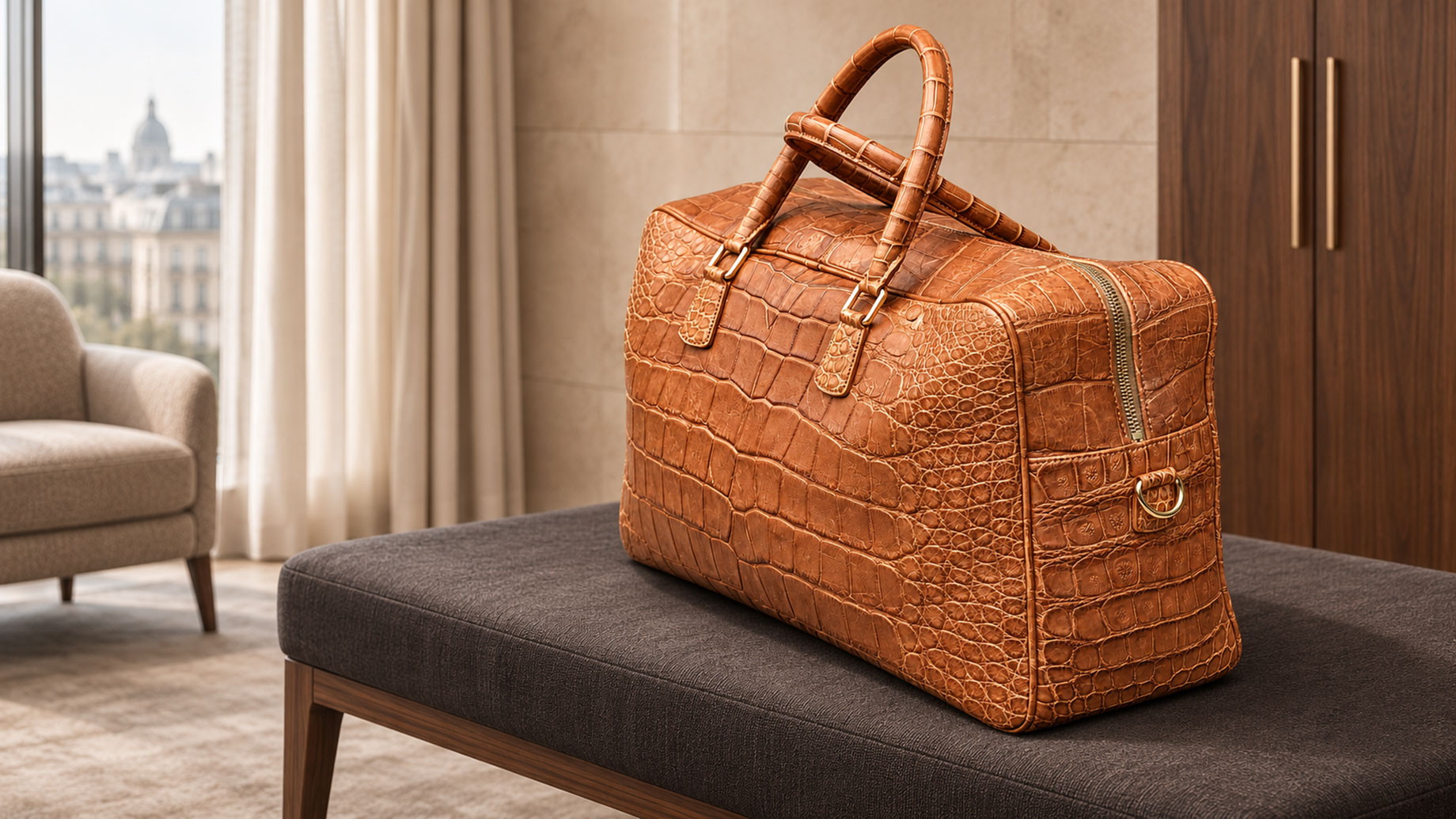
Some luggage is bought for the trip. A crocodile weekender is bought for the next twenty years of trips. It is the bag that goes from the car to the jet to the hotel suite, and it is one of the few pieces of luggage that people remember.
It is also one of the most demanding things a leather atelier can make. Here is how a commission works, and what to decide before you place one.
Why the Duffle Shows Crocodile Best
A wallet or a belt uses a narrow strip of skin. A duffle uses large, open panels, so the whole scale pattern is on display: the fine, square tiles of the belly at the centre, the rounder scales toward the flanks.
That is also what makes it difficult. A bag this size needs several skins, matched in colour and scale so that the two sides mirror each other and the pattern runs cleanly across the body. The placement is planned before a single cut is made. When it is done well, the bag looks as if it came from one piece.
Decide the Size First
Think about how you travel, not how the bag looks in a photo.
- Compact weekender: one or two nights, fits the overhead locker and the boot of a sports car.
- Standard weekend bag: two to four nights, the most popular format.
- Large travel duffle: a week away, or the bag that carries everything for the yacht.
- Bespoke dimensions: built around a specific use, such as a car’s luggage space.
Choose the Finish
The finish decides the character of the bag.
Matte crocodile is understated and forgiving. It is the practical choice for a bag that will be handled by porters and slid across car seats.
Glossy crocodile is polished until it shines. It is formal and unmistakable, and it asks for a little more care.
Nubuck crocodile is brushed to a soft, velvety surface, with the scales still clearly visible. It looks relaxed and suits lighter colours.
Himalayan crocodile fades from white at the centre to smoky grey at the edges. It is the rarest finish and the hardest to match across large panels.
Colour, Hardware and Lining
Black and dark brown are the classics. Navy, burgundy, racing green, red and taupe are common requests, and a colour can be developed for one client.
Hardware comes in gold, silver, brass or palladium tone, and the lining and trim are matched to it. Initials or a monogram are added at the design stage, on the body, on a luggage tag or hidden inside.
Many buyers order companion pieces from the same hides where the skins allow it: a pouch, a wallet, a belt or a briefcase.
How the Commission Runs
At OJ Exclusive, a bespoke atelier in the Netherlands that has worked with exotic leathers since 2015, every crocodile duffle is made to order. The dimensions are agreed for each commission, and the client chooses the finish, the colour, the lining, the trim and the hardware. A design visual is approved before production begins, so there are no surprises when the bag arrives.
A crocodile weekender starts from €3,500, and each bag receives a personal quotation. Those who prefer calfskin can have the same shape in leather from €1,000.
Allow four to six weeks once the design is confirmed, plus shipping. The finished bag is delivered in a dust bag and luxury packaging, tracked and insured.
Travelling With Exotic Leather
Crocodile, alligator and python leather are regulated under CITES, the international convention on trade in endangered species. A reputable maker supplies the CITES certificate where your destination requires one and confirms any shipping restrictions at the start.
The rules for carrying exotic leather across borders differ from country to country. Keep a copy of the certificate with the bag’s papers, and check the rules for your destination before you fly with it for the first time.
Care That Takes Five Minutes
- Store the bag in its dust bag, filled with tissue so it keeps its shape.
- Keep it away from radiators and long hours of direct sun.
- If it gets wet, blot it and let it dry at room temperature.
- Condition the leather a few times a year with a cream made for reptile skins.
- Do not overfill it: crocodile holds its shape, but handles and zips last longer without the strain.
A Bag That Outlasts the Trip
Luxury homes are designed around the people who live in them. The best luggage is made the same way: for one person, to their size, in their colour, with their initials inside. A bespoke crocodile weekender takes a few weeks to make and a lifetime to wear in, and it looks better at every airport along the way.
