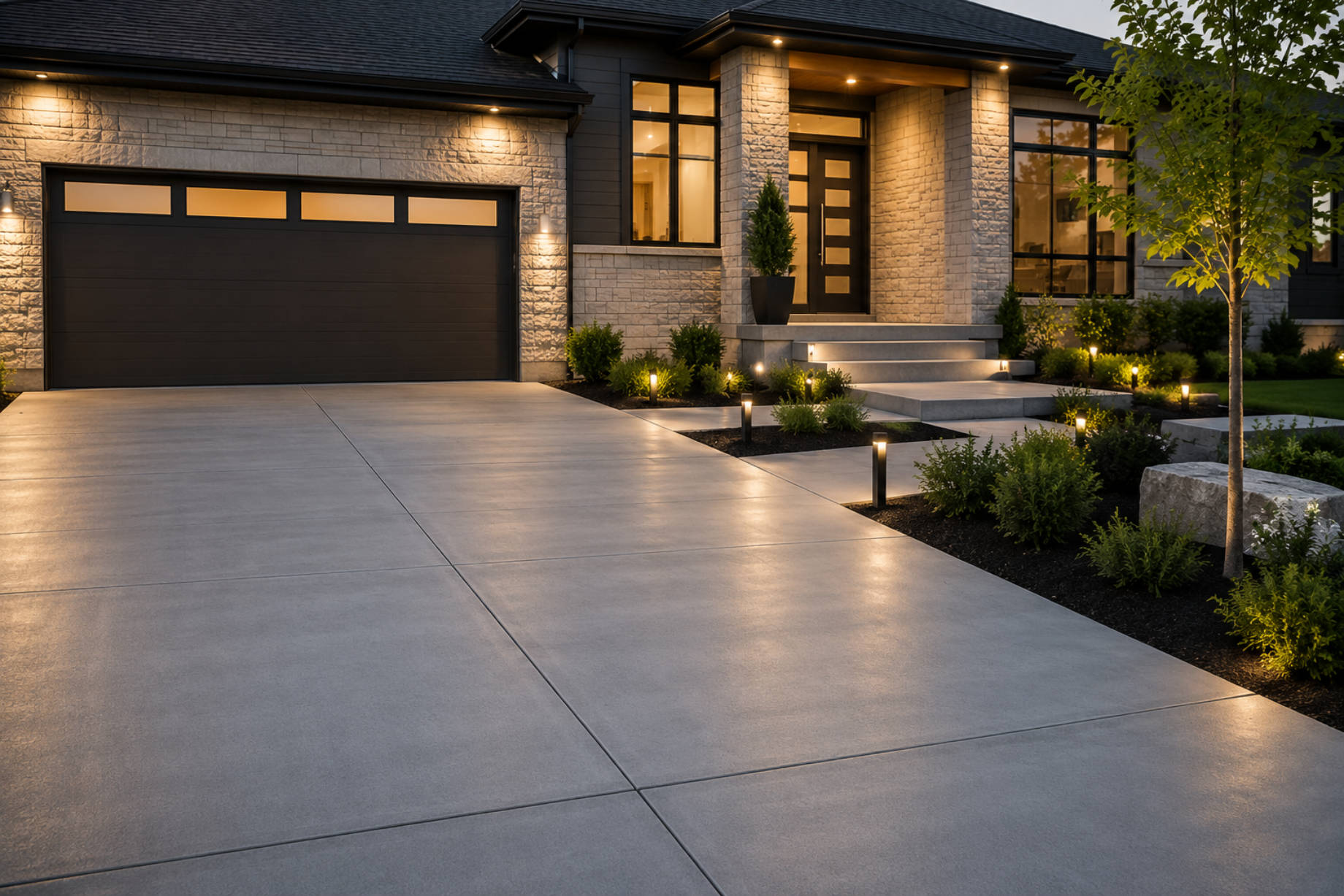
In real estate, the eye reaches the ground before anyone notices the architecture. A cracked driveway, a stained walkway or a patched parking area shapes a visitor’s impression long before they reach the front door. Concrete is one of the most visible surfaces on any property, and one of the most consistently underestimated when owners think about value.
First Impressions Begin at the Curb
Buyers and tenants form an opinion in seconds, and much of it is decided outside. Clean, level, well-finished hardscape signals that a property has been cared for. Surfaces that are spalling, uneven or discoloured suggest deferred maintenance, and that doubt quietly spreads to everything behind them. For both residential and commercial sites, the approach, the driveway and the parking area do more for perceived value than most interior upgrades of the same cost. It is the rare improvement that works on every visitor automatically, without a single word of explanation, and it sets the tone for the walkthrough that follows.
Concrete is a Long-Term Asset, not a Quick Pour
Done well, concrete lasts for decades with very little attention. Done poorly, it becomes a recurring expense and a liability. The difference is rarely visible on day one, which is exactly why it is so easy to get wrong, and so costly to discover later.
Where Quality Shows
A durable slab starts below the surface. Proper sub-base preparation, correct thickness, well-placed control joints and real attention to drainage are what keep a surface flat and crack-free through years of load and weather. These are the steps that do not photograph well, and they are the first to be cut by the lowest bid.
Where Shortcuts Cost
Skip the base work and the result is predictable: cracking, settlement, pooling water and trip hazards that turn into liability claims. By the time the damage shows, the cheap pour has already become the expensive one, and the only real fix is removal and replacement at full price.
The Commercial Angle
For commercial property in particular, the ground plane carries weight far beyond appearance. Parking areas and walkways affect tenant satisfaction, accessibility compliance and, ultimately, valuation. Owners who treat hardscape as part of the asset, and who invest in professional concrete paving rather than the cheapest available crew, protect both the surface and the numbers that depend on it. A well-built lot or plaza holds its value and rarely interrupts operations; a failing one drags down everything around it and tends to fail at the worst possible moment, during a sale, a lease renewal or a busy season.
A Surface Worth Getting Right
Concrete is easy to ignore precisely because, when it is done right, no one thinks about it. It demands attention only when it fails, and by then the cost has multiplied. Treating it as a deliberate part of a property’s value, rather than a line item to minimise, is one of the simplest ways to protect curb appeal, reduce liability and hold a property’s worth over time. The owners who get this right are rarely the ones explaining a cracked entrance to a prospective buyer.
