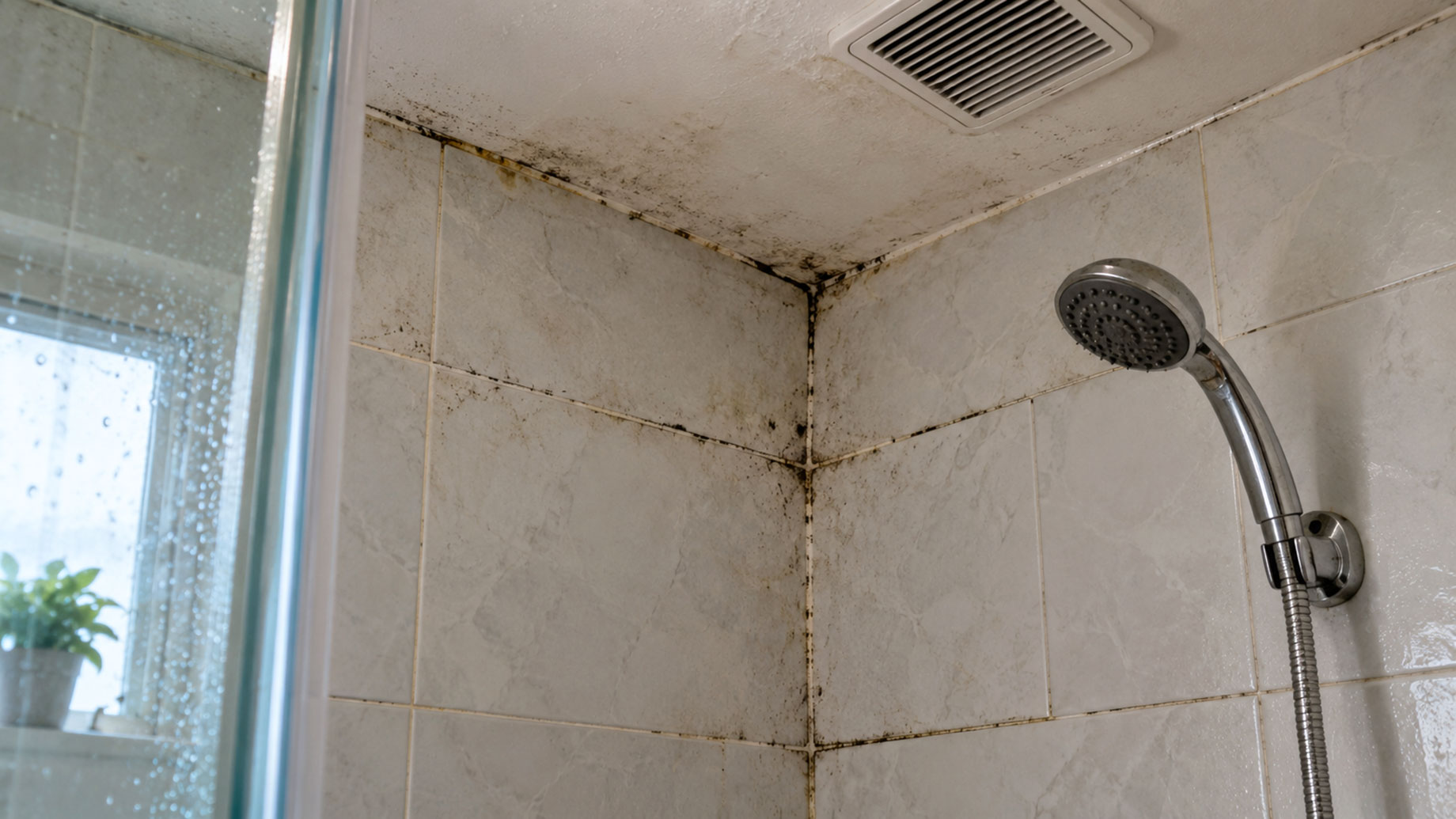
Contamination is predictable in its locations even when it seems to appear at random. Growth follows moisture, and moisture concentrates in the same handful of places in nearly every building, which is why the calls that reach Pure Home cluster around a short list of areas rather than spreading evenly through a house. Knowing which spaces carry the highest risk shortens the search considerably when a musty odor appears without an obvious source, and it helps a property owner decide when a professional assessment is warranted rather than waiting for visible damage.
Bathrooms and Rooms with Constant Water Use
Bathrooms combine everything growth requires: repeated humidity, warm surfaces, and materials that hold water. Failed grout and caulk let moisture pass behind tile where it soaks the substrate invisibly, while an exhaust fan venting into an attic instead of outdoors simply relocates the problem. Growth commonly starts behind the shower surround, beneath vinyl flooring, and inside the wall cavity around a toilet flange or supply line. Visible ceiling spotting above a shower usually signals that the cavity behind the wall has been wet considerably longer than the surface suggests.
Basements and Areas After Water Intrusion
Below-grade space sits against soil that stays damp long after rainfall ends, and Georgia clay retains water and pushes it through foundation walls and floor slabs by hydrostatic pressure. When a storm, a failed sump, or a burst supply line floods a lower level, the response window is short, and water damage repair by Pure Home addresses both the standing moisture and the contamination that follows within days if the material is left wet. Finished basements hide the results behind framing and drywall until the odor becomes noticeable, so the drying and the removal are handled together rather than in sequence.
Crawl Spaces Beneath the Floor Structure
Crawl spaces produce more contamination complaints in Georgia than any other area of a house. Bare earth releases moisture continuously, vented designs pull humid summer air across cool surfaces where it condenses, and the resulting conditions saturate joists, subflooring, and insulation out of sight. Air moves upward through the floor assembly, so contamination below affects the air quality of the living space above. Left unaddressed, the same moisture weakens framing, causes floors to sag, and creates conditions that attract wood destroying insects.
Attics and Roof Assemblies
Attic contamination usually traces to roof leaks or to ventilation that never worked as designed. A slow leak around flashing, a roof vent, or a chimney can wet sheathing for months before staining appears on a ceiling below. Blocked soffit vents trap warm moist air against cold sheathing in winter, producing condensation that spreads across the underside of the roof deck and saturates the insulation resting on the ceiling below. Bathroom exhaust fans and dryer ducts terminating inside the attic add concentrated moisture directly into a space with limited air exchange.
Kitchens, Laundry Areas, and HVAC Systems
Kitchens hide slow leaks under sinks and behind dishwashers and refrigerator water lines, where cabinet bases absorb moisture and stay wet in enclosed dark conditions. Laundry areas contribute supply hose failures and drain overflows, often behind machines nobody moves for years. Air handling equipment deserves separate attention because it distributes rather than contains: standing water in a clogged condensate pan, wet insulation inside ductwork, or a saturated filter turns the system into a delivery mechanism, seeding spores into every room it serves.
Conclusion
Every one of these areas shares the same underlying pattern of moisture that persists and air that moves too little to dry it. Below-grade spaces and roof assemblies account for the largest scopes because problems there develop unobserved for the longest time, while plumbing-driven growth in bathrooms and kitchens tends to be caught earlier. Periodic inspection of the spaces nobody enters routinely, paired with prompt attention to any water event, prevents the majority of these situations from ever reaching the point of major structural work.
