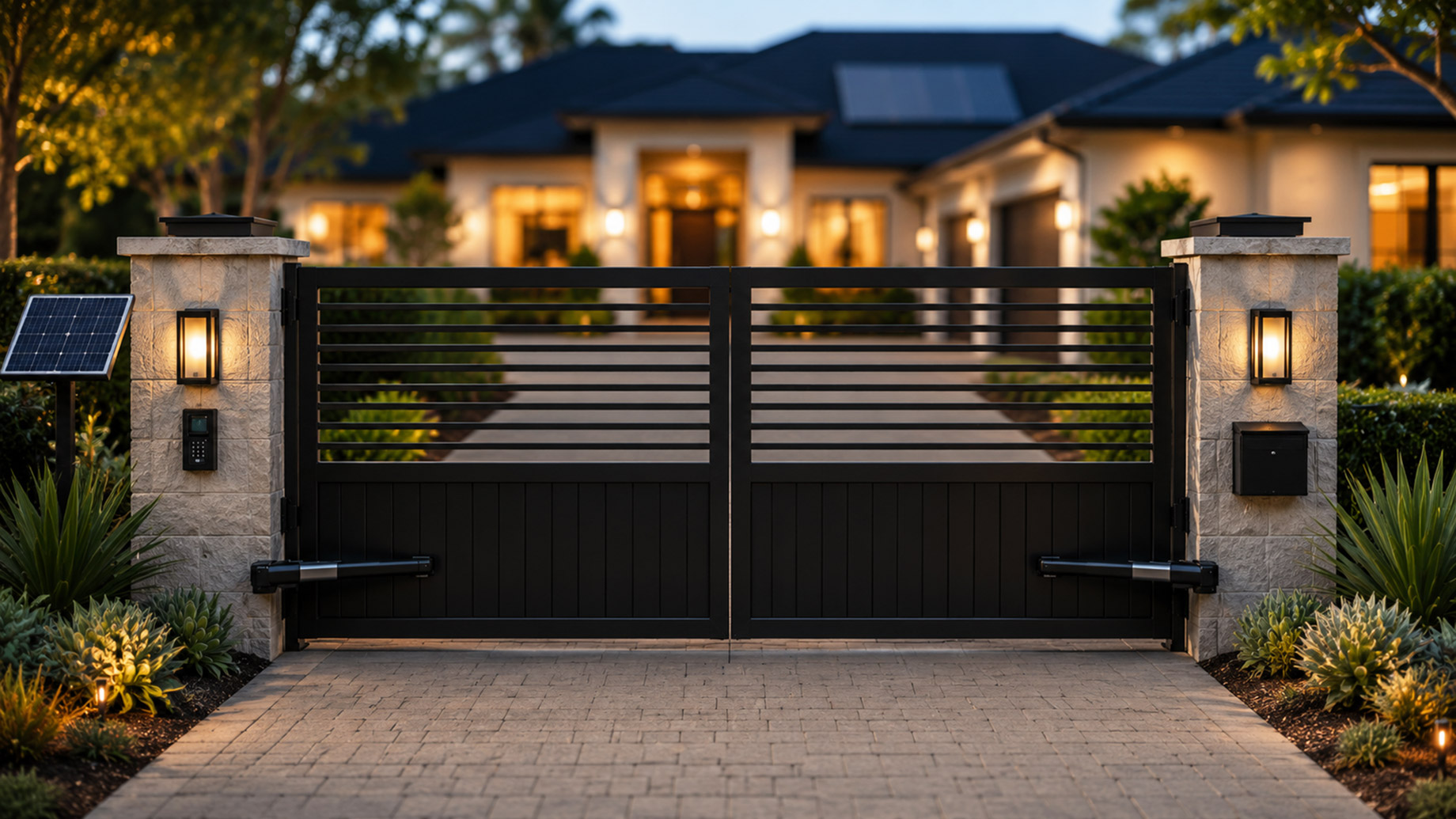
When we talk about green building, the conversation usually starts indoors: insulation, HVAC efficiency, low-flow fixtures, responsibly sourced lumber. The entrance to a property rarely gets the same attention. Yet the driveway and the gate that frames it are permanent, high-visibility parts of a home, and the choices you make there have a real effect on longevity, energy use, and how well the whole site works over time.
A driveway gate is not just a security feature or a status symbol. Done thoughtfully, it can be one of the more durable and low-impact elements on the property. Done cheaply, it becomes something you replace every few years, which is the opposite of sustainable. Here is how to think about an entrance the same way you would think about the rest of a green build.
Longevity is the most underrated form of sustainability
The greenest product is often the one you never have to replace. A gate is exposed to sun, wind, rain, and daily mechanical cycling, so material choice determines whether it lasts five years or thirty.
Powder-coated steel and wrought iron are workhorses. They resist warping, hold their finish for decades with minimal upkeep, and can be repaired rather than discarded when a hinge or a panel is damaged. Responsibly sourced or reclaimed wood can also be an excellent choice when it is properly sealed and paired with a steel frame for structural support, giving you natural warmth without the short lifespan of a thin, untreated gate.
The point is not to chase a single eco material. It is to build something once, build it well, and keep it in service. A gate that lasts thirty years and can be refinished instead of replaced keeps a surprising amount of metal, wood, and hardware out of the landfill over the life of a home.
Solar power turns the opener into a low-impact system
The moving part of any entrance is the operator, and this is where energy use quietly adds up. A trenched, hardwired opener means digging, conduit, and a permanent draw on the grid. For many properties, especially those with long or remote driveways, a solar-powered gate operator is a cleaner and simpler answer.
A small solar panel and battery can run a residential gate through its daily cycles without a single foot of trenching. That means less site disturbance during installation, no added load on the home’s electrical panel, and a system that keeps working during a power outage. For a homeowner already thinking about rooftop solar or battery storage, an off-grid gate fits naturally into that mindset.
Even on a wired system, modern low-voltage operators and LED entry lighting draw very little. Choosing efficient components at the entrance is a small decision that compounds over years of daily use.
The gate is part of the site, not an afterthought
Green building rewards planning, and an entrance is no different. The best results come when the gate is considered alongside grading, drainage, and landscaping rather than bolted on at the end. A few site-level ideas worth raising with your builder or contractor:
- Pair the gate with a permeable or partially permeable driveway surface so stormwater soaks in rather than running off. The gate and its support posts should sit where they will not interfere with that drainage.
- Position keypads and intercoms so a vehicle can pull off the road while the gate opens, which keeps traffic moving and reduces idling at the entrance.
- Use native or drought-tolerant planting around the columns and fence returns so the entrance looks finished without a thirsty landscape.
- Confirm setbacks, sight-line triangles, and permit requirements early. Every municipality treats fence and gate height near the road differently, and designing to the local code from the start avoids rework and wasted material later.
These are the same habits that make the rest of a green project run smoothly. Measure twice, integrate with the site, and build for the long term.
Convenience that also reduces waste
Smart access control is usually sold on convenience, but it has a quiet efficiency benefit too. A video intercom and app-based entry let a homeowner admit a delivery, a guest, or a service tech without driving to the gate or leaving it open. Fewer trips down a long driveway and fewer gates left standing open add up, especially on larger rural lots.
For homeowners who want the full package, this is where design, durability, and automation come together. Working with an experienced installer who handles custom fabrication as well as the electronics means the gate, the opener, and the access control are matched to each other and to the property. If you are exploring options, it is worth looking at how a company approaches automatic driveway gates from design through automation, so the finished entrance is built as one system rather than a collection of parts.
What to ask before you buy
If you are specifying a gate for a new build or a renovation, a few questions will steer you toward the sustainable choice:
- What is the expected service life of this material and finish, and can it be repaired?
- Is a solar operator practical for this driveway, and what would it save in trenching and grid load?
- How will the gate interact with the driveway surface, drainage, and landscaping?
- Does the design meet the local height and setback rules for the road frontage?
- Can the fabrication and the automation come from the same team so nothing is mismatched?
Answer those honestly and you end up with an entrance that looks the part, works reliably, and does not need to be torn out and rebuilt in a few years.
A greener first impression
An automatic driveway gate will never be the headline of a green home the way a heat pump or a solar array might be. But it is a permanent, visible element that either supports the project’s values or quietly undermines them. Choose durable materials, power it efficiently, integrate it with the site, and it becomes one more part of the home that was built to last. That, more than any single eco label, is what sustainable building is really about.
Roei is the owner of Automatic Gate Masters & Garage Doors, a licensed California gate contractor (CA License #1060180) serving the San Francisco Bay Area. The team designs, fabricates, and installs custom driveway gates, openers, and access control, with a focus on building entrances that last.
