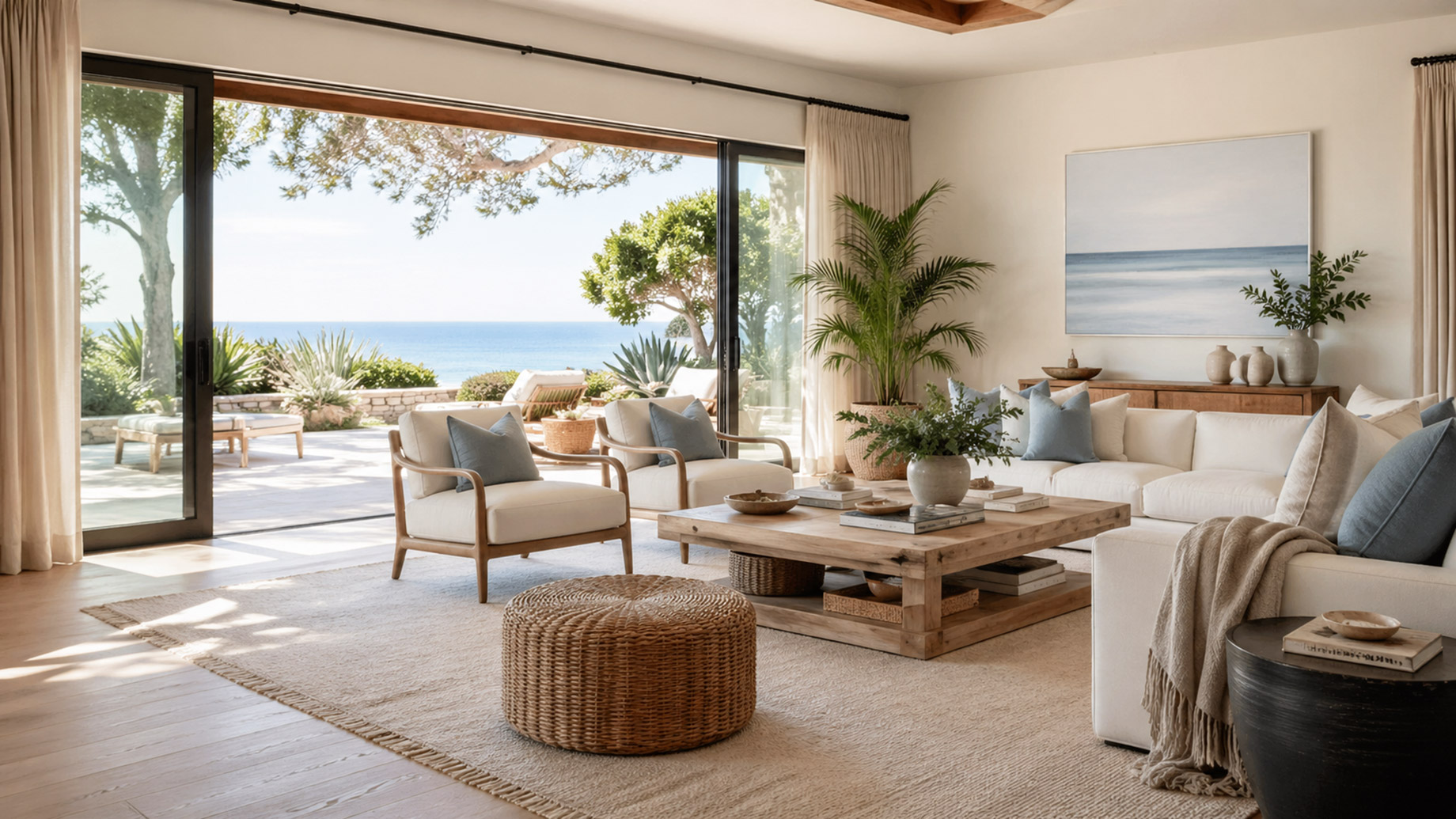
Open-air interiors tend to feel easier to inhabit. They suggest movement, light, texture, and a stronger connection to the world outside, even when the space itself is fully enclosed. Bringing that energy indoors is less about copying coastal or outdoor themes literally and more about shaping an interior that feels breathable, relaxed, and visually expansive.
Let Natural Movement Shape the Room
Open-air energy often begins with the sense that a room can breathe. That means avoiding layouts that feel too rigid or overfilled, and instead allowing furniture, sightlines, and decorative elements to guide the eye naturally from one area to the next. Spaces that feel open are usually built on restraint, where each piece has room to register without competing for attention.
Visual references can help reinforce that feeling when they are chosen with care. Artwork inspired by water, horizon lines, sailing forms, or weathered textures can introduce a more relaxed atmosphere without overwhelming the interior. In that context, nautical canvas art prints can work well because they bring in motion, scale, and an outdoor sensibility that supports the wider mood of the room rather than dictating it.
Use Light as a Design Material
A space rarely feels open-air if it looks visually heavy. Light, both natural and artificial, plays a central role in softening the room and giving surfaces a more lifted quality. Sheer window treatments, reflective finishes, and thoughtful lamp placement can all help distribute light more evenly, which makes the room feel less enclosed.
This is also where material choice matters. Matte walls, pale timber, linen, glass, and softly textured ceramics tend to respond well to changing light throughout the day. They create a subtle sense of variation, which is important because outdoor environments never feel static. A room that changes gently with the light feels more alive.
Keep the Colour Palette Airy and Grounded
Colour has a direct effect on whether a room feels enclosed or expansive. Open-air interiors usually rely on shades that reflect the landscape rather than dominate it. Soft whites, sand tones, muted blues, sun-faded greens, and warm neutrals tend to create a calmer backdrop that feels open without becoming bland.
The key is balance. Too much bright contrast can make a space feel fragmented, while an overly flat palette can feel lifeless. Bringing in tonal variation through upholstery, art, joinery, and smaller decorative pieces helps the room feel layered in the same way an outdoor environment is layered, with shifts in tone that feel natural rather than staged.
Bring in Textures That Feel Weathered and Real
Outdoor spaces are appealing partly because they are layered with texture. Stone, timber, woven fibres, sanded finishes, and aged metals all carry a sense of exposure and time that polished interiors sometimes lack. Bringing open-air energy inside often means introducing materials that feel grounded rather than overly perfected.
That does not require a rustic scheme. Even in a more refined interior, textured finishes can stop the room from feeling sealed off or overly controlled. A woven rug, limewashed surface, raw timber console, or finishes influenced by wabi-sabi can add the kind of visual depth that makes an interior feel more connected to natural surroundings.
Avoid Overstyling the Space
One of the fastest ways to lose open-air energy is to overdecorate. Rooms that feel fresh and outward-looking usually leave space for quiet surfaces, clean transitions, and a few well-judged focal points. This does not mean minimalism for its own sake. It means editing with intention so the room retains clarity.
That approach is especially useful in both residential and commercial interiors, where too many decorative gestures can make the environment feel closed in. A carefully placed artwork, a generous plant, or a strong textured material often does more than a crowded collection of unrelated accessories. Open-air energy depends on ease, and ease is difficult to achieve in a room that is trying to say too much at once.
Where Indoor Calm Meets Outdoor Spirit
Bringing open-air energy into interior spaces is really about atmosphere. When light feels soft, textures feel natural, colours feel lifted, and the room has space to breathe, the interior begins to carry the same ease people associate with the outdoors. The result is not a themed space, but one that feels more expansive, settled, and naturally alive.
