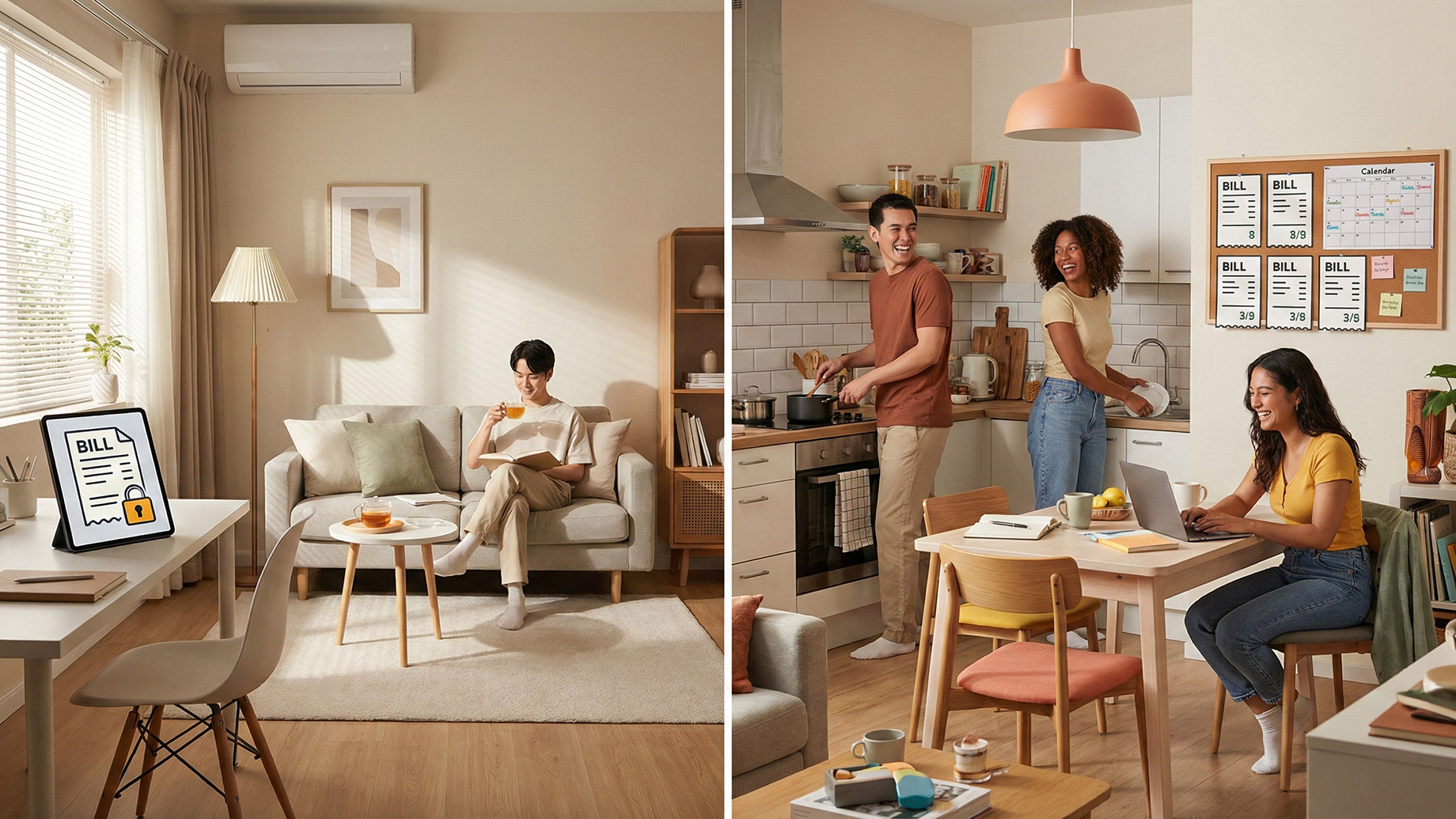
Deciding where to live involves more than picking a neighborhood. One of the biggest forks in the road is choosing between renting a place entirely for yourself or sharing a space with roommates.
Both options come with distinct flavors, and the right choice depends heavily on your personality, finances, and what you prioritize when you walk through the front door at the end of the day.
Cost and Budget Considerations
Money is usually the loudest voice in the room when making rental decisions. Sharing an apartment almost always wins on pure affordability. You split rent, utilities, internet, and even household supplies like cleaning products and toilet paper.
This shared burden often allows you to live in a nicer area or a larger unit than you could afford alone. On the other hand, renting a private unit means you shoulder 100% of the financial weight. Every electric bill, internet subscription, and rent check comes directly from your bank account.
While this is more expensive, it also eliminates the stress of chasing roommates for their portion of the bills or worrying about someone else’s financial stability affecting your housing situation.
Space and Accommodation
When you opt for a shared rental, you often gain access to a larger common area. A three-bedroom apartment usually comes with a spacious living room and a full-sized kitchen that you might not get in a studio or one-bedroom unit. You get more square footage overall, even if your personal territory is smaller.
If you are looking at private apartment rentals in Korea (프라이빗 아파트 임대) or other dense urban areas, you might find that solitary living means accepting a compact footprint. Studios and efficiency units prioritize function over sprawling space.
However, every inch of that space is yours to utilize exactly how you see fit, without negotiating for shelf space in the refrigerator or cabinet space for your mugs.
Lease Terms and Flexibility
Private rentals typically involve a standard one-year lease directly between you and the landlord. You are the sole responsible party. If you need to break the lease, the penalties fall squarely on you, but you also don’t have to worry about a roommate moving out unexpectedly and leaving you in the lurch.
Shared arrangements can be more fluid but also more complex. You might be signing a joint lease where everyone is liable for the total rent, meaning if one person bails, the others must cover the difference.
Conversely, subletting a room in a shared house often offers more month-to-month flexibility, which is great for those who aren’t ready to commit to a long-term contract.
Amenities and Facilities
High-end shared apartments often come with perks that might be out of reach for a solo renter. Splitting the cost might grant you access to a building with a gym, a pool, or a concierge service. The combined budget of two or three people opens doors to luxury complexes that a single income might not support.
Solo renters often have to prioritize essential amenities over luxuries to keep costs down. You might trade a building gym for a nearby membership or a doorman for a secure key fob system. The trade-off is that you never have to wait for a turn to use the washing machine or coordinate who gets to use the TV on Sunday night.
Community and Social Aspects
Loneliness is a real factor to consider. Shared apartments provide built-in socialization. You have people to chat with after work, share meals with, or watch movies alongside. It can be incredibly comforting to have a presence in the house, especially if you are new to a city and looking to build a social circle.
Living alone requires more effort to maintain a social life. You have to make plans to see people, rather than just walking into the kitchen. However, this also means your home is a sanctuary. You host on your terms and recharge in solitude, which is vital for introverts who need quiet to function at their best.
