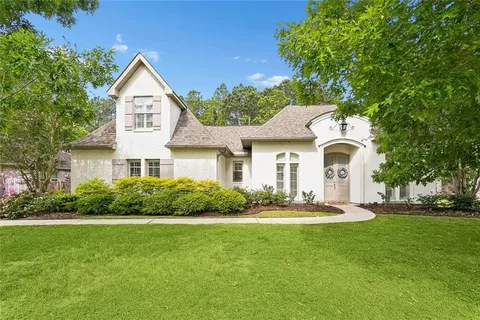
Walk through the listings of any major luxury market, Beverly Hills, Aspen, the Cote d’Azur, Knightsbridge, and a pattern emerges that rarely makes it into the property description. A significant share of these estates are owned outright, purchased years or decades ago, and appreciated substantially since. What happens next, once an owner is sitting on tens of millions in equity inside a single trophy property, has quietly become one of the more interesting financial questions in global real estate.
For a growing number of ultra-high-net-worth owners and the family offices that advise them, the answer is not to sell. It is to borrow against the asset, unlocking the capital tied up inside it while keeping the property, its future appreciation, and the lifestyle it represents fully intact. Specialist lenders such as Global Mortgage Group (GMG) have built their platforms around exactly this need, serving internationally mobile owners whose wealth sits across multiple countries and whose properties represent far more capital than a conventional bank is willing, or able, to lend against.
Why the World’s Wealthiest Rarely Sell to Raise Capital
The instinct to sell a valuable asset when capital is needed is a natural one. For owners of trophy real estate, it is often also the least efficient option available. A sale of a $15 million estate can trigger a substantial capital gains liability, transaction costs, and in the case of foreign owners, withholding requirements applied before any proceeds are even released. Beyond the tax cost, a sale is permanent. An estate in a market like Aspen or the south of France, held for decades and appreciated well beyond its purchase price, cannot simply be replaced with a comparable asset once it is gone.
Sophisticated owners and their advisors have increasingly reframed the question. Rather than asking whether to sell, the more useful question has become how to access the equity inside a property without giving up the asset that created it. For a family office managing real estate across several jurisdictions, that shift in thinking has become as much a part of portfolio management as the original acquisition strategy.
An American Family’s Estate, and the International Buyer’s Problem
This dynamic plays out distinctly depending on where an owner lives relative to where the property sits. An American family with a generational estate in Nantucket or the Hamptons faces one set of considerations. An international owner, someone who purchased a trophy property in the United States, the United Kingdom, or Australia while living and earning elsewhere, faces a considerably steeper one.
Conventional mortgage lending was built around a borrower with domestic income, a local credit history, and tax filings that match the country where the property sits. International owners of trophy real estate rarely fit that description, regardless of how substantial their global net worth actually is. It is entirely possible for an owner with a nine-figure net worth spread across multiple countries to be declined by a domestic bank simply because their documentation was never designed to be read by a conventional underwriting model. The property itself performs beautifully. The paperwork simply does not translate.
How Equity Extraction Actually Works
The mechanism sophisticated owners increasingly rely on is asset-backed lending, structured facilities underwritten primarily on the value of the property itself and the owner’s broader financial picture, rather than on domestic income documentation. These are not retail mortgage products. They are bespoke instruments built for owners whose wealth is genuinely international, held through trusts, holding companies, or family office structures that a conventional lender is simply not equipped to evaluate.
Typical structures offer loan-to-value ratios in the 65 to 80 percent range, terms of one to three years, and interest-only repayment that avoids straining cash flow during the facility term. Execution timelines of two to four weeks are increasingly standard among specialist lenders, a marked contrast to the months a conventional private bank might require to move through the same request. For an owner who needs to act quickly, whether to fund a new acquisition, support a business need, or manage an estate planning objective, that speed differential is often the deciding factor.
This is precisely the gap Global Bridging Loans are designed to close. Rather than forcing an international owner’s file through a domestic mortgage process built for someone else entirely, these facilities are structured around the property and the owner’s actual financial position, reaching a class of borrower that conventional lenders routinely turn away despite substantial, verifiable wealth.
For owners managing multiple properties across several jurisdictions, the appeal often extends beyond a single transaction. Rather than negotiating separately with lenders in each market where they hold real estate, the ability to consolidate a liquidity need under a single cross-border facility simplifies what could otherwise become a fragmented, time-consuming process spread across several banking relationships.
The Capital Behind the Strategy
What has made this kind of financing more accessible in recent years is the sheer growth of private credit as an institutional asset class. A segment of alternative finance that was relatively niche not long ago has expanded into a multi-trillion-dollar global market, and that scale has created the depth of capital needed to fund large, cross-border, asset-backed lending at the size and speed that owners of trophy real estate require. Private credit now underpins much of the institutional bridge financing being arranged against luxury residential, commercial, and hospitality assets in gateway cities worldwide.
For owners of the world’s most valuable estates, and the advisors who manage that wealth on their behalf, the calculation has become increasingly clear. A sale is a one-time, tax-generating, value-destroying event. Borrowing against the asset, structured correctly, keeps the property in the family, keeps its future appreciation intact, and frees the capital already built into it to work somewhere else. As more owners and family offices come to treat this as routine portfolio management rather than an exotic alternative, the quiet financial strategy behind the world’s most valuable estates is likely to become considerably less quiet.