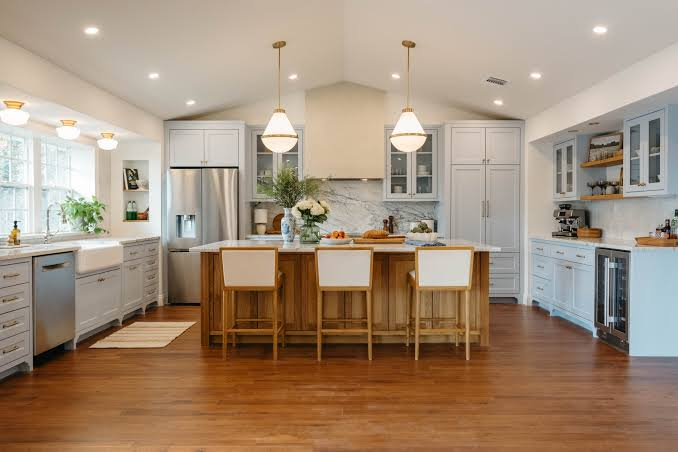
The kitchen is one of the hardest-working rooms in the home. It is used for cooking, eating, making drinks, helping with homework, hosting guests and sometimes working from a laptop at the island or dining table. Because of this, one single ceiling light is rarely enough.
Good kitchen lighting is not just about making the room bright. It is about creating the right light for different moments of the day. A kitchen needs clear task lighting for preparation, general lighting for everyday use and softer lighting for evenings. This is where layered lighting makes a big difference.
Why One Light Usually Is Not Enough
Many older kitchens rely on one central ceiling light. While this may brighten the room overall, it often leaves shadows in the places where light is needed most.
If the main light is behind you while you chop food, wash dishes or cook at the hob, your own body can block the light and create shadows across the worktop. This can make the kitchen less practical and, in some cases, less safe.
A single bright light can also feel too harsh in the evening. The same light that works well when cleaning or cooking may feel cold and uncomfortable when you are having dinner or relaxing with family.
Layered lighting solves this by using different types of light for different purposes.
Start with General Ceiling Lighting
General lighting is the main layer of light in the kitchen. It helps the room feel bright, open and easy to move around in. Ceiling lights, recessed downlights, flush fittings and track lighting can all provide this base layer.
The right choice depends on the size and layout of the kitchen. A small kitchen may only need one well-positioned fitting, while a larger kitchen may need several lights spread across the ceiling.
It is important to think about the whole room, not just the middle of the ceiling. Walkways, cupboard areas, dining spaces and corners all need enough light to feel usable.
For anyone planning a kitchen update, choosing suitable kitchen ceiling lights is a sensible starting point because this layer supports everything else in the room.
Add Task Lighting Where Work Happens
Task lighting is the practical layer. It is used to brighten the areas where specific jobs happen, such as chopping, cooking, reading recipes or washing up.
Under-cabinet lighting is one of the most useful forms of task lighting because it shines directly onto the worktop. This helps remove shadows and makes food preparation easier.
Task lighting may also be useful above the sink, hob, island or coffee station. In some kitchens, pendant lights over an island can provide both task lighting and style, as long as they are positioned correctly.
The aim is to make sure the areas used most often are properly lit, rather than relying on general ceiling light alone.
Use Pendant Lights to Define Key Areas
Pendant lights are popular in kitchens because they add character as well as function. They work especially well over islands, breakfast bars and dining tables.
A row of pendants over an island can help define the space and make it feel more intentional. In an open-plan kitchen, pendants can separate the cooking area from the dining or living area without needing walls.
Height matters. Pendants should usually sit low enough to create atmosphere but high enough that they do not block views or get in the way. The size of the fitting should also suit the scale of the island or table.
Oversized pendants can look impressive in a large space, but they may overwhelm a smaller kitchen. Smaller fittings can work well in groups, especially when spaced evenly.
Think About Evening Lighting
Kitchens are no longer just functional rooms. Many are now social spaces, especially in open-plan homes. This means the lighting needs to work after cooking is finished too.
Softer lighting can make a kitchen feel warmer in the evening. This might come from dimmable ceiling lights, pendants, wall lights, cabinet lighting or small lamps on a shelf or sideboard.
Warm light is usually more relaxing than cool, bright light. If the kitchen is used for dining or entertaining, warmer tones can help the room feel less clinical and more inviting.
Dimmers are especially useful because they allow the same lights to feel practical during the day and softer at night.
Avoid Shadows on Worktops
A common kitchen lighting mistake is placing lights in positions that create shadows. This often happens when downlights are installed in a neat grid without considering where people will stand.
If lights are placed behind the person using the worktop, the work surface may end up darker than expected. This is why lighting should be planned around the layout of the kitchen, including cupboards, appliances, islands and preparation areas.
Before finalising light positions, it helps to imagine where people will stand when cooking, washing up or serving food. The best lighting plan supports those real movements.
Match the Lighting to the Kitchen Style
Lighting also affects the overall design of the kitchen. Sleek integrated LEDs may suit a modern kitchen, while warmer pendants or softer flush fittings may work better in a traditional space.
The finish of the fittings can also tie the room together. Black, brass, chrome, bronze and glass can all create different effects. The lighting should complement handles, taps, appliances and other details without making the room feel too busy.
Good lighting should feel like part of the design, not something added at the end.
Final Thoughts
Layered kitchen lighting makes a room more practical, comfortable and flexible. General ceiling lights help brighten the whole space, task lighting supports cooking and preparation, while pendants and softer evening lighting create atmosphere.
The best kitchen lighting plans are based on how the room is actually used. By thinking about cooking, dining, cleaning, relaxing and socialising, homeowners can create a kitchen that works well at every time of day.