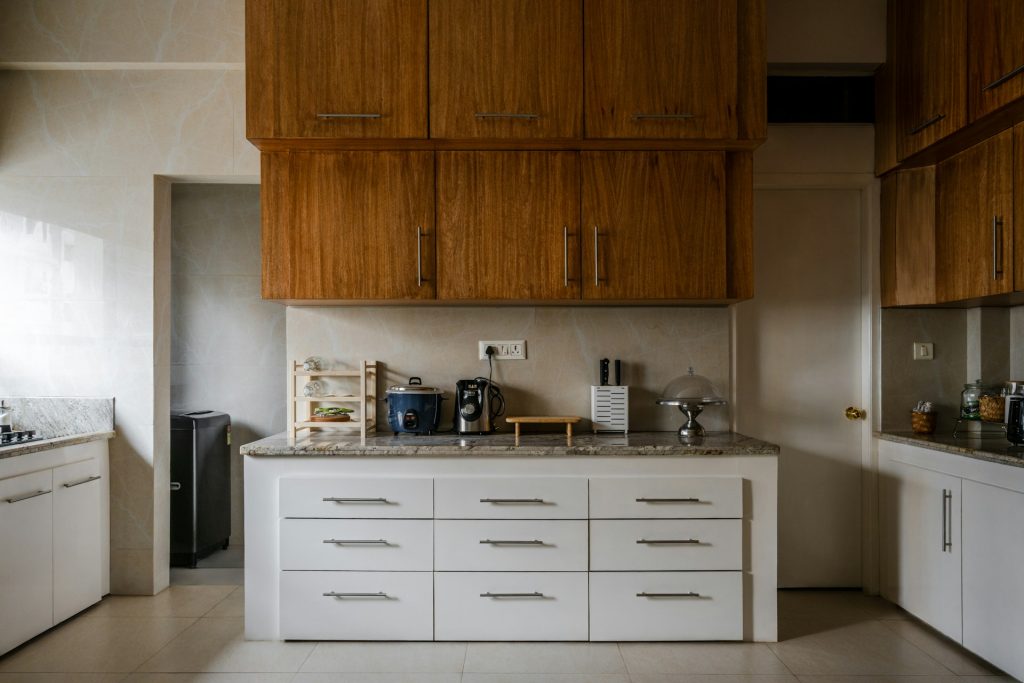
The kitchen is the room that gets looked at the most, used the most, and judged the most by the people who live in it and the guests who visit. And within the kitchen, nothing shapes the overall impression of the space more directly than the cabinet doors. They cover the majority of the visible wall surface, they establish the visual language of the room, and they are the element you interact with more than any other fixed feature in the kitchen.
Getting them right matters more than most homeowners realize, and getting them wrong is surprisingly easy to do.
The Decision Is More Nuanced Than It Looks
Walk into any kitchen showroom and the cabinet door selection will feel manageable. A few popular styles, a handful of wood options, some painted choices. The decision seems straightforward until you are actually living with the result and noticing that the doors feel slightly off in a way you cannot quite articulate.
That feeling usually comes from one of a few sources. The style might be slightly wrong for the aesthetic of the rest of the space. The wood species might be fighting the countertop rather than complementing it. The finish might be technically correct but not quite right for the light in the room. These are the kinds of details that experienced designers catch immediately and that most homeowners only notice after installation, when the opportunity to change them easily has passed.
Understanding what actually drives these decisions produces better outcomes than approaching the selection as a style preference exercise.
The Case for Custom Over Stock
Stock cabinet doors exist in standard sizes that may or may not align with the openings in your existing cabinet boxes. When they do not, the result is gaps or overlaps that compromise the finished appearance of the kitchen regardless of how well-chosen the door style itself was.
Custom-made kitchen cabinet doors are manufactured to the exact dimensions of the openings they are made for, which eliminates the fitting compromise entirely. Cabinet Doors produces custom kitchen cabinet doors to order across more than 22 material choices, spanning 10 wood species and 12 painted finish options, with factory direct pricing that makes custom manufacturing significantly more accessible than most homeowners expect. The quality of a door made to order for a specific opening is consistently higher than a stock door adjusted to fit, and the result reflects the difference.
Style as a Framework, Not a Destination
Cabinet door styles are not interchangeable. Each one carries a specific set of aesthetic associations that either reinforce or contradict the design direction of the kitchen around it.
Shaker doors are the most versatile option available because their fundamental simplicity does not impose a specific aesthetic on the space. They work painted in a farmhouse kitchen, stained in a transitional one, and finished in a muted painted color in a contemporary setting. The clean frame and flat recessed panel provide visual structure without decoration, which is exactly why they work across such a wide range of design directions.
Raised panel doors carry more traditional associations. The sculptural quality of the raised center panel references historical craftsmanship and works naturally in formal, traditional, or period-inspired kitchens. In a contemporary space they can feel heavy and dated, but in the right context they add a level of architectural detail that simpler door styles cannot match.
Slab doors sit at the opposite end of the spectrum. A single flat panel with no frame and no detail, the slab door depends entirely on the quality of the material and the finish to make its impression. In a contemporary or minimalist kitchen where every element is carefully considered, a slab door in a beautiful wood veneer or a flawless painted finish is one of the most refined statements a kitchen can make.
Glass-ready doors introduce transparency into the upper cabinet run, allowing the contents of the cabinet to become part of the visual composition of the kitchen. This works particularly well when the items being displayed are intentional, whether that is glassware, ceramics, or curated collections. The payoff in visual depth and warmth is significant.
Wood Species and What They Actually Do
The wood species is not just an aesthetic decision. It is a practical one that affects how the door responds to finishing, how it holds up over time, and how it interacts with the light in the kitchen.
Maple is the most consistent performer for painted finishes. Its tight, uniform grain does not create texture or pattern variation under paint, which is what you want when the finish itself is the design statement. For stained doors, maple can be tricky because it absorbs stain unevenly, producing a blotchy result without careful preparation.
Red oak’s pronounced, open grain is exactly the quality that makes it work for certain stained applications and challenging for painted ones. The grain remains visible under paint, which can be an interesting texture detail or an unwanted distraction depending on the design intent.
White oak has earned its current popularity honestly. Its straight grain, pale golden tone, and natural elegance translate across both traditional and contemporary aesthetics in a way that feels considered rather than trendy. For homeowners who want a natural wood kitchen that will not feel dated in five years, white oak is one of the safer long-term choices available.
Alder sits between maple and oak in both grain character and warmth, offering a natural wood appearance that is more refined than oak but more characterful than maple. It accepts stain evenly and works well in transitional and warmth-forward kitchen designs.
The Details That Separate Good From Great
Hardware selection, finish consistency, and the reveal between adjacent doors are the details that separate a kitchen that looks professionally designed from one that looks assembled. The gap between doors should be consistent across the entire run. The hardware should complement the door style rather than competing with it. The finish should be even and durable enough to withstand the daily contact that kitchen cabinet doors take.
None of these details are complicated, but all of them require attention that the purchase of the doors alone does not guarantee. A kitchen where the doors, the hardware, and the installation are all considered together looks like a kitchen that was designed. One where any of those elements was treated as an afterthought looks like one that was assembled, and the difference is immediately visible to anyone who walks into the room.