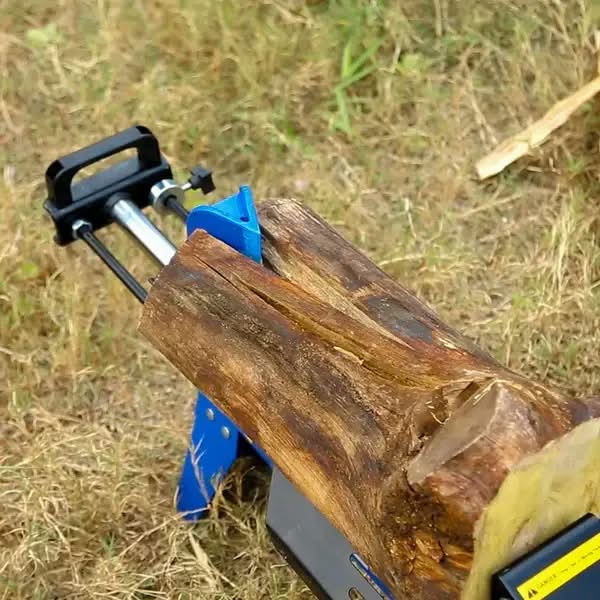
A pile of seasoned maple is one job; fresh oak rounds with knots and crotches are another. If your property regularly produces heavy hardwood, choosing by price or the biggest tonnage decal can leave you with slow cycles, stalled wedges, and a sore back. The right log splitter should match the toughest wood you handle, the volume you process, and the way logs move across your property. Before shopping, measure several large rounds and note their species, moisture condition, and cut length.
Size the Machine for Your Toughest Hardwood
Diameter is only the starting point. Oak, hickory, hard maple, elm, and sweetgum resist a wedge differently because density, knots, and grain patterns vary. Green rounds can also hold together more stubbornly than seasoned, straight-grained firewood. A homeowner splitting clean 12-inch oak does not need the same reserve as a landowner processing 20-inch storm-fallen hickory.
For hardwood that is frequently green or knotty, a heavy-duty gas log splitter in the 30- to 35-ton range provides a useful margin. That reserve helps the ram keep moving when the wedge meets a crotch or twisted grain. Still, confirm maximum log diameter and length; high force does not help if a round will not sit securely on the beam.
Match Hydraulic Speed to Your Workload
Tonnage tells you how much force is available; cycle time tells you how quickly the ram extends and returns. Someone splitting a few fireplace loads can tolerate a slower machine. A homesteader heating a house or a small firewood seller will feel every extra second over hundreds of cycles.
Look for a two-stage hydraulic pump. It moves oil quickly under light resistance, then shifts to high pressure at tough fibers. Pump flow, engine output, and cylinder size should be considered together. For demanding work, the BILT HARD woodsplitter combines 35 tons of rated force with a 10 HP 306cc four-stroke engine, an 18 GPM pump, and a stated 15-second cycle. That setup targets repeated heavy splits rather than occasional kindling.
Reduce Lifting Before Increasing Force
Large hardwood rounds become a handling problem before they reach the wedge. Repeatedly lifting 18- or 20-inch sections onto a horizontal beam slows the job and increases strain, especially for older users, solo operators, or anyone preparing an entire winter’s supply.
Choose a vertical-capable machine or a horizontal splitter with a hydraulic log lift. A lift lets you roll a round onto a low platform and raise it to beam height instead of dead-lifting it. The LOG-X lift is rated for 700 pounds, while its full beam supports the log during the split. Cradles or work tables keep pieces from falling and make resplitting easier. Four- or six-way wedges can reduce passes on straight rounds; switch to a standard wedge when knots make the grain unpredictable.
Choose Mobility for Your Property
Gas power suits woodpiles far from an outlet, storm cleanup across acreage, or crews moving between jobs. A towable frame brings the machine to the logs and reduces tractor or trailer trips with unsplit rounds.
Check the coupler, tire rating, safety chains, ground clearance, total width, and approved towing speed. The LOG-X uses a 2-inch ball coupler and 16-inch DOT-approved tires rated up to 45 mph, but follow local towing rules and the owner’s manual. On rough private lanes, maneuverability and tire clearance may matter more than speed. Confirm that the assembled machine will also fit your storage area.
Budget for Safe, Reliable Ownership
A gas log splitter suits rural homeowners, serious wood burners, property managers, and small firewood operations that need mobility and sustained force. That capability comes with engine oil, fuel, air filter, hydraulic fluid, hose, and filter maintenance. Cold starts and long storage also favor easy service access. Check parts support before comparing prices.
Run the engine outdoors because exhaust can allow carbon monoxide to accumulate in enclosed spaces. Before each session, inspect hoses, fittings, tires, controls, and the wedge; stop if you find a hydraulic leak. Wear eye protection, gloves, sturdy boots, and hearing protection. Only the operator should position a round and use the controls, with helpers outside the work zone until the ram stops.