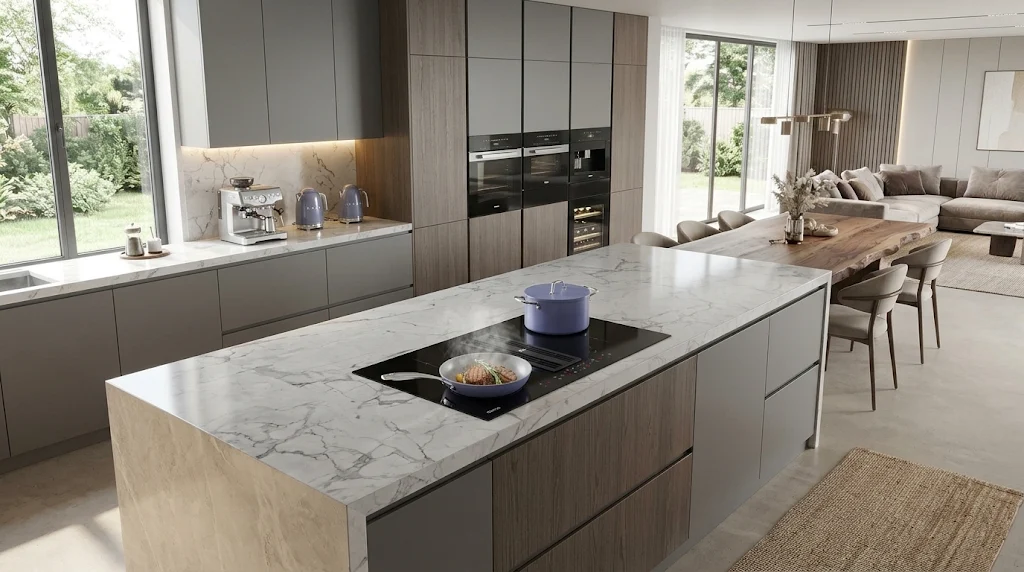
Modern kitchen design is evolving beyond the traditional arrangement of separate appliances, cabinets and work surfaces. Today, homeowners and designers increasingly consider how cooking equipment, ventilation systems, and smart features can work together in a coordinated space. This shift is changing not only the appearance of kitchens but also how they function in everyday life.
Integrated cooking technology lets designers plan different elements around available space, cooking habits, and practical requirements. From extraction systems built into cooking surfaces to connected appliances, these developments are shaping kitchen layouts, interior design decisions, and how people approach kitchen renovations.
The Shift from Traditional Appliances to Integrated Kitchen Design
Traditional kitchens were often designed around individual appliances, with separate spaces allocated for cooking, ventilation and food preparation. While this arrangement remains practical, modern kitchen planning increasingly focuses on how these elements interact. Built-in ovens, induction hobs and concealed extraction systems can create a more coordinated appearance while helping designers make better use of available space.
This approach also changes when homeowners make appliance decisions. Rather than selecting equipment after cabinets and worktops are installed, homeowners can consider appliance dimensions, ventilation requirements, and electrical connections during the initial planning stage. This helps reduce compatibility problems and makes it easier to create a consistent design.
Another important development is the growing popularity of open-plan kitchens. When cooking areas connect directly with dining rooms or living spaces, visual continuity becomes more important. Integrated appliances can help maintain a cleaner appearance without sacrificing everyday functionality.
How Integrated Cooking Technology Is Reshaping Kitchen Layouts
Integrated cooking technology influences more than the appliances themselves. It can affect the positioning of kitchen islands, work surfaces, storage cabinets and preparation areas. Designers increasingly consider how cooking equipment fits into the overall layout rather than treating each appliance as an independent installation.
Kitchen islands provide a useful example. In some contemporary designs, the cooking surface sits within the island, allowing the person preparing meals to stay connected with family members or guests. However, this arrangement requires careful consideration of electrical connections, ventilation routes and available workspace.
The relationship between cooking and storage also matters. Integrated appliances can help create a more organized appearance, but their dimensions and installation requirements must be considered early. Adequate clearance, accessible controls and convenient movement between preparation and cooking areas remain essential.
Ultimately, successful integration is not simply about hiding appliances. It is about creating a kitchen where technology supports the way people use the space.
The Growing Role of Integrated Extraction Systems
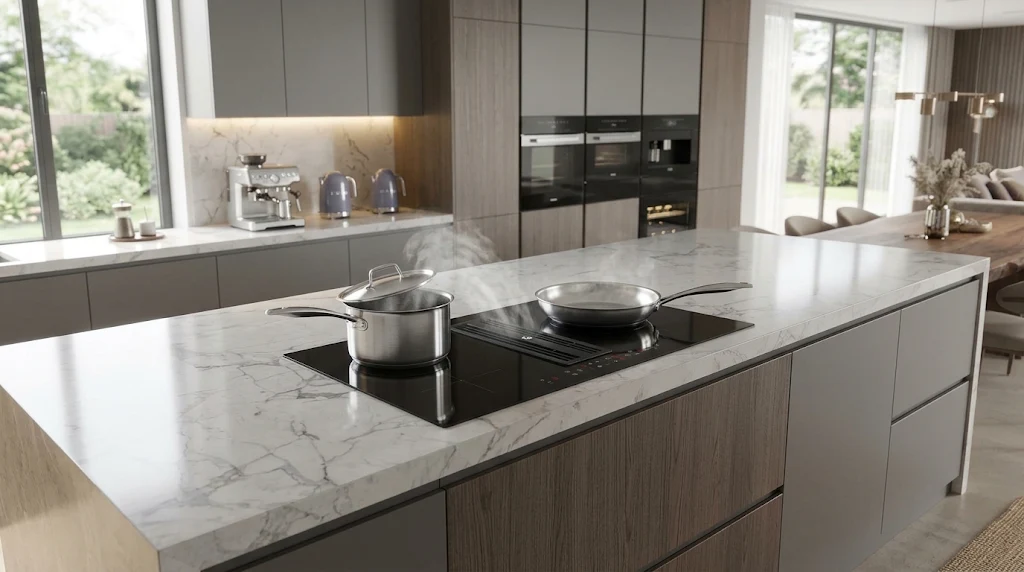
Ventilation has traditionally relied on cooker hoods positioned above cooking surfaces. Although this remains common, integrated extraction systems offer another approach by incorporating ventilation directly into the cooking appliance.
An extractor hob combines a cooking surface with an extraction unit that draws cooking vapors downwards or sideways, depending on its design. This arrangement can reduce the need for a separate overhead hood, potentially creating more flexibility when designing kitchen islands or open-plan spaces.
One advantage is the opportunity to maintain unobstructed sightlines across the kitchen. Without a conventional overhead hood, designers may have greater freedom when planning upper cabinets, lighting and decorative features. However, this does not mean integrated extraction is automatically suitable for every kitchen.
Installation requirements can be more demanding because some systems need space beneath the cooking surface for ductwork, motors or filtration components. Their effectiveness also depends on the appliance design, cooking conditions and correct installation. Homeowners should therefore compare technical specifications rather than choosing a system based on appearance alone.
Why Ventilation Still Matters in Contemporary Kitchen Design
Even as cooking appliances become more integrated, effective ventilation remains essential to kitchen planning. Everyday cooking releases moisture, odors, and airborne grease, while certain cooking methods can also generate fine particles. Without appropriate ventilation, these emissions may affect indoor comfort and contribute to deposits on nearby surfaces.
Two common approaches to handling extracted air are ducted and recirculating ventilation. Ducted systems carry air outside through a suitable duct route, while recirculating systems pass air through filters before returning it to the kitchen. The choice depends on the appliance, installation conditions, and manufacturer’s recommendations.
The following comparison explains how different arrangements influence kitchen design.
| Ventilation arrangement | How it works | Main design consideration |
| Overhead cooker hood | Captures cooking emissions above the hob | Mounting height and overhead space |
| Ducted extraction | Carries extracted air outside | Suitable duct routing |
| Recirculating extraction | Filters air and returns it to the room | Filter maintenance |
| Integrated extractor hob | Combines cooking and extraction in one appliance | Under-counter installation space |
These arrangements are not entirely separate categories. An integrated extractor hob, for example, can operate through either ducted or recirculating extraction, depending on the model.
Good ventilation planning should account for extraction performance, filter requirements, duct configuration and installation clearances. A visually attractive kitchen is not necessarily well ventilated, so practical performance should remain a priority.
Choosing Appliances That Balance Performance and Proportion
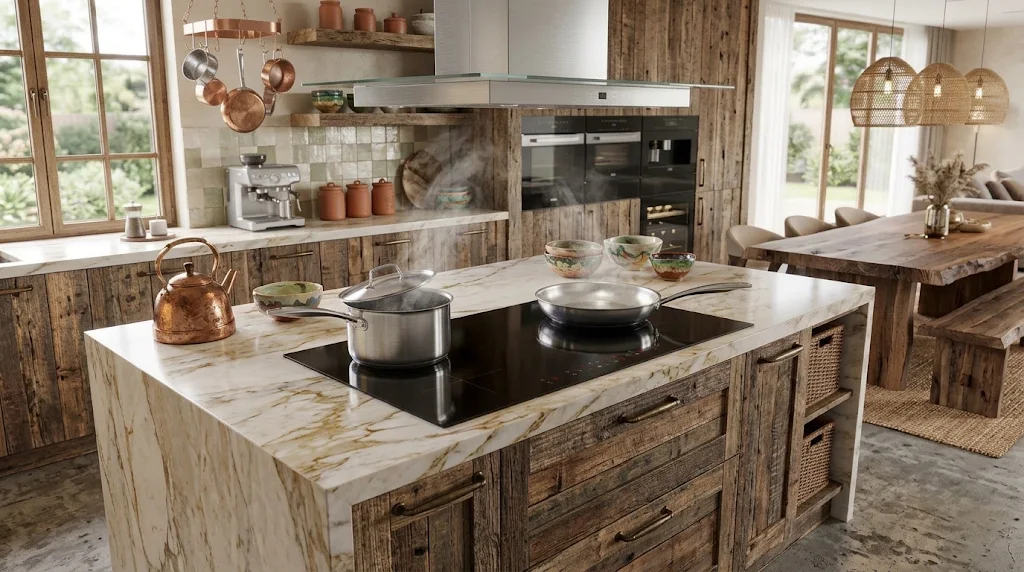
Selecting cooking and ventilation equipment requires more than matching appliance finishes or choosing dimensions that look appropriate. The relationship between the cooking surface, extraction system and available kitchen space can influence both performance and visual balance.
For example, a 90cm cooker hood may suit certain wider cooking surfaces, providing appropriate coverage when installed according to the manufacturer’s recommendations. However, the correct choice depends on the hob’s dimensions, the hood’s design, mounting height and specified extraction requirements.
Homeowners should also consider extraction capacity and noise levels. A system that appears suitable on paper may perform differently depending on duct length, bends, installation quality and the surrounding kitchen environment. Recirculating models require additional filter considerations, while ducted systems need an appropriate route to vent air outdoors.
Appliance proportions matter as well. A large hood may dominate a compact kitchen, while an undersized system may not provide the coverage recommended for the cooking arrangement. Reviewing technical specifications before finalizing cabinetry and worktops helps avoid these problems.
Smart Features, Energy Awareness and Everyday Convenience
Smart technology is becoming another consideration in contemporary kitchen planning. Modern cooking appliances may include touch controls, programmable timers, automatic settings and connectivity features designed to make everyday operation more convenient. Some compatible extraction systems can also adjust their operation in response to cooking activity.
These features can reduce the need for constant manual adjustments, although their usefulness depends on individual cooking habits. For some households, straightforward controls and reliable operation may be more valuable than extensive connectivity or app-based functions.
Energy awareness is also becoming increasingly relevant. Induction cooking, for example, transfers heat directly to compatible cookware through electromagnetic induction. This differs from conventional electric resistance cooking, which first heats a surface or element. However, actual energy consumption depends on cooking duration, appliance efficiency, cookware and usage patterns.
Companies operating in this sector, including CIARRA Appliances, form part of a wider kitchen appliance market responding to changing expectations around integrated cooking and ventilation. The most useful technological developments solve practical problems rather than simply adding more features.
What Homeowners Should Consider Before Choosing Integrated Cooking Technology
Integrated appliances can create attractive and functional kitchens, but they require careful planning. Their installation requirements may differ considerably from those of conventional standalone equipment, particularly when ventilation systems need additional space beneath worktops or inside cabinets.
Before making a decision, homeowners should consider:
- Installation space: Check appliance dimensions, cabinet requirements and required clearances.
- Ventilation arrangements: Confirm whether ducted or recirculating installation is appropriate.
- Electrical requirements: Ensure the available electrical supply meets the manufacturer’s specifications.
- Maintenance access: Consider how filters, motors and other serviceable components can be reached.
- Long-term practicality: Check replacement filter availability, cleaning requirements and repair accessibility.
It is also important to review installation manuals before finalizing the kitchen layout. Some integrated systems may require structural or cabinetry adjustments that are difficult to accommodate after renovation work is complete.
Where electrical connections or ventilation modifications are involved, installation should follow applicable local regulations and be carried out by suitably qualified professionals. Planning these details early can prevent unnecessary changes and improve the kitchen’s long-term usability.
The Future of Modern Kitchen Design
Integrated cooking technology is likely to remain a key influence on contemporary kitchen design as homeowners place greater emphasis on functionality, visual consistency, and convenient operation. Developments in extraction systems, induction cooking and connected appliances are creating more ways to coordinate equipment with the surrounding environment.
However, a successful modern kitchen does not necessarily require the most advanced appliances. The better approach is to select technology that suits the available space, cooking habits and maintenance expectations. Homeowners researching integrated cooking and ventilation options can also explore solutions from established manufacturers such as CIARRA Appliances when considering their kitchen plan
FAQs
These questions are designed to address genuine informational search intent and complement the article without simply repeating its paragraphs.
1. What is integrated cooking technology in modern kitchens?
Integrated cooking technology refers to appliances and systems designed to work together within a coordinated kitchen layout. Examples include built-in ovens, induction hobs, integrated extraction systems and connected cooking appliances. The goal is to improve functionality, make better use of available space, and create a more consistent kitchen design.
2. How does an integrated extractor hob work?
An integrated extractor hob combines a cooking surface with a built-in ventilation unit. Instead of relying entirely on an overhead cooker hood, it draws cooking vapors downwards or sideways through an extraction opening. Depending on the model, the system can use ducted ventilation to carry air outdoors or recirculating filtration to return filtered air to the kitchen.
3. Are extractor hobs suitable for open-plan kitchens?
Extractor hobs can suit open-plan kitchens because they eliminate the need for a conventional overhead hood in some installations. This can preserve sightlines and create more flexibility when designing kitchen islands. However, suitability depends on cooking habits, extraction performance, installation requirements, and the kitchen’s ventilation arrangements.
4. What should you consider when choosing a cooker hood for a modern kitchen?
Consider the cooking surface width, recommended hood coverage, extraction capacity, mounting height, noise levels, and available ducting arrangements. Also check the manufacturer’s installation instructions and filter requirements. Choosing a cooker hood based on appearance or width alone may not provide suitable ventilation performance.
5. Does integrated cooking technology make a kitchen more energy-efficient?
Not automatically. Energy efficiency depends on the appliances selected, their operating characteristics, and how they are used. Induction cooking can transfer heat efficiently to compatible cookware, while suitable ventilation controls may help avoid unnecessary operation. However, integrated design alone does not guarantee lower electricity consumption.