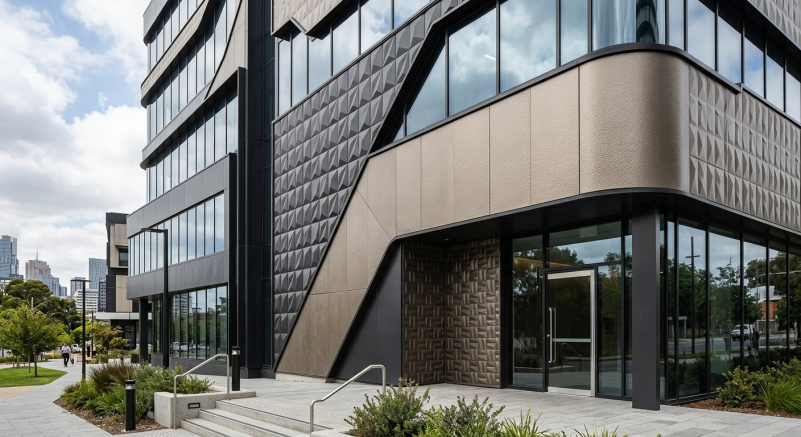
Flat metal cladding has a place in modern construction, but architects increasingly look for surfaces that add depth and visual interest without changing the building envelope’s performance. Embossed steel panels answer that need. These textured metal panels combine a pressed 3D surface with the corrosion resistance, formability and cost efficiency of coated steel, making them a practical choice for contractors and distributors supplying contemporary facade projects.
This article explains how embossing works, why texture matters in current facade design, and what buyers should verify before ordering embossed steel coil or sheet for a residential, commercial or hospitality project.
What Are Embossed Steel Panels?
Embossed steel panels are steel or aluminum sheets and coils that pass through patterned rollers to create a raised or recessed surface texture. Unlike printed or laminated finishes that only change color and appearance, embossing physically reshapes the metal surface — a process sometimes referred to as rigidized metal. The technique is widely used across architectural facade material categories, from appliance panels to full building cladding systems.
These panels can be supplied as plain metal, galvanized or Galvalume substrate, or as prepainted coil where the texture is combined with a color coating.
The Embossing Process: How Texture Is Formed in Metal
Flat steel or aluminum passes between two synchronized rollers, one engraved with the target pattern. Pressure from the rollers transfers the design into the metal surface without reducing the base wall thickness — the steel work-hardens in the process rather than thinning out. The result is patterned steel coil that retains its original mechanical strength while gaining a tactile, three-dimensional finish.
Pattern depth, roller speed and line pressure all affect the final texture. Buyers ordering embossed coil should confirm pattern depth and repeat with their supplier, since deeper textures can affect paint adhesion if the panel is embossed after coating.
Why Texture Matters in Modern Facade Design
Flat, glossy metal panels can appear industrial or repetitive across a large facade. Texture breaks up reflected light, adds shadow lines, and gives a building a more tactile, human-scaled appearance — a factor increasingly cited in facade design trends for both residential and commercial projects. This visual depth is one reason decorative steel panels are now specified for feature walls, lobby cladding and signature entryways rather than only utilitarian applications.
Some recent commercial and office projects have paired opaque textured metal cladding with glass systems for contrast — a combination explored in this piece on aluminum composite panels and glass partitions in modern offices, where solid and transparent materials share a single design language.
Embossed vs. Flat Prepainted Steel: Aesthetic and Functional Differences
Buyers deciding between embossed and flat coated steel should weigh appearance against project-specific performance needs. The table below summarizes the main differences.
| Factor | Embossed Steel Panels | Flat Prepainted Steel |
| Surface Texture | 3D pattern pressed into the metal — diamond, linen, stucco, custom | Smooth, uniform surface with no relief |
| Rigidity | Increased bending resistance, approx. 15–25% at the same gauge | Standard rigidity for the given thickness |
| Oil Canning Risk | Reduced — texture disrupts waviness across large panels | More visible on large flat spans |
| Scratch / Fingerprint Visibility | Diffused by texture, less visible | More visible on glossy or dark flat finishes |
| Down-Gauging Potential | Higher — added rigidity can allow a thinner base gauge | Limited — thickness is the main source of stiffness |
| Typical Facade Use | Feature walls, textured cladding, elevator interiors, luxury facades | General roofing, wall cladding, standard panels |
Structural Benefits — Enhanced Rigidity and Down-Gauging
Beyond appearance, embossing delivers a measurable engineering benefit. The pressed pattern acts as a form of micro-corrugation, increasing structural rigidity steel panels by roughly 15–25% at the same nominal thickness compared with flat sheet. This added stiffness reduces oil canning — the visible waviness that can appear across large flat panels — and supports down-gauging metal, where a thinner base gauge is used without sacrificing panel flatness or impact resistance.
For large-volume facade projects, down-gauging can reduce material weight, freight cost and structural loading on the supporting frame, which is a relevant consideration for contractors and procurement teams comparing quotations across suppliers.
Popular Embossed Patterns Used in Architecture
Common embossed patterns specified for architectural and appliance-grade steel include:
- Stucco / orange peel — a fine, randomized texture that diffuses glare and hides minor surface marks
- Diamond plate — a raised geometric pattern often used for structural or anti-slip applications
- Linen / skin texture — a subtle woven-look finish common on appliance and interior panels
- Wood grain embossing — deeper texture combined with printed wood tones for a natural cladding look
- Custom geometric patterns — client-specified designs milled into dedicated embossing rollers
Custom geometric texture metal patterns typically require dedicated roller tooling, so buyers planning a large or branded facade project should confirm tooling lead time and minimum order quantity early in the sourcing process.
Applications in Luxury Residential and Commercial Facades
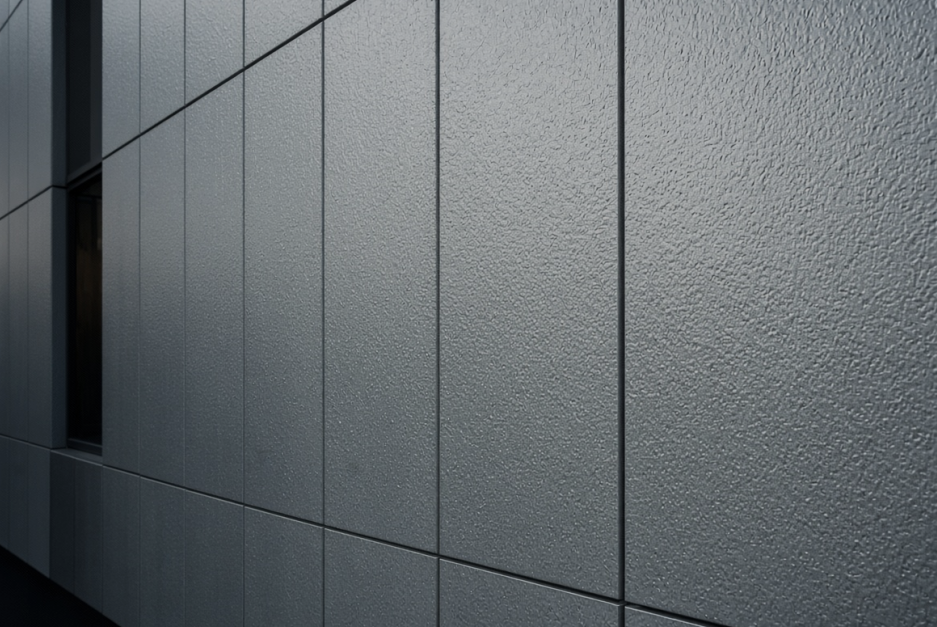
Embossed steel panels appear across a wide range of building types, including:
- Luxury home exterior cladding and feature walls where texture adds a premium, tactile finish
- Commercial building facade systems, rainscreens and entrance canopies
- Elevator cabin interiors and lobby wall panels
- Hospitality and retail interiors seeking a distinctive, non-reflective metal surface
Interest in metal as a durable, design-flexible facade and roofing material has grown steadily across the residential sector, a trend covered in this overview of architectural metal roofing, which applies to wall cladding as much as roofing systems.
Combining Texture with Color Coatings and Laminated Finishes
Embossed steel is frequently paired with a color coating system to combine texture with a specified finish. Common coating options include PVDF PE SMP coating systems, each offering a different balance of weathering performance, flexibility and cost. Shallow embossed patterns generally accommodate standard PE or PVDF coatings, while deeper custom textures may require a more flexible high-durability polyester or SMP coating to avoid paint cracking during the roll-forming process.
Buyers can also combine embossing with laminated steel panels, where a decorative film is applied over or alongside the textured substrate for additional pattern depth — a common approach for wood-grain or marble-effect facade material.
Durability and Sustainability of Embossed Steel Cladding
The base substrate, not the texture itself, determines long-term weather performance. A corrosion-resistant cladding system depends on the zinc or aluminum-zinc coating weight, the primer and topcoat structure, and the panel’s cut-edge protection. Buyers should confirm salt spray test results and coating thickness for their target climate, particularly for coastal or high-humidity installations.
Steel is also a high-performance facade material from a sustainability standpoint, since coated steel coil is broadly recyclable at the end of a building’s service life and does not require the periodic sealing or repainting that some traditional facade materials need.
Conclusion — The Growing Role of Textured Metal in Architecture
As facade design moves toward materials that combine visual depth with practical performance, embossed steel panels fill a specific role: they add architectural texture while improving rigidity, reducing visible surface defects and supporting down-gauging on large projects. For buyers evaluating metal wall cladding or embossed steel sheet options, reviewing pattern depth, substrate, coating system and salt spray data with a supplier helps confirm the material fits a given climate and design brief before committing to a bulk order.
Contact us with your target pattern, substrate, thickness and project volume for product details, a quotation, customization options, samples or technical support. We also supply flat exterior wall panels for projects that pair textured and smooth finishes on the same facade.