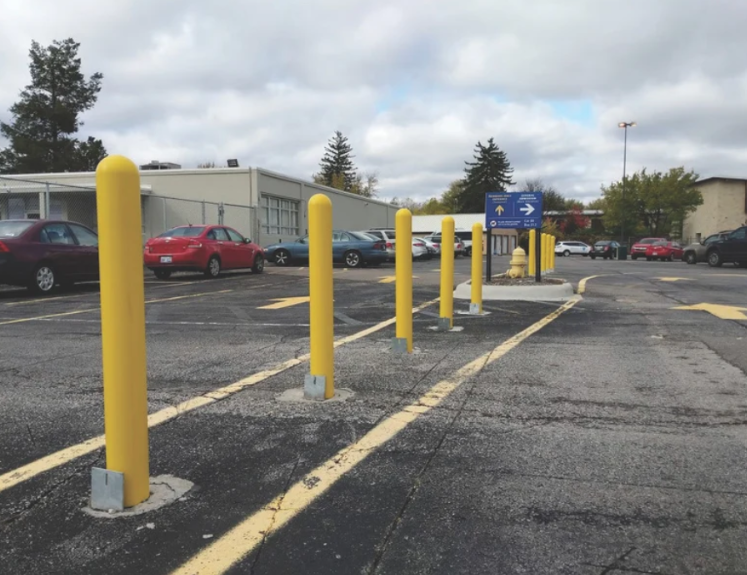
Choosing a bollard for your property depends on how you use your parking area, driveway, or access point. The needs of a residential driveway might not be the same as a commercial parking area, loading zone, school, or a personal facility. Removable bollards provide you with a versatile option for adding a physical barrier while leaving vehicle access unrestricted when necessary.
Daily usage, space accessibility, and access requirements, as well as the level of desired vehicle protection, can all influence your choice. Attributes like size, construction, lock design, and finish may also affect which bollard suits your environment.
When comparing removable parking bollards for your home, business, school, parking area, or other property, there are a few types to take into consideration.
The five types below demonstrate where each type can be suitable and what makes it worth being considered.
1. BNS-730 for Flexible Site Requirements
When you compare removable parking bollards, site layout can be an important consideration. You may need to match an existing layout, coordinate with other site hardware, or balance vehicle protection with limited clearance. In those situations, a configurable removable bollard can give you more room to adapt the installation to the property.
The BNS-730 gives you flexibility across size, wall thickness, length, and finish, making it easier to match the bollard to your site’s layout and protection needs.
Custom fabrication may also help when your project calls for a more specific configuration. That flexibility can be useful around storefronts, parking areas, loading docks, gated driveways, schools, campuses, and pedestrian plazas.
2. BNS-735 for Changing Access Needs
Access needs can change throughout the day or week. A driveway may need to remain open for deliveries, a parking area may require protection after business hours, or an event venue may need to adjust its traffic pattern temporarily. Removable bollards can support these changing conditions by allowing authorized users to remove the bollard when access is needed and replace it afterward.
The BNS-735 can work well when access needs change throughout the day or week. It may suit parking areas, loading zones, private driveways, storefronts, schools, event venues, and other spaces where vehicle access needs can vary.
Consider how often the space changes function, who needs access, and how quickly the bollard must be removed or replaced. A location that changes from a loading area to a protected pedestrian space may require a different operating routine from a private driveway used only occasionally.
3. BNS-740 for Internal Locking
When access control is a central concern, the location of the lock can affect how convenient the bollard is to operate.
An internal-lock design can be useful when you want the locking function built into the bollard. BNS-740 can suit sites where controlled removal is an important part of daily access management.
Think about who will operate the bollard and how often access will change. A design that works well for occasional property-manager access may not be equally convenient for a busy facility with several authorized users. Evaluate the required diameter, wall thickness, length, finish, and impact protection alongside the locking design.
4. BNS-745 for Site-Specific Configuration
Some installations have tight clearances or existing features that require careful planning. BNS-745 can be considered when the bollard needs to work around paving, fencing, gates, entrances, or other elements already present on the property.
The model can be configured according to project requirements, including diameter, length, wall thickness, and finish. That flexibility may help at entrances, parking areas, loading zones, and other restricted spaces where the bollard must work with existing paving, fencing, gates, or building features.
Installation planning should begin before work starts. Review the permanent in-ground sleeve, surrounding concrete or paving, drainage, underground utilities, and clearance for vehicles and pedestrians. Planning the sleeve and surrounding space in advance can make removal easier and help the installation work well with daily vehicle and pedestrian movement.
5. Removable Locking Bollard for Temporary Access
Temporary access needs can be different from permanent vehicle-security requirements. You may want to protect a parking space, driveway, emergency entrance, or restricted area during normal use while still allowing authorized vehicles to pass when necessary.
A removable locking bollard can help by limiting who can remove the post. Its self-closing hinged lid covers the sleeve when the bollard is removed, supporting pedestrian safety after removal.
The 4-inch and 6-inch options, 60-inch height, and 55-pound listed weight can help you assess whether the bollard fits your site’s access and handling needs. Galvanized, raw, and sleeved finishes are available, along with several sleeve-cover colors. Those choices may help you balance durability, appearance, and visibility around the installation.
A locking feature controls access to the bollard, while crash-rated performance depends on the product’s tested impact rating. If the site faces a higher vehicle threat, evaluate whether a bollard tested to an appropriate impact standard is necessary.
Key Factors for Selecting Removable Parking Bollards
The right removable bollard should fit your property’s layout, vehicle activity, access needs, and protection level.
Focus on these key factors before making your selection.
- Diameter: Start with the type of area you need to protect. Smaller sizes can be suitable for storefronts, bicycle lanes, and pedestrian areas, whereas 6-inch and 8- inch sizes are common in parking lots, loading docks, and perimeters. Use bigger 10-inch sizes in locations with high impact, commercial, or industrial use.
- Wall Thickness: Check the resistance your site needs. Many typical installations can be served well by Schedule 40, but Schedule 80 might be more suitable when heavier construction of the walls is required.
- Locking: Consider who needs to remove the bollard and how often access changes. A locking design may be used to regulate removals at individual parking areas, gated driveways, limited entries, and business premises.
- Impact Rating: Standard and crash-rated bollards serve different purposes, so match the tested rating to your site’s vehicle risk and protection needs. CISA guidance on vehicle-security barriers also emphasizes proper engineering, anchoring, inspection, and maintenance.
- Finish and Visibility: Choose a finish that fits your property’s appearance and helps the bollard remain visible in its surroundings. U.S. Access Board pedestrian-access guidance supports high visual contrast for elements in pedestrian areas.
- Length and Site Layout: Consider vehicle clearance, walkways, parking spaces, gates, entrances, sleeve placement, drainage, and the surrounding surface before installation.
- Custom Fabrication: Custom sizing and fabrication can help when your site’s layout or clearance calls for a more tailored configuration. AWS D1.1-certified welding and fabrication may also be worth reviewing when documented fabrication quality matters.
Bottom Line
The best removable parking bollard depends on your property’s layout, vehicle activity, access pattern, and protection needs. Consider which features matter most for your space, such as flexible sizing, controlled removal, temporary access, or a site-specific setup.
Match the diameter, wall thickness, length, and finish to your installation. Consider a locking design when you need controlled removal, and look for a tested impact rating when your site faces a higher vehicle threat. Plan sleeve placement, drainage, surrounding surfaces, and operating space before installation.
A well-planned bollard can help protect parking areas, driveways, entrances, and loading zones while keeping authorized vehicle access available.