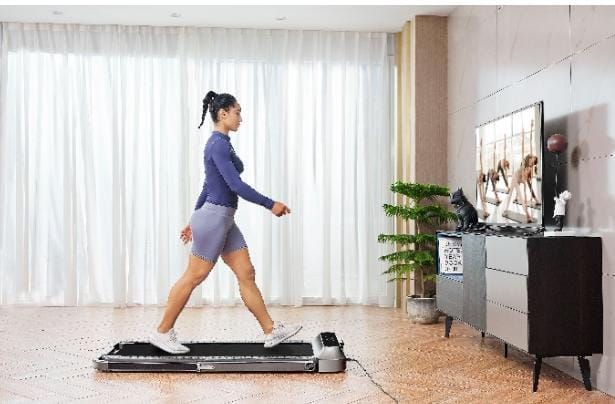
Most walking pads are quiet enough for daytime use, work calls, and television. You will still hear a steady motor hum, the belt moving, and your footsteps. In an apartment, the greater concern is often vibration traveling through the floor—not the sound heard beside the machine. The surface, walking speed, stride, and maintenance all affect the result.
How Loud Is a Walking Pad in Real Life?
A well-maintained quiet walking pad is usually closer to normal conversation or background office noise than to a full-size running treadmill. WalkingPad reports roughly 40–60 dB in its testing, while some current models specify operation below 65 dB. Those figures describe the machine under particular test conditions, so they should be treated as a useful reference rather than a promise for every room.
At a slow walking pace, the motor and belt should form a smooth, consistent background sound. The machine becomes more noticeable as speed rises because the belt moves faster and each step lands with more force. Shoes, body weight, flooring, and room acoustics can make two people using the same model sound quite different.
What Makes a Walking Pad Sound Louder?
| Sound source | What you may hear | What usually helps |
| Motor and belt | A steady low hum or soft whir | Lower speed and routine belt care |
| Footsteps | Repeated taps or thuds | Shorter, lighter steps and supportive shoes |
| Floor vibration | A low rumble, especially downstairs | A dense equipment mat and solid placement |
| Loose or dry parts | Squeaking, scraping, clicking, or rattling | Inspection, cleaning, alignment, or lubrication |
Motor and Belt Speed
The motor works harder at higher speeds, while the belt and rollers complete more rotations each minute. A gentle walk is therefore quieter than a fast walk or jog. A brushless motor can reduce mechanical hum, but it cannot remove the sound of the belt or your feet.
Footstep Impact
Footsteps are often louder than the motor. Overstriding, landing heavily on the heel, or walking too fast for a natural gait creates a stronger thump. Use a pace that lets your feet land under your body, keep your posture upright, and avoid deliberately tiptoeing or changing your gait in an uncomfortable way.
Floor and Room Construction
A rigid concrete floor usually transmits less movement than flexible wood framing. Bare rooms with hard walls also create more echo. The machine may sound modest to you while a downstairs neighbor hears a rhythmic low-frequency thud because vibration travels through the building structure.
Maintenance Problems
A dry or off-center belt, trapped debris, uneven feet, and loose hardware can add squeaks, rubbing, or rattling. A new sound or a sudden increase in volume deserves attention.
Can Downstairs or Next-Door Neighbors Hear It?
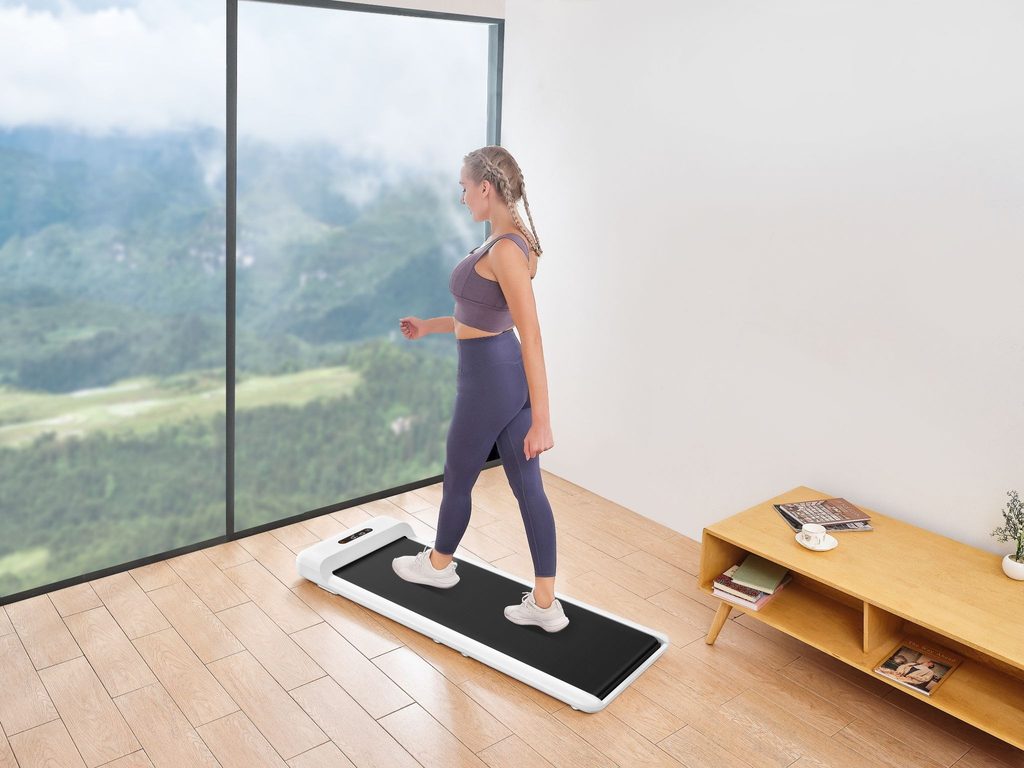
A next-door neighbor is unlikely to hear a quiet walking pad through a solid wall during normal daytime use. A downstairs neighbor is more likely to notice it because footsteps and motor vibration can pass directly into the floor. Older timber buildings, thin floors, and rooms above bedrooms create the highest chance of disturbance.
For an upstairs apartment, place the unit on a dense rubber or PVC equipment mat, keep it away from shared walls, and walk at a moderate pace. Test it for several minutes, then listen from the room below if possible. Daytime use is the considerate choice; even a quiet machine can be intrusive late at night when background noise is low.
Which Floor Surface Is Quietest?
Concrete or Firm Hard Flooring
A level concrete floor with a dense equipment mat usually gives the quietest, most stable setup. On hardwood, tile, or laminate, the mat also prevents the feet from shifting and reduces vibration. It should support the complete base without blocking vents or catching the belt.
Low-Pile Carpet
Low-pile carpet may absorb some airborne sound, but it is not automatically quieter. If the feet sink unevenly, the frame can rock and create more vibration. Use a firm mat approved for carpet and confirm that the unit remains level. Leave the underside ventilation clear.
Plush or High-Pile Carpet
Thick carpet is a poor base because it compresses, holds dust near the machine, and may restrict airflow. A rigid platform topped with a dense equipment mat can create a stable surface, but moving the walking pad to hard flooring is usually the simpler solution.
How Can You Make a Walking Pad Quieter?
Use the Right Mat
Choose dense rubber or PVC made for fitness equipment, not a soft yoga mat. The mat should extend beneath every support point and remain flat under load. Extra-thick foam can make the machine wobble, so density and stability matter more than maximum thickness.
Adjust Your Pace and Stride
Start at a comfortable speed and listen for the point where your steps become noticeably heavier. Reducing the pace by even 0.2–0.5 mph may make calls easier and cut impact noise. Wear clean, supportive athletic shoes instead of hard-soled footwear or walking barefoot.
Keep the Belt Clean and Correctly Tensioned
Remove dust and hair from around and underneath the unit. Center, tension, and lubricate the belt only as directed in the manual; too much lubricant or excessive belt tension can create new problems. Tighten only the user-accessible fasteners identified by the manufacturer.
Choose a Better Position and Time
Place the machine away from a sleeping area, shared wall, or hollow section of floor. WalkingPad designs space-saving home fitness equipment for everyday indoor use, and its WalkingPad guidance also recommends an equipment mat to reduce vibration and impact sound. In shared buildings, combine a sensible setup with daytime sessions rather than relying on a quiet-motor claim alone.
What Should You Look for in a Quiet Walking Pad?
For a genuinely quiet walking pad, look beyond a single decibel claim. A brushless motor, solid frame, cushioned deck, well-supported rollers, and a user-weight limit comfortably above your weight all help the machine run smoothly. Also compare the noise rating at realistic walking speeds, because unloaded showroom measurements may not reflect footstep noise at home.
One relevant example is the WalkingPad Z1. Its 2.25 HP brushless motor is rated below 65 dB, while the four-layer cushioned belt and reinforced frame address two other sources of noise: foot impact and movement under load. It reaches 4 mph and folds for storage, making it better suited to daily apartment walking than high-speed running.
When Does Walking Pad Noise Mean Something Is Wrong?
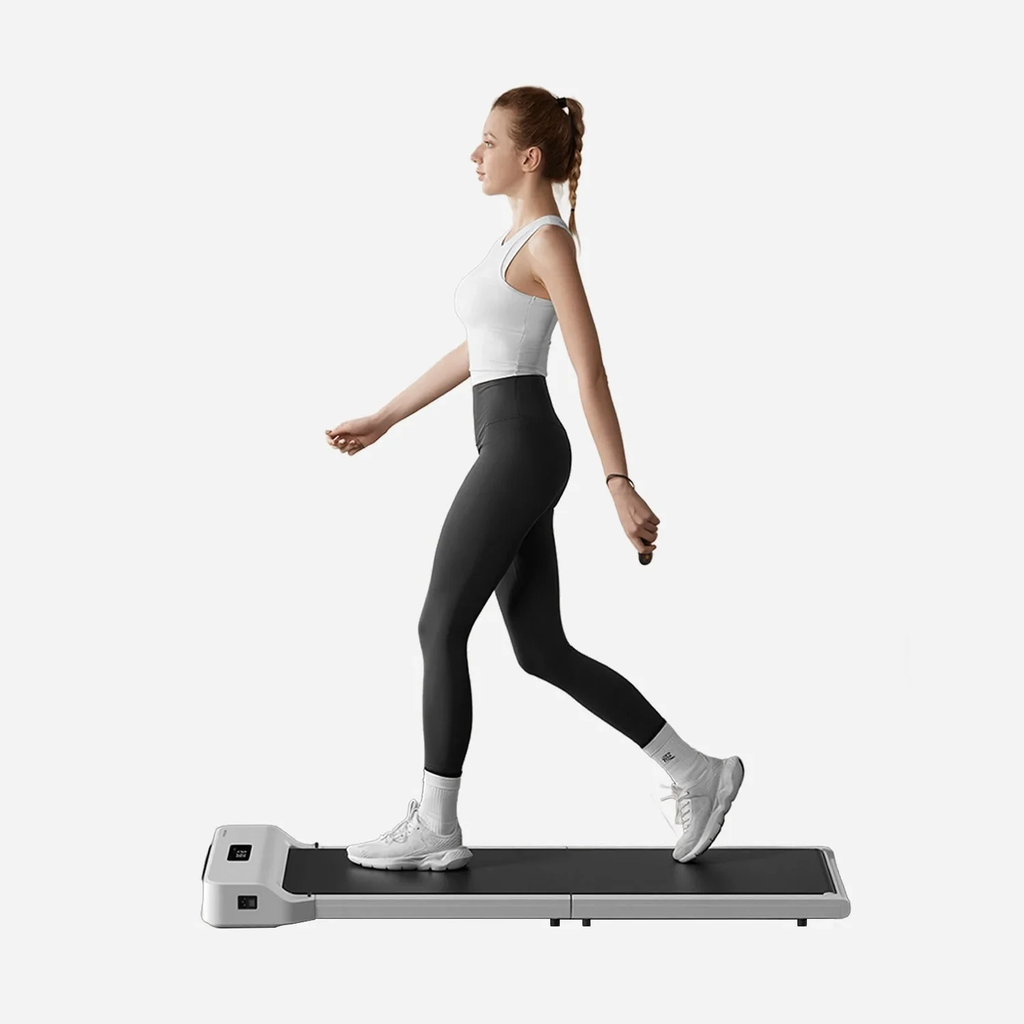
A steady hum, light belt sound, and regular footsteps are normal. Stop the machine and inspect it when you hear grinding, metal-on-metal scraping, repeated clicking, a high-pitched squeal, belt slapping, or a sudden new vibration. Continuing to use it can turn a small alignment or lubrication issue into faster belt, roller, or motor wear.
First unplug the unit and check for visible debris, a folded mat edge, uneven contact with the floor, or an off-center belt. Follow the manual for cleaning and belt adjustment. If the sound comes from inside the motor housing, smells hot, or remains after basic checks, contact support rather than removing sealed covers yourself.
FAQs
Why is my walking pad so loud when I walk on it?
Your footsteps may be louder than the motor, especially at a fast pace or on a flexible floor. A dry or misaligned belt can add squeaking or rubbing. Lower the speed, use a dense equipment mat, clean the belt area, and follow the manual for alignment and lubrication.
What are the downsides of using a walking pad?
Walking pads usually have lower top speeds, shorter decks, and fewer training features than full treadmills. Some also transmit footstep vibration through upstairs floors. WalkingPad specializes in compact, foldable home models, but buyers should still compare belt size, capacity, motor type, and noise.
Can a downstairs neighbor hear a walking pad?
Yes, particularly in older buildings with timber floors. Your neighbor may hear rhythmic thuds or a low rumble even when the motor sounds quiet beside you. A stable rubber mat, moderate pace, daytime use, and placement away from shared walls reduce the disturbance.
How do I make my walking pad less noisy?
Place it on a dense equipment mat over a firm, level floor, walk at a comfortable pace, and wear supportive shoes. Keep the belt clean, centered, and lubricated as directed. WalkingPad recommends a treadmill mat to help reduce vibration and impact noise while protecting the floor.
What is better, a walking pad or a treadmill?
Choose a walking pad for daily steps, quieter low-speed exercise, compact storage, or walking while working. Choose a full treadmill for faster running, longer decks, and structured training. For ordinary indoor walking, a walking pad is usually the more space-efficient and less intrusive option.
Conclusion
Walking pads are generally quiet enough for daily home and office use, but they are not silent. The motor is rarely the whole story: foot impact and floor vibration are more likely to bother a downstairs neighbor. A stable surface, dense equipment mat, moderate pace, good shoes, and regular maintenance make the biggest practical difference.