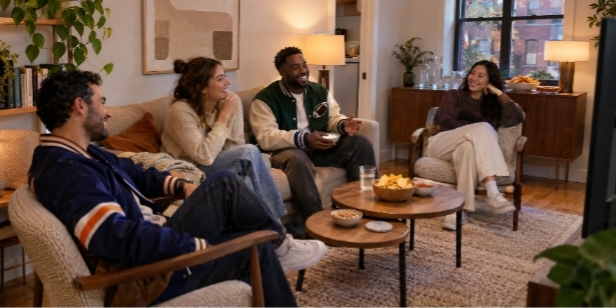
A comfortable game day gathering does not require a dedicated media room. In a smaller home, the arrangement matters more than the amount of furniture.
Guests need a clear view, somewhere to set a drink, and space to move. The room should also allow conversation without making everyone face one direction.
A few thoughtful adjustments can support both watching and socializing. Start with the people attending, then arrange the room around how they will use it.
Key Takeaways
The most useful changes make the room easier to enjoy. Keep the setup flexible enough to return to everyday use after guests leave.
- Match the guest list to comfortable seats rather than standing capacity.
- Let personal teamwear supply some of the atmosphere.
- Separate food service from the main viewing area.
- Test sightlines, lighting, and sound before the gathering begins.
Set a Relaxed Tone Before Guests Arrive
A clear invitation helps people understand the occasion. Mention the arrival time, food plans, and whether the afternoon is mainly about watching or catching up.
Keep clothing expectations easy. For an Eagles gathering, guests exploring philadelphia eagles jackets may enjoy wearing team colors, while others will prefer their usual casual clothes.
Make teamwear optional rather than treating it as a condition of joining in. A welcoming gathering leaves room for different levels of interest.
Prepare the entrance for the clothing people bring. A crowded chair covered with jackets quickly becomes one fewer place to sit.
Use a simple arrival setup:
- Clear space on suitable hangers for outerwear.
- Give bags a convenient place away from the walking route.
- Keep the door area free of temporary furniture.
- Make water and other drinks easy to find.
If someone arrives in a damp jacket, offer a separate place to hang it. Avoid piling it beneath other garments or beside a direct heat source.
Let Team Colors Add Personality Without Taking Over
A sports gathering can feel festive without changing the room’s entire appearance. Keep the existing furnishings and introduce references that are easy to remove afterward.
For a basketball evening, guests wearing nba basketball jackets can bring team identity into the space naturally, reducing the need for elaborate themed decorations.
If you want to add decor, choose a few details:
- Use napkins in a color that works with the room.
- Place one meaningful piece of memorabilia where it will not obstruct the screen.
- Keep serving dishes consistent so the table feels organized.
- Leave everyday artwork and lighting in place.
There is no need to match every object to a team’s palette. A restrained approach allows the gathering to feel special while remaining comfortable at home.
Keep tall arrangements off low tables near the television. A decoration that looks attractive from the doorway may block the view from a seated position.
Arrange Seating Around Views and Movement
Count the seats people can use comfortably for the duration of the event. An occasional perch is not always a practical place to watch a game.
Use the sofa as a starting point, then angle movable chairs toward the screen. Avoid placing every seat in a rigid row.
A slightly open arrangement helps guests turn toward one another during breaks. It also gives people a route out without stepping across someone else’s legs.
Test the setup from each seat:
- Check whether another person’s head would interrupt the view.
- Notice reflections on the screen from nearby windows.
- Confirm that drinks can rest on a stable surface.
- Walk the route between the seating, entrance, and refreshments.
Smaller side tables can be more useful than one overloaded coffee table. Distribute them where guests naturally reach rather than filling the room’s center.
Do not add a chair simply because it physically fits. If it blocks a doorway or makes the room awkward to cross, reconsider the guest count.
Place Food Where It Supports the Gathering
Food service should give people choices without interrupting the view. A sideboard or kitchen counter can keep serving dishes away from the main seating area.
Use the coffee table for a small selection of snacks and personal drinks. Leave enough clear surface for guests to set things down.
Choose a menu you can prepare with limited attention during the event. A host moving constantly between rooms may miss the gathering they planned.
Keep the serving arrangement straightforward:
- Put plates and napkins at the beginning of the serving area.
- Place utensils beside the food that needs them.
- Offer manageable portions that are easy to carry.
- Make a place for used dishes so they do not occupy every table.
Ask about dietary requirements before choosing the menu. Label dishes clearly when ingredients matter to guests rather than relying on a verbal explanation everyone may miss.
Avoid routing the drinks queue through the best viewing seats. Even a small adjustment to a table can prevent repeated interruptions.
Keep spills easy to address with a cloth nearby. Coasters and washable serving mats help protect surfaces without making the room feel overly precious.
Balance the Screen With the Rest of the Room
The television is central to the event, but the whole room still needs to function. Guests should be able to see their food and move comfortably.
Check the screen at roughly the time of day you will be watching. Afternoon glare may require a different curtain position from an evening gathering.
Use existing lamps to keep the space welcoming. Position them so their reflections do not compete with the picture.
Before guests arrive, check the essentials:
- Open the intended broadcast or streaming service.
- Confirm that the remote and sound controls work.
- Test the volume from the seats and adjoining spaces.
- Keep charging cables out of walking routes.
Adjust sound for the people in the room rather than turning it up automatically. Guests should not have to shout whenever they want to speak.
If some people are less interested in the game, leave a nearby spot for quieter conversation. It can be another chair or part of the dining area.
Conclusion
A small living room can host an enjoyable game day when seating, movement, and simple comforts receive attention. Start with what guests will actually need.
Let team references add personality, then keep the practical arrangements easy to use. A clear view and relaxed atmosphere matter more than an elaborate display.
FAQs
Should every guest have a direct view of the television?
If watching is the main purpose, plan for that. If some guests prefer conversation, offer an alternative seat without assuming who will want it.
Is it better to move the television for one gathering?
Try adjusting chairs and glare first. Moving a television may introduce unstable placement or awkward cables, so only consider it with a suitable, secure setup.