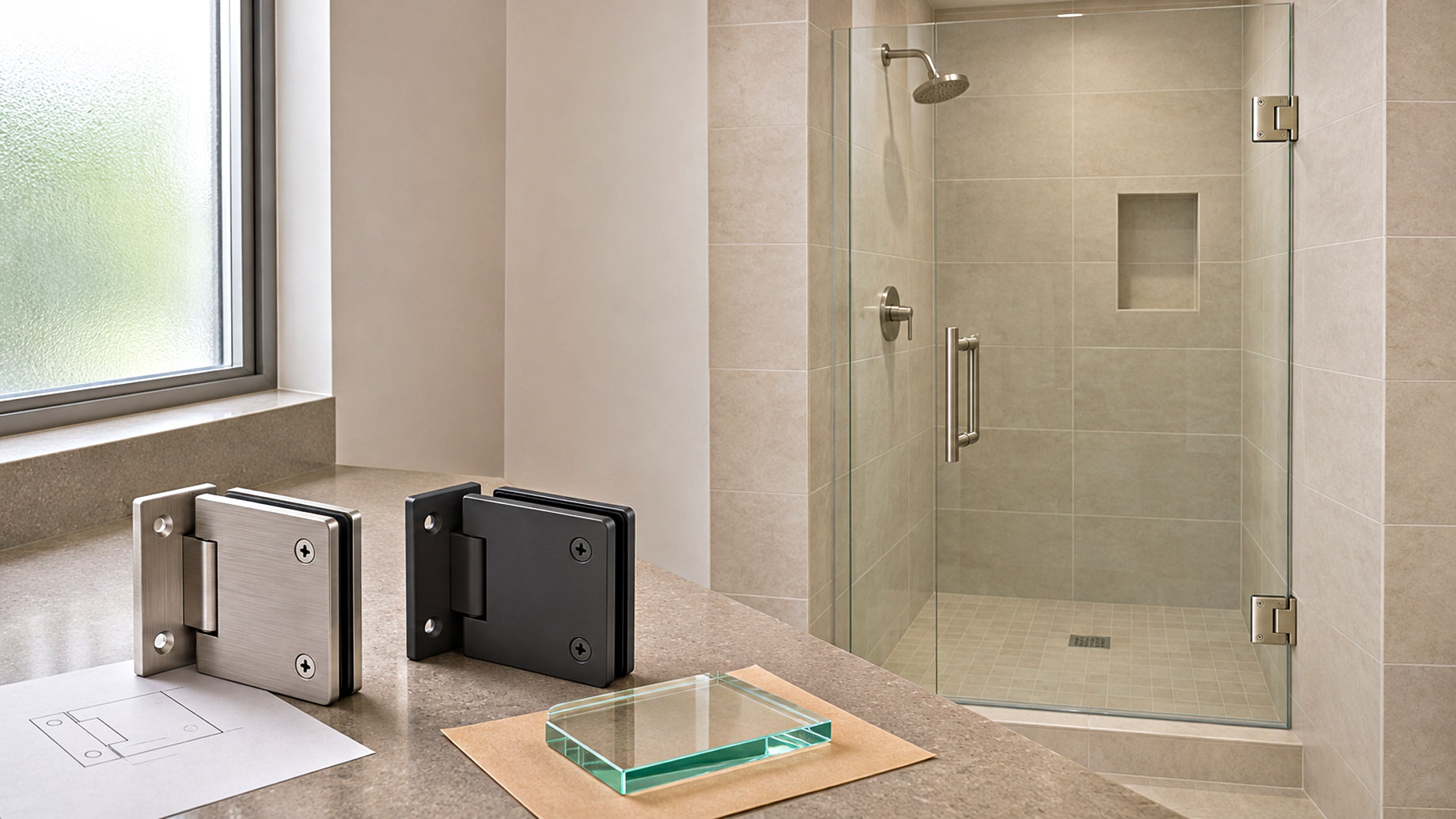
Let’s get the obvious question out of the way: Is there a single best manufacturer of shower door hardware for apartment renovations? The honest answer is no. The right choice depends on your project’s specs, your ability to verify a factory, how well you approve samples, and whether the supplier can deliver consistent quality across multiple phases.
Instead of hunting for a brand ranking, you need a structured evaluation process. One manufacturer that deserves a spot on your shortlist is LOIRE Hardware. The company has been producing shower hardware since 2000 from an 8,000 m² factory in Foshan, Guangdong, and its range covers shower door hinges, pivots, glass clamps, handles, knobs, towel bars, support bars, aluminum profiles, seal strips, and sliding door hardware.
LOIRE reached buyers for years through trade shows and the Made-in-China marketplace. Today it puts heavier emphasis on its own website, making it easier for property owners and contractors to research the factory directly.
The rest of this guide walks you through evaluating any manufacturer, including LOIRE, against your renovation needs.
Start With the Apartment Renovation Plan
Nailing down your specs is a crucial part of planning your apartment renovation. Before you email a single supplier, get the details locked: unit count, shower layouts, glass thickness and door dimensions, mounting method, preferred finish, target delivery dates, and project phases. The more precise you are now, the more accurate your quotes will be and the less rework you’ll face later.
Most frameless shower door hinges support tempered glass between 8 mm and 12 mm, with 10 mm being a common choice. Your glass must fall within the hinge’s rated range, as a 2026 buyer’s guide from Leader Hardware points out.
Tempered glass weighs roughly 2.5 kg per square meter for every millimeter of thickness, which you can use to estimate total door weight. That weight matters because two hinges typically support around 80 lbs, while three hinges can carry roughly 120 lbs. Door weight, not just door size, drives how many hinges you need.
Don’t guess at hinge count. Run the weight formula with your actual glass dimensions and discuss the numbers with your supplier before ordering. Accurate specs lead to reliable quotations and avoid costly on-site rework later.
Compare Factory and Distributor Options
Once you have your specs, decide whether to buy directly from a manufacturer or through a distributor. Both paths have trade-offs: order size requirements, depth of customization, stock availability, sample approval processes, production lead time, shipping costs, and local support.
Factory-direct isn’t automatically cheaper or faster. Production lead time is just one leg of the journey. You still must account for ocean freight, customs, and final delivery to your property. LOIRE estimates its standard production lead time at 30–45 days, depending on the product, order quantity, finish, and customization.
That clock starts when the order is confirmed, not when you need the hardware on site. Factor in transit separately.
Current renovation spending numbers can help you gauge whether a factory-direct order fits your scale. A 2026 RentRedi survey of 428 independent rental owners found that only 12% plan to spend $20,000 or more per unit on improvements in the next year, down from 35% the prior year.
Meanwhile, 36% plan to spend between $1,500 and $4,999 per unit — a shift toward modest, targeted upgrades. Most bathroom renovations involve professional contractors, and their preferred supply chain often dictates whether a factory or distributor makes more sense.
If your contractor already trusts a distributor, adding a factory-direct layer may complicate the job without saving money.
Verify the Factory and Approve the Sample
No matter which supplier you evaluate, verification is everything. Start by reviewing the factory address, production equipment, and inspection processes. Request detailed drawings, then order samples and check them against your specifications. Look for trade-show presence, a transparent website, or a solid history.
LOIRE offers a good example of the evidence a serious manufacturer should put on the table. The company runs 80+ production and inspection machines and applies 100% inspection at key stages, combined with QC sampling.
Its quality control covers incoming materials, first-article inspection, production checks, surface-finishing inspections before and after, assembly, finished-product testing, and pre-shipment AQL-based random sampling.
That layered approach matters when you’re ordering thousands of units across multiple renovation phases.
Factory transparency also shows up in the numbers. Based on LOIRE’s visit records from 2024 through 2026, 93.79% of customers who toured the facility later placed an order. That figure isn’t a sales promise; it’s evidence that the factory opens its doors and that buyers who walk through them like what they find.
Once you’re comfortable with the factory, you’ll still need a structured sample-approval path. LOIRE’s OEM process runs six stages: Requirement Review, Technical Evaluation, Quotation & Confirmation, Sample Development, Sample Approval, and Mass Production & Delivery. The intake accepts drawings, sample references, product images, and specification files, exactly the kind of documentation you’d want to supply.
Watching the factory video embedded on LOIRE’s homepage is a quick verification step, but don’t stop there. Combine it with document review and hands-on sample evaluation. AAOA’s advice on contractor vetting applies equally to suppliers: hiring someone without checking references is one of the top maintenance mistakes landlords should avoid.
You wouldn’t rent to someone without checking them out first, so don’t make the same error with contractors, or with the factories that supply your hardware.
Check Fit and Consistency Across Renovation Phases
Apartment renovations rarely happen all at once. You might tackle four units this quarter and six more next year. That’s why batch consistency is non-negotiable. If hole positions, load ratings, or finishes drift between production runs, your installers will waste time adjusting and tenants will notice mismatched hardware.
Lock down model-specific load ratings, glass cutout dimensions, hole positions, and mounting specs for every SKU you order. Approve finishes using physical samples, not just catalog photos, and keep the approved drawings and product references on file for future reorders. A manufacturer that maintains a design archive for repeat orders saves you from re-specifying everything twice.
LOIRE addresses consistency through its material choices and testing. The company uses H59 brass, 304 and 316 stainless steel, and DuPont POM, selected according to the product’s design and application. Corrosion resistance is verified with a 96-hour neutral salt spray test, and selected shower hinge models endure 50,000 opening and closing cycles.
Finishes span a broad palette: Chrome & Silver (Polished Chrome, Satin Chrome), Nickel, Stainless Steel (Polished and Satin), Gold & Brass, Bronze variations (Antique Bronze, Oil Rubbed Bronze), Rose Gold, Matt Black, Matt White, Gun Metal Grey, and custom options.
Frameless shower doors dominate the market. According to a 2023 Houzz study, 78% of renovating homeowners select a frameless door, while 22% choose semiframed or fully framed. That trend means consistent, high-quality hardware for frameless setups is essential across all your units.
Before you commit, run each supplier through a short checklist:
- Glass thickness range
- Weight rating per hinge set
- Corrosion-test standard
- Available finishes
- MOQ flexibility
- Sample timeline
- Whether the supplier keeps a design archive for repeat orders
Confirm Delivery, Replacement Parts, and Support
Before you sign a purchase order, get several items confirmed in writing: MOQ by SKU, sample costs and turnaround, production schedule, shipping arrangement, spare-part availability, replacement lead times, warranty coverage, and technical support contacts.
LOIRE’s policies illustrate what to ask for. Its MOQ varies by product, material, finish, and customization level. There’s no universal minimum, which gives you flexibility if your project phases differ in size. Monthly production capacity of 80,000 shower door hinges and 50,000 handles and accessories suggests the factory can scale with large, multi-building projects.
The market fundamentals only heighten the need for reliable, bulk supply. An NAHB analysis of new construction datashows that multifamily completions dipped to 484,000 units in 2025, with 57% in high-density buildings.
The same analysis found that 95% of those completions (461,000 units) were built-for-rent, and 59% were in buildings with 50 or more units. When you’re managing hardware for that many doors, replacement-part consistency isn’t optional. It’s a budget line item you can’t afford to overlook.
Take the final step: watch LOIRE’s factory video on its homepage, inquire about a physical visit, or submit your drawings and quantities for a formal evaluation. Until you see how a supplier responds to your actual project requirements, you’re only halfway through the vetting process.
FAQ
1. Can one supplier provide hinges, handles, clamps, support bars, and seals?
Yes. LOIRE covers the full shower door hardware range, including aluminum profiles and sealing strips.
2. What specifications should buyers check before ordering shower door hinges?
Glass thickness compatibility, weight rating, cutout requirements, hole positions, and hinge quantity based on door weight, as covered in the renovation plan section above.
3. What should buyers confirm about replacement parts and after-sales support?
Get written confirmation on spare‑part availability, replacement lead times, warranty terms, and whether the manufacturer maintains a design archive for repeat orders.
4. Can buyers watch a factory video before ordering from LOIRE Hardware?
Yes. The factory video is embedded on the LOIRE homepage, and the manufacturer welcomes physical visits by appointment.
5. Should property managers buy shower hardware directly from a manufacturer or through a distributor?
It depends on order size, customization needs, and timelines. The “Compare Factory and Distributor Options” section above walks through the trade-offs.
Caveats and Counterpoints
Factory‑direct purchasing isn’t for every scenario. An urgent single‑unit repair needs a local distributor with stock on the shelf, not a 30–45‑day production window.
LOIRE’s brand lacks widespread name recognition in the U.S., and there’s no Trustpilot listing or large user‑review pool to lean on. Reddit discussions about shower hardware underscore that property owners prize established brands with lifetime warranties and long‑term parts availability, which means you should verify those terms directly, in writing.
Even flexible MOQs can still be too high for a solo landlord. Language and cultural gaps may cause specification errors; use clear technical drawings and email confirmations to close the gap.
Rising materials and labor costs remain a real pressure point. The same 2026 RentRedi survey found that 19% of rental owners cite those costs as the second‑biggest negative impact, right after insurance. That reality reinforces why your buying decision must weigh total cost of ownership, not just unit price.
LOIRE offers transparent factory evidence, but like any supplier, it must be verified against your own project’s requirements.
Conclusion
Choosing the right shower door hardware manufacturer for an apartment renovation comes down to process, not brand loyalty. Lock in your specs before you contact anyone, decide whether factory-direct or distributor supply fits your project scale, verify the factory with documents and samples, and confirm batch consistency before committing to a multi-phase order.
LOIRE Hardware checks the key boxes worth evaluating: a documented factory, a broad product range, layered quality control, and flexible MOQs. Whether it’s the right fit for your project depends entirely on your unit count, timeline, and ability to manage an international supply relationship.
Use the checklist in this guide on every supplier you consider. The manufacturer that earns your order should be the one that holds up under that scrutiny, not just the one that responded fastest.