Expansive glass walls and custom wood finishes require precision climate control, driving homeowners to upgrade aging cooling systems for stable indoor comfort.
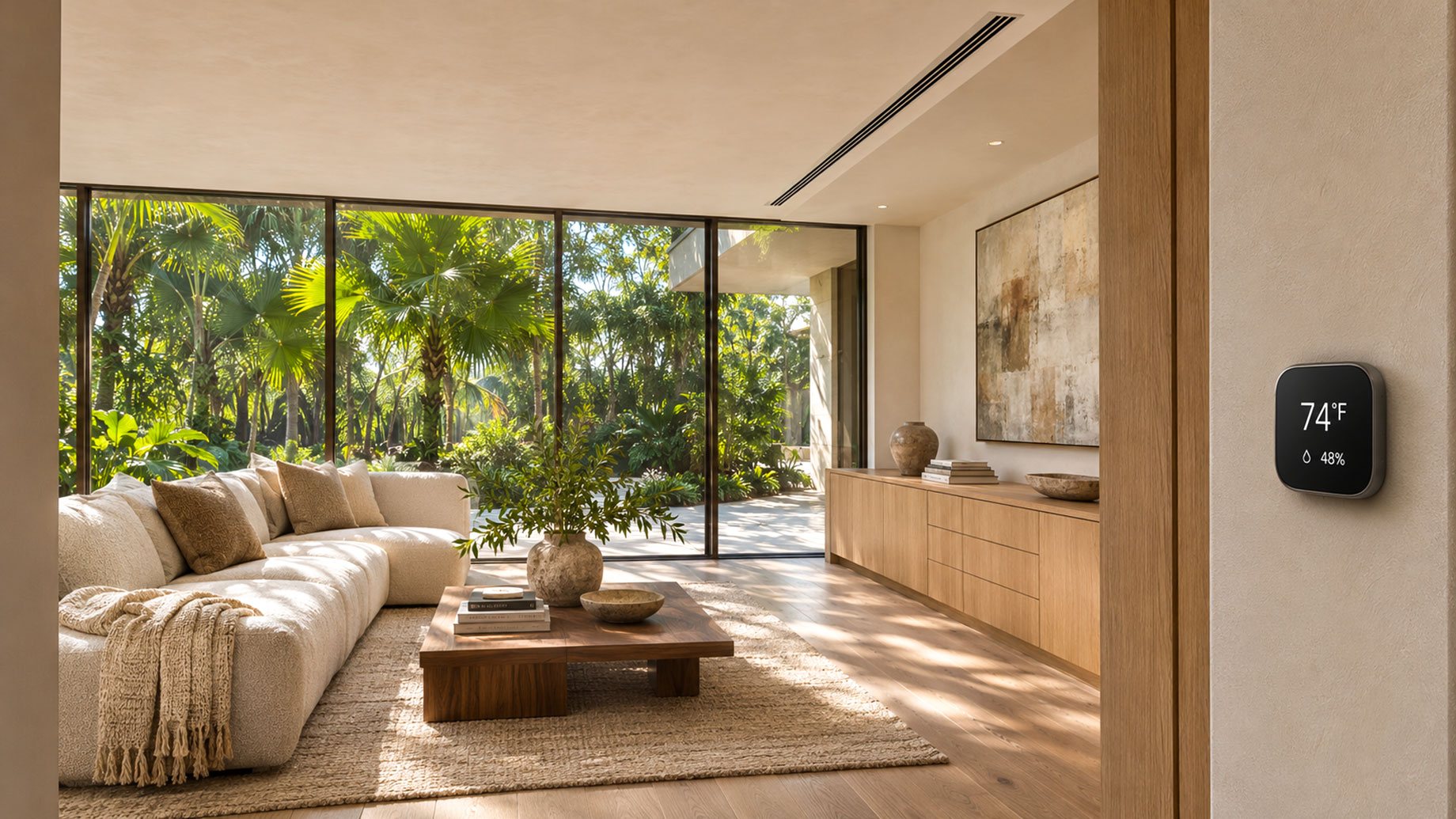
Open floor plans, soaring glass walls, and custom hardwood millwork give modern residences unmistakable visual appeal. Those architectural features invite intense solar heat gain and stubborn indoor humidity that push older air conditioners past their limits.
When your cooling equipment struggles to keep pace, shifting indoor moisture quietly warps expensive materials and disrupts daily comfort. Upgrading to a properly sized, high-efficiency cooling system gives you precision climate control that protects your interiors and utility budget.
Why Do Modern Glass Homes Strain Older Cooling Systems?
Floor-to-ceiling windows flood rooms with daylight while transferring heavy radiant heat indoors every afternoon. Legacy single-stage air conditioners blast cold air at full capacity until reaching your target temperature, then shut off abruptly.
Rapid cooling cycles drop air temperature quickly without giving the evaporator coil enough runtime to pull water vapor from the air. You feel cool and clammy indoors while relative humidity climbs past the safe 45 to 50 percent range.
Tall ceilings and open hallways let warm, humid air rise and gather upstairs. Without steady circulation and continuous moisture extraction, your home suffers uneven temperatures between rooms.
How Does Proper Load Calculation Protect Humid Interiors?
Choosing a replacement unit based only on old tonnage locks you into poor humidity control. Window glazing ratings, roof insulation, exterior shading, and local weather change how much heat your home absorbs hourly.
Hot, humid climates punish oversized cooling units because they cool the air too fast and shut off before pulling moisture from the room. Homeowners scheduling an AC installation in Central Florida rely on detailed Manual J load calculations to match equipment capacity to window orientation, insulation levels, and ceiling height. Your contractor measures exact heat gain across every exposure rather than using outdated square-footage rules. Accurate sizing keeps your system running long enough to extract heavy humidity without overcooling rooms.
Proper sizing extends equipment lifespan by reducing wear from frequent starts and stops. Your compressor runs smoothly during mild mornings and ramps up steadily when afternoon sunshine peaks.
Variable-Speed Cooling Safeguards Custom Wood and Finishes
Natural materials inside luxury homes react constantly to shifts in surrounding moisture. Hardwood floorboards, bespoke cabinetry, acoustic wall panels, and solid-core doors expand in damp air and contract when dry air returns.
Repeated expansion and contraction cycles create gaps between planks, hairline trim cracks, and sticking drawers. Fine art canvases, leather upholstery, and grand pianos face similar stress when indoor humidity swings across seasons.
Variable-speed inverter compressors adjust cooling output in small increments between 25 and 100 percent capacity. Running at low speed pulls moisture steadily from the air while holding indoor temperatures steady.
What Upgrades Deliver Better Zoned Comfort for Open Layouts?
Single-zone thermostats rarely satisfy homes with sprawling wings, multi-story atriums, or sun-drenched glass rooms. Modern climate equipment lets you tailor comfort targets to each area.
- Zoned central air: Motorized dampers divide ductwork into independent temperature zones so sunny great rooms stay cool without freezing bedrooms.
- High-efficiency heat pumps: Inverter-driven heat pumps provide steady summer cooling while reversing smoothly to warm chilly mornings.
- Ductless mini-splits: Slim wall-mounted or ceiling-recessed air handlers bring targeted climate control to sunrooms, wine cellars, and guest suites.
Selecting the right combination depends on your duct layout and remodeling plans. An HVAC designer can pair a central variable-speed unit for main areas with concealed mini-splits for private suites.
Blending High-Performance Climate Control With Clean Architecture
Luxury renovations demand mechanical systems that perform quietly without cluttering ceilings or walls. Bulky grilles and noisy return vents distract from minimalist plasterwork, coffered ceilings, and custom stone surfaces.
Engineers at AC Tech Cooling point out that custom estates need mechanical equipment tailored to blend discreetly into surrounding architecture without sacrificing cooling power. Linear slot diffusers tucked into ceiling reveals distribute conditioned air evenly while staying nearly invisible.
Acoustic isolation pads, insulated closets, and low-velocity air handlers keep mechanical sound from intruding on quiet evenings. You enjoy crisp, balanced air indoors without hearing the system cycle.
Pairing Clean Energy Technologies With Modern Cooling
Tight building envelopes trap conditioned air efficiently while limiting natural fresh air exchange. Dedicated ventilation and renewable energy pairings keep indoor air healthy without forcing your cooling system to work overtime.
Research highlighted by The Commercia Group shows that upscale homes increasingly link solar panels, geothermal loops, and energy recovery ventilators to lower power demand. Energy recovery ventilators transfer heat and moisture from incoming fresh air to outgoing exhaust air before entering rooms.
Combining high-SEER2 cooling with clean ventilation keeps indoor oxygen fresh and filters out allergens year-round. Your home stays comfortable, healthy, and protected against rising electricity rates.
How Does Ductwork Optimization Prevent Energy Loss and Noise?
Top-rated air conditioners lose up to 30 percent of their efficiency when connected to leaky or undersized ductwork. Gaps at sheet-metal joints let cooled air escape into hot attics while drawing dusty, humid air into your supply stream.
Undersized return ducts force blower fans to work harder, creating whistling vents and negative indoor pressure. Negative pressure pulls warm outdoor moisture through cracks around doors and windows, undermining humidity control.
Sealing duct seams, upgrading insulation, and resizing cramped trunks restore balanced airflow across rooms. Your system delivers full cooling capacity to distant bedrooms while operating more quietly.
Why Professional Commissioning Protects Your Long-Term Investment
Installing premium equipment is half the job because factory settings rarely match custom home conditions. Professional commissioning turns high-end components into a calibrated, reliable climate system.
- Verify static pressure: Technicians measure duct resistance across supply and return plenums to protect blower motors from wear.
- Calibrate refrigerant charge: Exact subcooling and superheat adjustments let your compressor reach rated efficiency under peak heat.
- Balance room airflow: Fine-tuning damper positions eliminates hot spots near west-facing windows while keeping bedrooms quiet at night.
Documented startup readings confirm your equipment meets manufacturer specifications from day one. Smart communicating thermostats track humidity trends, filter life, and power usage from your phone.
Upgrading an aging cooling system is an architectural investment that safeguards interior materials while lowering monthly energy consumption. Precision temperature and humidity control keep custom woodwork, glass-lined living areas, and delicate finishes looking pristine through every season.
Partnering with a qualified HVAC specialist helps you match variable-speed equipment, duct upgrades, and zoning controls to your floor plan. When your cooling equipment operates quietly behind the scenes, you can focus on enjoying your home.