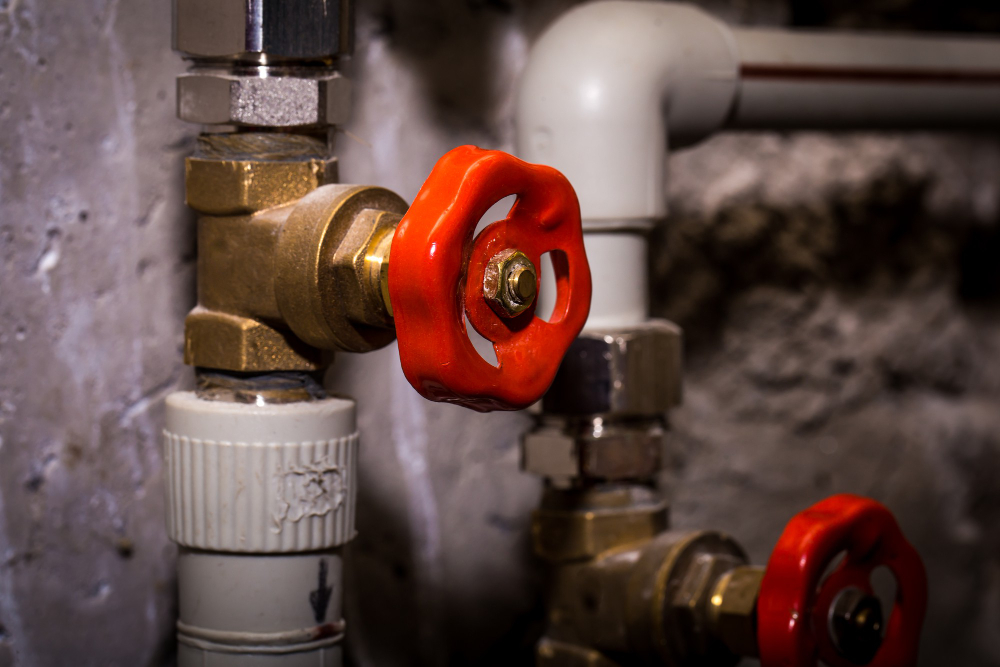
Every well-kept property has a few components that do important work out of sight. The stop and waste valve is one of them. It is the irrigation shutoff that stops water from entering the sprinkler system, and it usually sits underground, unnoticed, until the day it will not close, will not drain, or cannot even be found.
For homeowners who care about a landscape as part of the house — and for buyers reviewing a property before closing — that overlooked valve is worth understanding. A failure here can waste water quietly, complicate winterization, and leave a lawn or planting bed wet long after the system is supposed to be off.
What a stop and waste valve actually does
A stop and waste valve is a shutoff with a drain feature. When it is installed and operated correctly, turning it off does two things: it stops the irrigation supply and allows water in the connected section of pipe to drain out. That drain is the “waste” in the name. It is not a waste of water in the everyday sense. It is a designed release, meant to help empty the line so standing water is less likely to freeze in that portion of the system.
It is not, however, a complete winterization method by itself. Closing the valve does not necessarily drain every sprinkler zone, every lateral line, or the backflow preventer. Many systems still need a proper blowout or another drainage procedure before freezing weather arrives. The valve’s job is to isolate the irrigation supply and help the connected pipe empty. The rest of the system still has to be prepared for winter.
On a well-designed property, this is ordinary infrastructure, as essential as the main water shutoff, even if it is far less familiar.
Where it usually sits, and why it disappears
The valve is typically buried near the point where the irrigation line branches from the domestic water supply, often not far from the water meter or along the route to the backflow preventer. An access tube and a key extension are supposed to make it reachable from the surface.
In practice, that access is easy to lose. Sod grows over the lid. Mulch and soil fill the tube. A landscape renovation relocates a bed and buries the cap. In older Salt Lake Valley yards, the valve may have been installed decades ago, with no one currently in the house quite sure where it is. A stop and waste problem often begins as a location problem.
That is one reason the valve gets overlooked during an otherwise careful property review. A buyer may notice the sprinkler heads and the controller. A homeowner may have the system blown out each fall. Neither automatically confirms that the shutoff can still be found, turned, and trusted.
How a failed valve shows itself
A stop and waste valve rarely announces itself with a dramatic break. The signs are quieter, and they are easy to attribute to something else.
Watch for:
- A shutoff key that will not turn, or that turns with unusual force
- Water that continues to enter the sprinkler system after the valve is closed
- Persistently wet or muddy ground near the suspected valve location
- A collapsed, clogged, or missing access tube
- A damaged or disconnected key extension
- An unexplained rise in water use during a season when the irrigation should be off
Any of those symptoms can have more than one cause. A leak near the valve box may be the valve, a fitting, or another part of the irrigation system. A zone that will not shut off may be a different valve entirely. The useful response is diagnosis, not an assumption that the whole assembly must be replaced.
Still, a leaking irrigation shutoff is one of the more expensive quiet problems a yard can have. Water can escape underground for a long time before the landscape looks obviously wrong. In a climate where outdoor water use already dominates many residential bills, that kind of hidden loss is worth taking seriously.
Why the valve matters before winter, and after a purchase
In the Salt Lake Valley, irrigation systems have to be isolated and drained before freezing temperatures arrive. If the stop and waste valve is stuck open, leaking, or impossible to reach, the seasonal shutdown becomes guesswork. Forcing a stuck key is a poor solution. It can break the extension, damage the valve, or leave you with a shutoff that is even less reliable than before.
The same valve deserves attention when a house changes hands. A landscape that looks immaculate in June does not prove that the irrigation shutoff works. Asking where the valve is, whether it closes completely, and whether the access is intact is a small piece of due diligence that can prevent a midwinter surprise or a first-spring excavation in a finished yard.
A repaired or clearly marked valve is also a form of long-term property care. Future service visits go faster. Winterization is more predictable. The next owner, or the next landscape contractor, does not have to start by hunting for a lid under the lawn.
Repair, access, or replacement
Not every stop and waste problem requires a new valve. Sometimes the valve itself is sound and the access tube or key extension is what has failed. Sometimes a connection is leaking and the body of the valve can stay. Replacement becomes the better path when the valve is damaged, worn, or no longer able to shut the water off reliably.
The work can involve locating a buried valve, excavating around it, isolating the water supply, and restoring the surface when the repair is done. Depth, landscaping, and nearby hardscape all affect the scope. That is why a careful assessment comes first, with a clear explanation of whether the job is an access repair, a connection repair, or a full replacement.
If the shutoff is stuck, leaking, or hidden under a lawn that has grown over it for years, Water Wise Sprinkler & Irrigation of Salt Lake City can locate the valve, restore access, and replace the assembly when it will no longer close as it should. The aim is not a larger project than the property needs. It is to put the irrigation supply back under control.
Once the valve is working, mark it. A discreet reference — a note with the home’s irrigation records, or a clear lid that will not disappear under turf — keeps a repaired shutoff from becoming invisible again.
A small fitting with a large job
The most carefully designed landscape still depends on a few unglamorous parts. A stop and waste valve is one of them. It does not photograph well, and it should not have to. It should simply close when you need the water off, drain the section of pipe it is meant to drain, and remain findable the next time the seasons change.
If you have never looked for yours, that is a good place to start. If you cannot find it, or you cannot trust it, addressing the valve now is much easier than discovering the problem after the ground has frozen or a quiet leak has been running under the lawn.