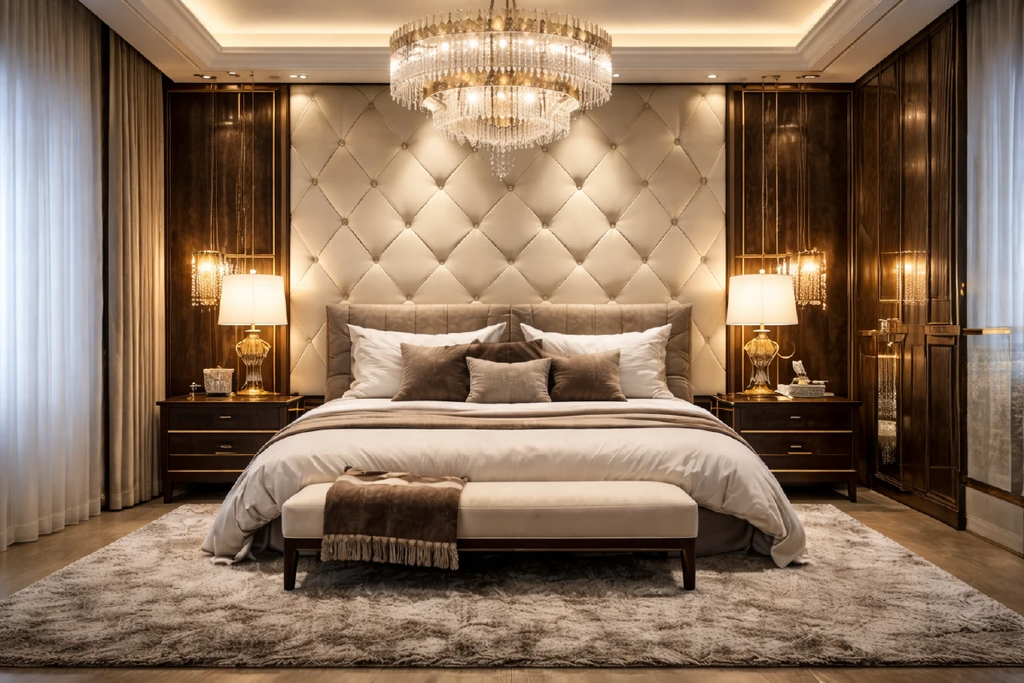
The most reliable way to balance material quality, aesthetics, and cost is to spend most on the elements that are hardest to change and that perform every day, such as windows, fixtures, and structural surfaces, and to save on finishes that are easy to update later. Pairing that rule with performance labels, smart purchase timing, and close control of what actually gets ordered lets a design look premium without carrying a premium price on every line.
Why does a design budget need a hierarchy?
Every design involves trade-offs. Without a clear hierarchy, budgets tend to be spent evenly across every surface, which means the most important elements get the same treatment as the least important ones. A better approach sorts each element into one of three groups: what the homeowner touches and uses daily, what is expensive or disruptive to replace, and what can be refreshed easily in a few years.
How the space will be used shapes that hierarchy. The AIA Home Design Trends Survey for the third quarter of 2026 found that demand for outdoor living spaces jumped 10 percent from 2025, and that accommodations for multiple generations, first-floor primary suites, and wider doorways topped the list of special features. AIA notes that these choices indicate homeowners are investing with the intention of aging in place. A home designed for the long term justifies higher spending on durable elements that will serve for decades.
Where should the budget go first?
Spend where performance and permanence overlap. Windows, exterior doors, roofing, plumbing fixtures, and primary flooring all carry high replacement costs and affect comfort every day. Hardware, lighting fixtures, paint, and decorative accessories can be upgraded later with far less disruption.
Windows are a good example. According to ENERGY STAR’s guidance on when to replace windows, windows take up approximately 8 percent of a home’s exterior surface but account for about 45 percent of heat gain or loss. That makes window quality one of the clearest places where a higher upfront cost pays back in comfort and energy performance. ENERGY STAR also notes that many new window frame types do not require painting, which reduces long-term maintenance.
How can purchase timing lower the cost of quality?
The same product can cost less depending on how it is bought. ENERGY STAR advises that replacing at least 8 to 12 windows at once helps achieve the best price per window, because installation costs fall when a contractor can haul, set up, and clean up for a larger project in one visit. The same logic applies to tile, flooring, and cabinetry: grouping purchases into fewer, larger orders often reduces delivery and installation costs.
Design intent only holds its value if the specified materials arrive as chosen. Substitutions, backorders, and short shipments are a common reason a carefully balanced design ends up with a mismatched finish or a rushed alternative. Contractors who manage purchasing through platforms like SubBase can check what was ordered against the specification and flag a backorder or shortage before installation day, which gives the designer time to approve an alternative instead of discovering it on site.
Lead times belong in the same conversation. A material that is ideal on paper but takes months to arrive can stall the project or force a rushed substitution. Asking suppliers for current lead times during design, and choosing a backup option for long-lead items, protects both the schedule and the look.
| Key figureENERGY STAR reports that windows make up approximately 8 percent of a home’s exterior surface yet account for about 45 percent of heat gain or loss. |
Which upgrades deliver high value for a small cost?
Some of the best design decisions cost very little. Water-efficient fixtures are one example. The EPA WaterSense guidance on bathroom faucets explains that WaterSense labeled bathroom faucets and accessories using a maximum of 1.5 gallons per minute can reduce a sink’s water flow by 30 percent or more from the standard 2.2 gallons per minute without sacrificing performance. EPA estimates that replacing old faucets and aerators with WaterSense models can save the average family 700 gallons of water per year.
EPA also notes that WaterSense labeled models are available at a wide variety of price points and in a broad range of styles, and that the savings can be as simple as installing a labeled aerator that costs as little as a few dollars. That makes efficient fixtures an easy place to choose a design-led finish without paying extra for performance.
Lighting controls follow similar logic. Dimmers and well-placed task lighting change how a room feels at a modest cost compared with replacing finishes.
Where can a design save without looking cheaper?
Strategic savings come from placing premium materials where they are seen and touched, and using simpler materials elsewhere. A few proven approaches:
- Use a premium tile on a feature wall or backsplash and a coordinated standard tile on the floor or remaining walls.
- Invest in solid, high-quality cabinet boxes and drawer hardware, then choose simpler door profiles that can be replaced later.
- Select one statement light fixture per room and use simpler fixtures for task and ambient lighting.
- Choose durable, mid-range flooring in high-traffic areas and reserve natural materials for lower-traffic rooms.
- Keep custom millwork for focal points and use stock profiles where they will not draw attention.
These approaches work because attention concentrates on a few focal points in each room. Matching premium spending to those points lets the rest of the palette stay simple without the space feeling unfinished.
How should quality be judged beyond appearance?
A material that looks beautiful in a showroom can disappoint if it stains, scratches, or fades quickly. Before committing, ask for samples, check warranty terms, and review maintenance requirements. Performance labels such as ENERGY STAR for windows and WaterSense for plumbing fixtures offer independent evidence that a product meets defined criteria, which simplifies the comparison between options that look similar.
It also helps to consider the full life of the material. A slightly more expensive surface that lasts longer and requires less maintenance is often the better value, especially in a home designed for the long term.
How should trade-offs be presented to clients?
Clients make better budget decisions when trade-offs are presented side by side. A simple comparison listing two or three options for a key element, with cost, durability, maintenance, and appearance noted for each, turns an abstract discussion into a clear choice. Showing the cost of a premium selection next to a specific saving elsewhere in the project makes the overall balance easy to see, and it creates a record of why each decision was made if the budget needs to be revisited later.
Bringing quality, aesthetics, and cost into balance
Balancing a design budget comes down to choosing where to be generous. Spend on what performs and is hard to replace, save on what can be refreshed, use performance labels to compare options, buy in sensible batches, and make sure the materials that arrive are the ones that were specified. A design built on those principles can look refined, perform well, and stay within its budget.