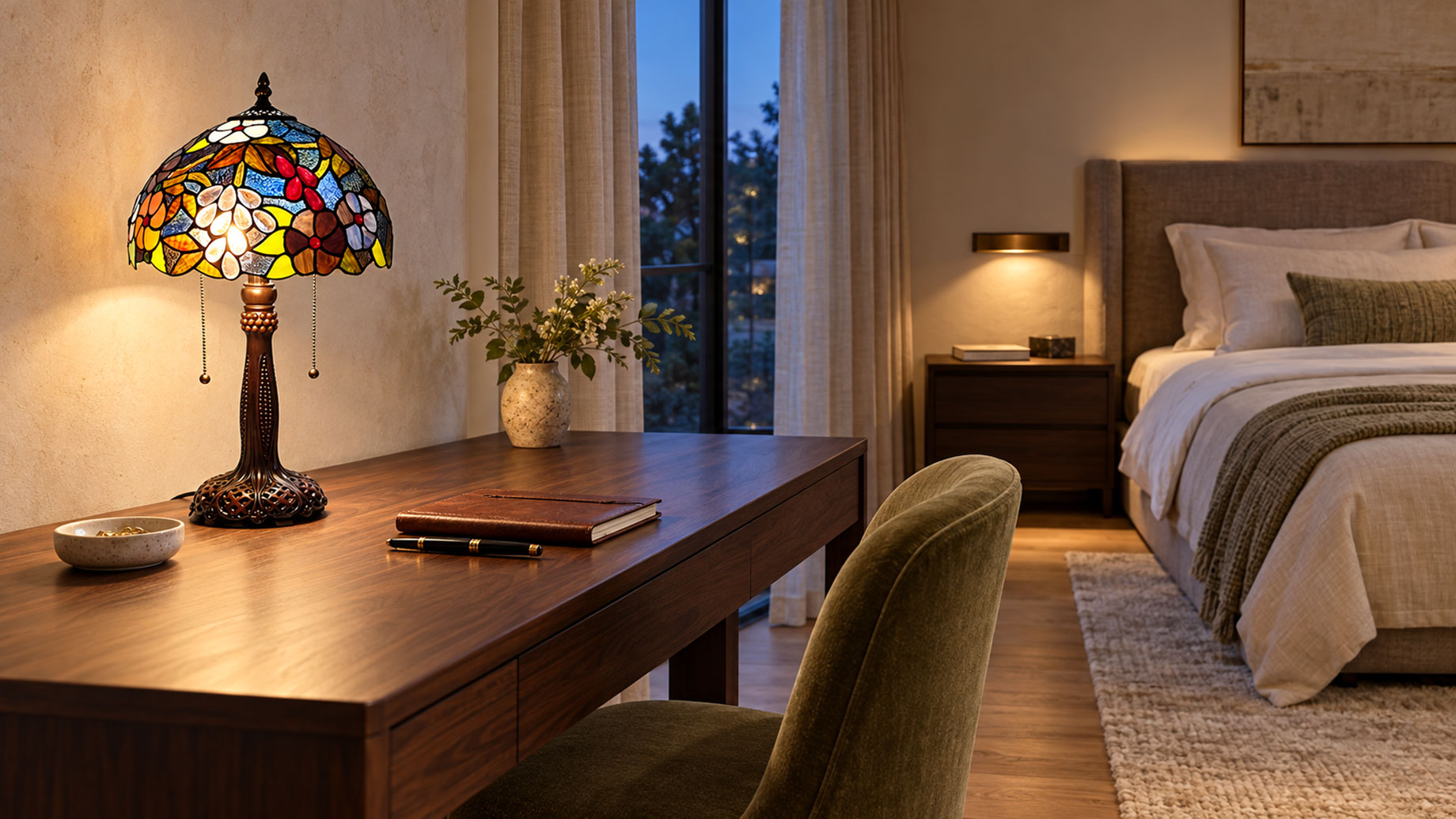
A bedroom suite is experienced at closer range than most rooms in a home. The bedside table is within arm’s reach. The writing desk might hold a journal rather than a computer. Materials that appear understated from the doorway reveal their grain, texture and finish when someone settles into the room.
Lighting deserves the same attention. A stained-glass lamp introduces detail at this intimate scale: a pattern to notice during the day and a different arrangement of color once illuminated. In a contemporary bedroom, it can provide the character that a restrained architectural setting sometimes needs.
The challenge is deciding where that character belongs. A lamp beside a writing chair has a different relationship to the room than one beside a pillow. Treating those positions individually creates a suite that feels composed while remaining comfortable to use.
Give the Writing Corner Its Own Identity
A small writing desk can make a generous bedroom feel more personal. Positioned beside a window or within a shallow alcove, it offers somewhere to write, read correspondence or plan the following day without sitting on the bed.
Choose its proportions around those activities. A slim desk with a usable drawer and a comfortable chair often serves the room more naturally than an oversized workstation. Leave space to pull the chair back without interrupting the route to the wardrobe or bathroom.
A Tiffany flower desk lamp can become the defining object in this corner. Floral glass brings an expressive element to a simple timber surface, particularly when the surrounding wall and upholstery are quiet. Let the lamp occupy one side of the desk, with enough clear space remaining for an open notebook and a relaxed writing position.
Check the effect while seated. The shade should not expose an uncomfortable view of the bulb, and the base should sit securely within the desktop. If the lamp’s decorative glow does not provide sufficient light on the page, add a discreet task light rather than trying to make the ornamental piece perform every function.
Use the Glass to Edit the Material Palette
A patterned shade can contain more colors than the rest of the bedroom combined. That does not mean each color needs to reappear elsewhere.
Select one quieter tone from the glass and use it in a substantial textile, such as the desk chair or a bed throw. An olive leaf might connect with muted green upholstery; a cream petal could sit comfortably against ivory linen. Stronger red, blue or amber details can remain concentrated in the lamp.
The base provides another reference. Dark bronze can relate to walnut furniture or a deep brown picture frame without requiring every metal finish in the room to match. Keep those connections broad enough to accommodate the natural differences between materials.
Consider the shade with its light switched off as well as on. Glass that appears relatively subdued in daylight may become the most prominent color in the room after dark. View fabric and paint samples beside the actual lamp before committing to a large upholstered surface.
Plan the Bedside from the Pillow Outward
Bedside lighting is often arranged from a standing position, even though its most important viewpoint is much lower. Sit against the pillows before deciding whether a lamp is the right height and shape.
When comparing Tiffany nightstand lamps, consider the combined height of the mattress, nightstand and lamp. A tall base on a high cabinet may place the shade awkwardly above the person using it. A low lamp can also be unsuitable if its light does not reach the book or its controls are difficult to access.
Check the footprint as carefully as the height. The nightstand needs room for ordinary possessions: a book, glasses and perhaps a small tray. A shade that extends into the pillow area or toward the walking route can make an otherwise attractive arrangement feel crowded.
Try the switch from a normal resting position. The movement should feel straightforward, without reaching behind the shade or stretching across the base. If two people share the room, independent bedside controls allow each side to be used without illuminating the entire suite.
Decide Where Symmetry Helps
A pair of matching lamps can give a broad headboard a clear frame. This arrangement works particularly well when the nightstands have similar dimensions and the bed is the central architectural feature.
However, matching lamps are only one way to achieve balance. A window close to one side of the bed, an alcove on the other or different reading habits may call for another approach. One side might use a decorative table lamp while the other relies on a compact reading fixture.
In that situation, keep a visual connection through the nightstands, artwork or bedding. Avoid compensating for every difference with another decorative object. A room can feel balanced when each side has an appropriate amount of visual weight, even if the objects are different.
The writing corner should remain part of this composition. If a strongly patterned lamp already draws attention there, quieter bedside pieces may give the room a more comfortable rhythm than three equally assertive shades.
Judge the Suite with the Ceiling Lights Off
Overhead lighting can conceal weaknesses in a bedroom arrangement. Switch it off and assess how the individual areas work together.
A useful selection of Tiffany bedroom lamps starts with the intended positions and activities, rather than the idea that every surface needs a lamp. The desk may need a distinctive focal point, the bedside may need accessible reading light, and a dressing area may require its own functional illumination.
Walk from the entrance to the bed and bathroom. Notice whether the room remains understandable without becoming uniformly bright. Then return to the pillows and check whether a desk lamp across the room feels pleasant or distracting.
Mirrors deserve attention during this exercise. A mirror can repeat an attractive shade, but it may also reflect a visible bulb toward the bed. Changing the lamp’s position slightly can sometimes resolve the problem without altering the furniture layout.
Resolve the Details Before the Room Is Finished
Portable lighting offers flexibility, but its practical needs should still be planned. Locate outlets where cords can run behind furniture without crossing circulation routes or being pinched by drawers and bed frames. Keep switches accessible after the furniture is in its final position.
Select bulbs according to the fixture’s labeling and manufacturer’s instructions. Consider their physical size and the way they appear through the glass, as well as their output. Where dimming is desired, confirm that the lamp, bulb and control arrangement support it.
For pieces sourced internationally, verify the electrical rating, plug and suitability for the destination before ordering. A decorative match does not establish compatibility.
Leave enough clearance around each shade for routine cleaning and follow the supplier’s care guidance. A lamp crowded by curtains or ornaments is harder to maintain and less satisfying to use.
Imagine the finished room at the end of an ordinary evening: the desk cleared except for a journal, a floral shade glowing beside it, and a bedside light that can be switched off without getting up. Those small, repeated interactions give a private suite its sense of luxury. The room feels considered because its decorative choices belong to the way it is lived in.
