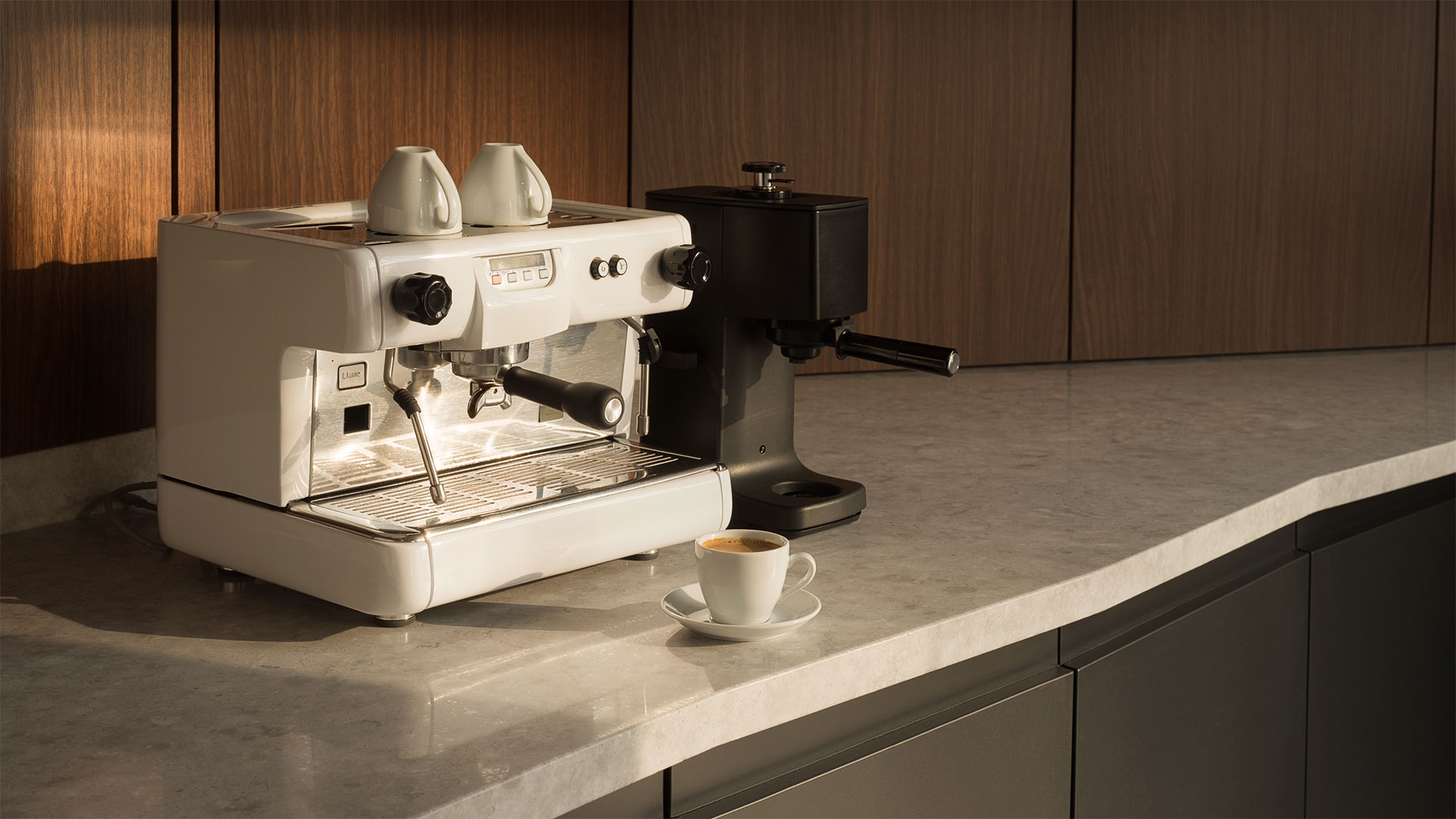
A luxury kitchen might include a plumbed-in espresso machine, a drawer fitted for coffee tools and a marble shelf with lighting beneath. These details can make a handsome coffee station. Its usefulness, though, depends on what happens there every morning.
An espresso corner should make a familiar routine easy: warm the cups, grind the beans, brew the coffee and clear up without crossing the kitchen at every step. Italian coffee habits offer a helpful starting point, from the cups warming above a café machine to the moka pot kept within reach of the stove.
The difference lies in a few practical decisions.
Keep the Cups Warm and Within Reach
In many Italian coffee bars, cups sit on the espresso machine’s warming tray, ready for the next order. There is a practical reason: a small espresso loses heat quickly when poured into cold porcelain.
Bring the same consideration into the home. If the machine has a designated cup-warming tray, keep the cups you use most often there. When the tray has not had time to warm them, or the machine does not have one, a hot-water rinse before brewing is a simple alternative. Empty the cup before pulling the shot.
Keep saucers and teaspoons nearby. The fewer cupboards you need to open, the more naturally the corner becomes part of the morning.
Give the Grinder a Permanent Place
Grinding beans immediately before brewing helps preserve their flavour and aroma. If you use a separate grinder, give it a permanent place beside the espresso machine, with accessible power for both appliances.
Allow a little counter space for dosing and tamping, and keep the knock box close enough to reach without carrying the portafilter across the kitchen. A shallow drawer beneath the counter can hold the tamper, cleaning brush and spare accessories, leaving the working surface easy to wipe down.
Keep the amount of coffee in the hopper modest, too. Store the remaining beans in a well-sealed container in a cool, dry, dark place. A month’s supply sitting beside a warm machine or beneath a downlight does little for freshness.
Plan Around the Machine’s Warm-Up Time
Warm-up time varies considerably between machines, including models with traditional E61-style group heads. Before choosing one, check how long it needs to be ready for brewing and consider how that fits your morning.
If automatic start-up matters, look for a machine with built-in scheduling or a manufacturer-approved timer arrangement. The aim is to make the first coffee fit comfortably into the household routine.
The cabinetry needs the same attention. Leave enough clearance to refill or remove the water reservoir, lift cups from the warming tray and use the steam wand comfortably. Follow the manufacturer’s ventilation and installation requirements, and make sure the drip tray can be removed easily for cleaning.
These are small details on a drawing. They become much more noticeable when a heavy machine has to be moved every time it needs water.
Include Water in the Design Brief
Water makes up most of an espresso, and its mineral composition affects both brewing and the condition of the machine. It deserves consideration while the coffee corner is being planned.
Hard water can cause limescale to accumulate inside the equipment. Water with very low mineral content may also fall outside the manufacturer’s recommended range. A filter that improves taste does not necessarily correct hardness or mineral balance.
For a plumbed-in machine, have the installer assess the local supply and specify treatment suited to the equipment. For a reservoir model, choose water or a treatment system that meets the manufacturer’s guidance.
Leave filters accessible for replacement, and consider the route to the sink. Refilling a tank, rinsing a milk jug and emptying a drip tray should all feel straightforward. Good coffee is easier to make consistently when the space makes maintenance easy, too.
Choose Coffee for the Cup You Want to Drink
The layout and equipment create the conditions for a good espresso. The beans give it its character.
Look for clear information about the roast, the beans in the blend and the recommended brewing method. If you enjoy the concentrated, full-bodied cup associated with traditional Italian espresso, use that preference as your starting point. Roast styles vary, so choose coffee whose flavour profile matches what you like to drink.
For a fuller set of buying considerations, Lusso Scelta’s guide to what actually makes a coffee brand luxury discusses sourcing, transparency and the expectations behind the label.
For those seeking Italian-roasted coffee, Lusso Scelta ships its selection from Vancouver. Whatever the source, buy whole beans in quantities that suit your household’s consumption, keep them properly sealed and grind what you need for each brew.
Leave Room for a Moka Pot
In many Italian homes, everyday coffee comes from a moka pot on the stove. An espresso at the neighbourhood bar and a moka brewed at home can each have a place in the day.
A thoughtful coffee corner can accommodate both. The moka pot offers its own style of rich stovetop coffee and is easy to take to a cottage or holiday home. Choose a size that suits the number of people you usually serve, and check compatibility with your hob, particularly if you cook on induction.
Keep it somewhere convenient, with room to dry after cleaning. A familiar object that gets used every day brings its own character to a kitchen.
The most useful lesson from Italian coffee routines is to let the habit guide the design. Choose materials you enjoy, keep the essentials close at hand and make room for the small tasks that surround every cup. An espresso corner earns its place through daily use.
Maysam Tehrani is the founder of Lusso Scelta, a Vancouver-based brand specialising in Italian-roasted coffee. He writes about Italian coffee culture and hospitality. More of his work is at maysamtehrani.com.
