Maintaining a traditional lawn can require considerable time, water, and regular attention. For homeowners looking to create a more practical outdoor environment, artificial turf has become one option worth considering.
However, turf does not have to be viewed as an isolated landscaping project. When combined with patios, pergolas, walkways, planting areas, and other outdoor features, it can become part of a larger backyard design.
For Los Angeles homeowners, this approach can create outdoor spaces that are attractive, functional, and easier to use throughout the year.
Rethinking the Traditional Lawn
A conventional lawn provides a familiar green appearance, but it also requires regular care.
Depending on the grass variety and local conditions, homeowners may need to mow, fertilize, irrigate, aerate, reseed, and address weeds or bare areas.
Artificial turf provides a different approach.
Modern synthetic grass products are designed to create a consistent green surface without the routine mowing associated with natural grass.
For homeowners considering artificial turf installation in Los Angeles, the important question is not simply whether turf looks like grass. It is whether the material, installation method, drainage, and intended use are appropriate for the specific property.
Start With Proper Site Preparation
The visible turf is only one part of an artificial lawn.
Proper preparation of the existing ground is essential.
Depending on site conditions, the installation process may involve removing existing grass, preparing and leveling the ground, addressing drainage, installing an appropriate base, and securing the turf.
If the underlying surface is not properly prepared, problems may develop later.
Uneven areas can become noticeable, drainage can be affected, and the finished lawn may not perform as expected.
For this reason, installation quality matters as much as the turf product itself.
Consider How the Yard Will Be Used
Artificial turf can serve several purposes.
Families with children may want an open area for outdoor play. Pet owners may want a durable surface that remains visually consistent. Other homeowners may simply want a green landscape surrounding a patio or pool.
The intended use should influence the product selection and installation approach.
For example, a high-traffic area may require different considerations from a decorative section of the yard.
Combine Turf With Hardscape
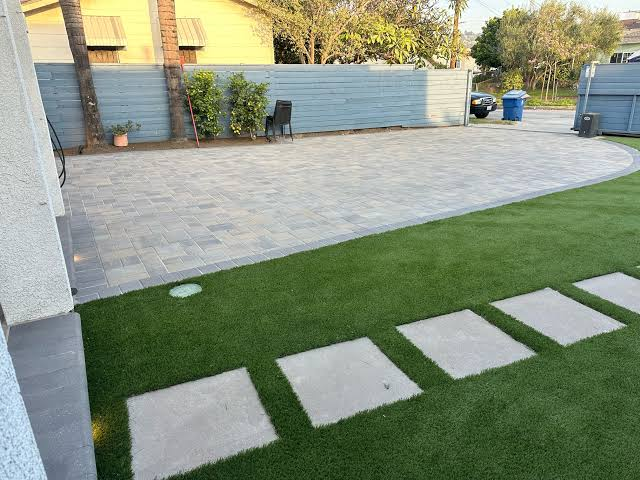
One of the most effective ways to create visual variety is to combine turf with hardscape materials.
Instead of covering the entire backyard with synthetic grass, homeowners can create defined sections using patios, walkways, pavers, or stone.
This approach can make the yard feel more intentional.
A rectangular turf area surrounded by paving can create a clean modern appearance, while curved turf edges combined with planting beds may create a softer landscape.
Create an Outdoor Room
A patio or pergola can turn part of the backyard into an outdoor room.
A seating area beneath a pergola provides shade while maintaining a connection to the surrounding landscape.
Adding turf around the structure can soften the hardscape and create a visual transition between the seating area and the rest of the yard.
For homeowners interested in patio and pergola installation in Los Angeles, the placement of these features should be considered in relation to the home’s doors, windows, sun exposure, existing landscaping, and desired views.
Think About Shade
Artificial turf and outdoor living areas have different relationships with sunlight.
A pergola or patio cover can provide shade for people, while the turf itself remains exposed to outdoor conditions.
When planning a backyard, consider where shade is needed during different times of day.
Furniture placement can also affect how the area functions. A shaded seating area near the turf may create a comfortable place for parents to watch children play.
Use Pathways to Connect Different Areas
A backyard can feel larger when pathways create clear connections between its different zones.
A path can lead from the house to the patio, from the patio to the lawn, or from the main entertainment area to a side yard.
Pavers are one option for defining these routes.
The pathway does not need to be completely straight. Curved layouts can create a more natural landscape, while straight lines may complement modern architecture.
Add Landscaping Around the Turf
Artificial turf does not mean the entire yard needs to be synthetic.
Plants, trees, shrubs, decorative stone, and garden beds can all be incorporated into the design.
Combining different textures can make the yard more visually interesting.
For example, a clean turf area can be bordered with planting beds, while a pergola can be surrounded by shrubs or small trees.
The goal is to create contrast without making the landscape feel cluttered.
Consider Drainage From the Beginning
Water management is important for any outdoor surface.
Artificial turf installations should be planned with the property’s drainage conditions in mind.
The surrounding hardscape and landscape should also be considered because water needs to move through the property appropriately.
A professional assessment can help identify potential drainage concerns before installation begins.
Think About Pets and Children
Families should consider how the outdoor space will be used by children and pets.
Areas with frequent activity should be planned around comfortable movement and easy access.
Pet owners may also want to discuss drainage and maintenance requirements before selecting a particular turf product.
The right installation approach depends on the property’s conditions and intended use.
Don’t Forget Outdoor Lighting
A backyard should not become unusable after dark.
Path lights, accent lighting, and illumination around patios can extend the time the space can be enjoyed in the evening.
Lighting can also highlight landscaping and architectural features.
For a turf-and-patio design, lighting can help define the boundary between different areas while improving visibility along walkways.
Plan the Backyard as a Complete Environment
The biggest advantage of combining turf with outdoor living features is that each component can support the others.
Turf can provide an open green area.
A patio can provide space for dining or relaxing.
A pergola can provide shade.
Walkways can connect the different areas.
Landscaping can soften the hardscape.
Lighting can make the entire property more usable after sunset.
When these components are planned together, the backyard can feel like one connected environment rather than a collection of individual projects.
Consider Future Changes
Outdoor spaces often evolve.
A family may eventually add an outdoor kitchen, fire feature, pool, garden, or additional seating area.
When planning a major renovation, it can be useful to think about these possibilities in advance.
Leaving appropriate space and selecting complementary materials can make future improvements easier.
Final Thoughts
A successful Los Angeles backyard does not have to rely on a traditional grass lawn or a single major feature.
Artificial turf, patios, pergolas, pathways, landscaping, and lighting can work together to create an outdoor environment designed around the homeowner’s lifestyle.
The most important step is planning the property as a whole.
By considering how people will move through the space, where they will relax, how the yard will be maintained, and how different materials interact visually, homeowners can create an outdoor area that remains useful and attractive for years to come.