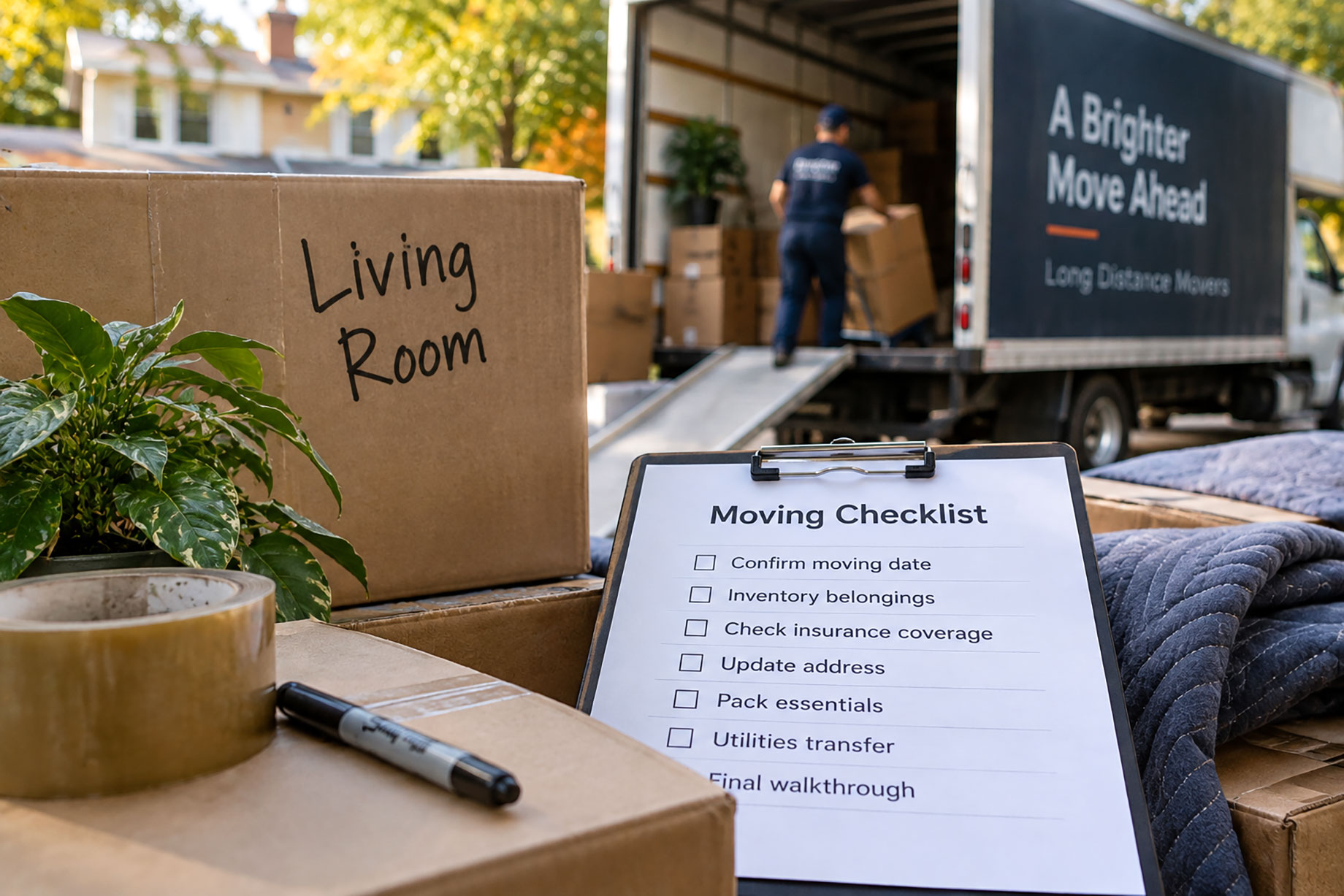
A move across state lines works nothing like a move across town. Pricing shifts from an hourly rate to a calculation based on weight and distance, delivery dates become windows instead of fixed appointments, and the entire planning timeline needs to start weeks earlier than most people expect. Treating a long-distance move like a bigger version of a local one is one of the most common ways plans go sideways.
Understanding how long distance movers actually operate, from pricing structure to delivery scheduling, helps avoid the kind of surprises that turn a cross-country relocation into a stressful, expensive ordeal.
Quick Answer: What Should You Know Before Hiring Long Distance Movers?
Long distance moves are typically priced based on shipment weight and distance traveled, rather than an hourly rate used for local moves. Delivery is usually quoted as a window rather than a fixed date, since carriers often combine multiple households on one route. Booking four to six weeks in advance, confirming licensing, and understanding valuation coverage options are all important steps before committing to a mover.
Why Long Distance Moves Require Different Planning
A local move fits into a single day, load the truck, drive across town, unload. A long-distance move spans hundreds or thousands of miles, and that distance changes nearly every aspect of how the process works, from pricing to scheduling to the level of advance planning required.
Pricing is the clearest example. Instead of charging by the hour, long distance movers typically calculate cost based on the total weight of the shipment and the distance it’s traveling, sometimes factoring in cubic footage for smaller loads. This is why an accurate, detailed inventory matters so much more for a long-distance move than a local one, since the quote depends directly on how much is actually being shipped.
Delivery timing works differently too. Long-distance carriers often consolidate multiple customers’ belongings onto a single truck to make longer routes economically viable, which means your delivery date typically falls within a window rather than landing on a specific, guaranteed day. Understanding this upfront helps set realistic expectations for coordinating move-out and move-in timing at both ends of the relocation.
Key Benefits of Working With Experienced Long Distance Movers
- More accurate cost estimates. A detailed inventory, ideally confirmed through an in-home or video survey, produces a far more reliable quote than a rough phone estimate.
- Reduced risk of scheduling conflicts. Understanding that delivery falls within a window helps avoid the stress of expecting belongings on an exact date that may not be realistic.
- Better protection for your belongings. Long-distance carriers typically offer tiered valuation coverage options, worth understanding fully before signing a contract, especially for higher-value items.
- Smoother coordination across a longer move. Experienced long-distance movers understand the logistics of multi-day transit in a way that reduces the chance of miscommunication or delays along the route.
Buying Guide: What to Check Before Booking
| Factor | Why It Matters |
|---|---|
| DOT and FMCSA licensing | Interstate movers are federally regulated and required to carry proper licensing; verify this before booking |
| Binding vs non-binding estimate | A binding estimate locks in pricing based on your inventory, reducing the risk of surprise charges later |
| Delivery window | Confirm the estimated delivery range and how the carrier communicates updates during transit |
| Valuation coverage | Ask about full-value protection versus basic released value, since coverage levels significantly affect liability for damaged items |
| Storage-in-transit options | Useful if your move-in date isn’t finalized when your belongings are picked up |
| Peak season pricing | Rates typically rise during summer months, so confirm pricing relative to your planned move date |
| Cancellation and rescheduling flexibility | Long-distance moves sometimes shift due to closing dates or lease timing, so flexibility matters |
If you’re moving during peak season, generally late spring through early fall, book earlier than you think you need to, since truck availability tightens significantly during this period.
Common Mistakes to Avoid
- Underestimating total shipment weight. A rough guess often leads to a quote that changes once the shipment is actually weighed, so a detailed inventory or in-home survey matters.
- Assuming delivery happens on an exact date. Long-distance carriers typically quote a delivery window, not a specific day, since trucks often combine multiple households on one route.
- Skipping a close look at valuation coverage. Basic released-value coverage often pays out far less than an item’s actual worth, so understanding upgrade options before signing matters.
- Booking too close to the move date. Especially during peak season, waiting too long to book can limit truck availability and push the pickup date later than planned.
Expert Tips
Request an in-home or video-based inventory survey rather than relying on a phone estimate whenever possible, since this produces a far more accurate quote and reduces the chance of price changes on moving day.
Ask directly about the carrier’s typical delivery window for your specific route, since transit time varies significantly based on distance and how many stops the truck makes along the way.
If your move-in date isn’t finalized, ask about storage-in-transit options, which hold your belongings temporarily rather than forcing a rigid delivery timeline that may not align with your new home’s availability.
Why Choose AtwoB Moving
Coordinating a cross-country relocation with long distance movers who handle the licensing, inventory planning, and delivery logistics properly is exactly what AtwoB Moving provides for customers planning an interstate move. Binding estimates, valuation coverage options, and realistic delivery windows are communicated clearly upfront, rather than left as surprises once the truck is already loaded.
Customers planning a long-distance relocation can expect straightforward guidance through scheduling, inventory documentation, and transit timing from the first quote through final delivery.
FAQs
How far in advance should I book long distance movers?
Four to six weeks ahead is a reasonable minimum, with longer lead times recommended during peak season between late spring and early fall.
How is long distance moving priced differently from local moving?
Long-distance moves are typically priced based on shipment weight and distance traveled, rather than the hourly rate commonly used for local moves.
Is my delivery date guaranteed with a long distance move?
Most long-distance movers quote a delivery window rather than a fixed date, since trucks often combine multiple households on one shared route.
What’s the difference between binding and non-binding estimates?
A binding estimate locks in your price based on the inventory provided, while a non-binding estimate can change once the shipment is actually weighed.
Do I need extra insurance coverage for a long distance move?
Basic valuation coverage is often included, but it may not fully cover an item’s actual value, so it’s worth asking about full-value protection for higher-value belongings.
What happens if I’m not ready to move into my new home yet?
Many carriers offer storage-in-transit options, holding your belongings temporarily until your move-in date is confirmed and ready.
How can I verify a long distance mover is properly licensed?
Interstate movers are required to carry DOT and FMCSA licensing, which can typically be verified through the Federal Motor Carrier Safety Administration’s online database.
Conclusion
Hiring long distance movers involves more planning than a local relocation, from understanding how weight-based pricing works to setting realistic expectations around delivery windows. Booking early, confirming valuation coverage, and requesting a detailed inventory survey upfront all help prevent the kind of surprises that turn a long-distance move into a far more stressful process than it needs to be.
