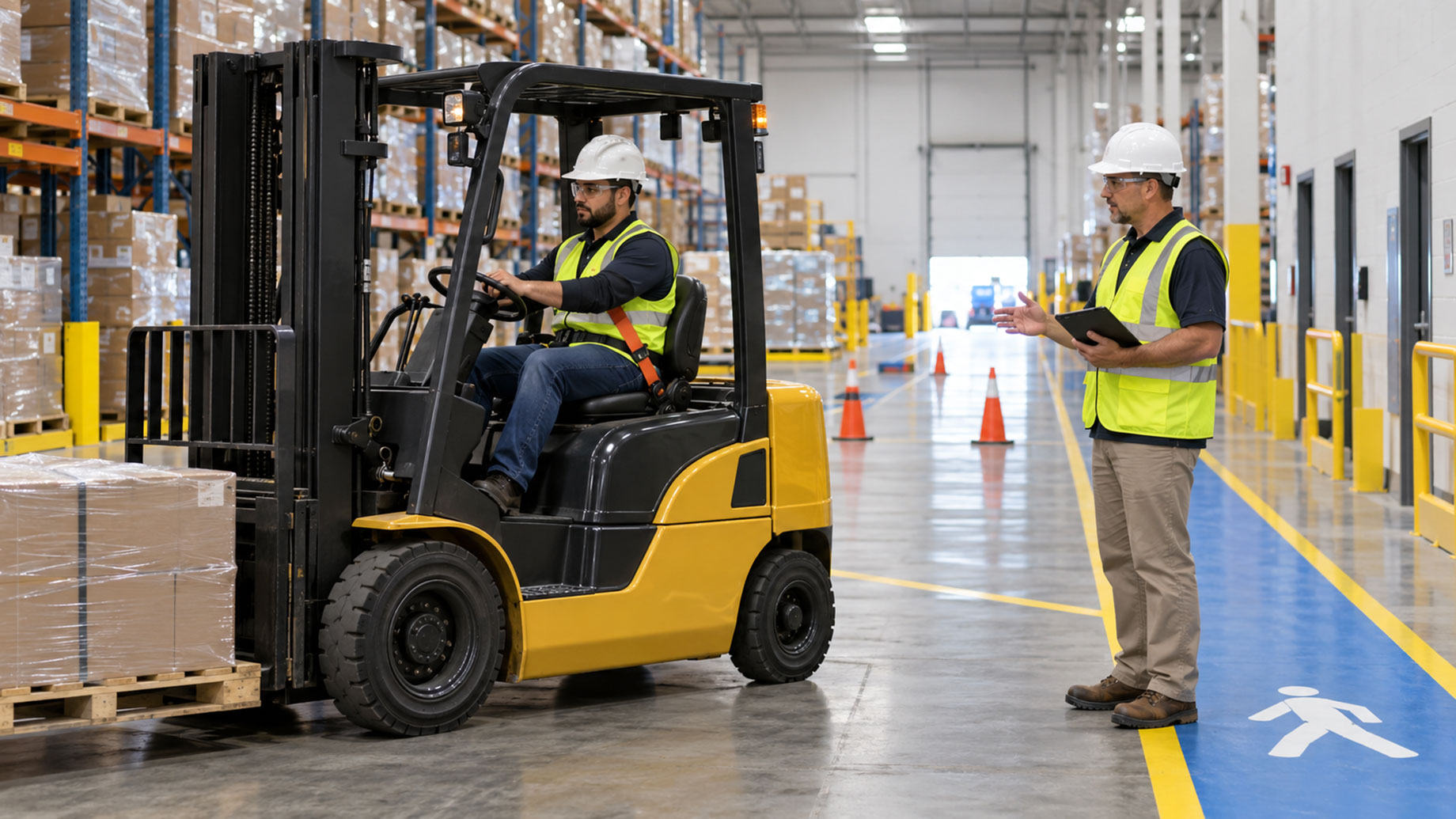
From busy distribution centers to construction sites and manufacturing plants, forklifts play an important role in Houston’s commercial and industrial operations. These machines allow workers to move bulky materials efficiently, but operating one without adequate preparation can create serious risks. Proper education helps employees understand how to control equipment, assess their surroundings, and respond appropriately to different working conditions. For businesses seeking qualified operator preparation, Forklift Certification Houston training can provide an important foundation for safer material-handling practices.
Houston’s Fast-Paced Workplaces and Forklift Use
Houston is home to a broad range of industries that depend on efficient material movement. Warehousing, shipping, construction, manufacturing, retail distribution, and logistics operations may all use powered industrial trucks as part of their daily activities.
In these environments, forklifts often operate around employees, delivery vehicles, shelving systems, machinery, and stored products. A small mistake can therefore affect more than the person behind the controls.
Creating a safe operating environment starts with making sure workers understand the equipment they are using and the conditions in which they will be working.
What Makes a Forklift Different?
A forklift may look relatively straightforward to operate, but its handling characteristics are very different from those of a conventional vehicle.
The steering wheels, counterweight, mast, forks, and carried load all influence how the machine behaves. A forklift can also become less stable when a heavy load is positioned incorrectly or raised too high.
Operators need to understand these characteristics before performing routine tasks. Knowing how the equipment responds to acceleration, braking, turning, lifting, and lowering can help workers make more informed decisions while operating it.
Identifying Risks Before Starting a Task
Safe forklift operation begins before the machine starts moving. Operators should take time to consider the area where they will be working.
Potential concerns can include:
- Narrow passageways
- Uneven flooring
- Sloped surfaces
- Poor visibility
- Overhead obstructions
- Pedestrian traffic
- Unstable materials
- Loading and unloading zones
- Other moving equipment
Conditions can change throughout a workday. A route that was clear in the morning may become crowded later, or a storage area may be rearranged. Operators should remain aware of these changes instead of relying solely on familiarity with a particular route.
The Importance of Load Awareness
A forklift’s ability to move heavy materials is one of its biggest advantages, but loads must be handled appropriately.
Operators should know the rated capacity of their equipment and understand that the size, weight, position, and shape of a load can affect stability.
A load should be properly positioned on the forks before transportation. Operators should also consider whether the load blocks their forward view or extends beyond the normal dimensions of the equipment.
When visibility is restricted, workplace procedures should be followed to determine the safest method of movement.
Why Load Balance Matters
An unevenly distributed load can behave differently from a compact, balanced pallet. Materials may shift, slide, or fall if they are not positioned securely.
Operators should avoid making sudden movements while carrying materials and should follow established procedures for lifting, lowering, and transporting loads.
Understanding how weight affects the forklift’s center of gravity is an important part of responsible operation.
Navigating Busy Warehouse Areas
Warehouses can become complicated environments when forklifts and people share limited space. Storage racks may restrict visibility, while employees may move between aisles or retrieve products.
Operators should maintain a controlled speed and exercise additional caution around corners, intersections, entrances, and other areas where visibility is limited.
Facilities can also improve safety through physical measures such as designated forklift routes, pedestrian walkways, floor markings, warning signs, and controlled crossings.
These measures work best when operators and pedestrians understand and respect the same traffic procedures.
Preparing Equipment Before Use
A forklift should not simply be switched on and driven away at the beginning of a shift. Operators should follow the required inspection process before using the machine.
The inspection may involve checking important components such as:
- Forks and attachments
- Tires
- Steering
- Brakes
- Hydraulic functions
- Warning devices
- Controls
- Safety restraints
- Fluid levels
- Visible damage
The exact inspection requirements can depend on the equipment and workplace procedures. If a potentially dangerous defect is discovered, employees should follow the appropriate reporting and equipment-control process rather than ignoring the problem.
Training for Real-World Situations
Effective forklift education should go beyond explaining controls and basic movements. Operators need to understand how safety principles apply to situations they may encounter during actual work.
For example, an employee may need to move a pallet through a crowded warehouse, operate near a loading dock, travel over a ramp, or work in an area where visibility is limited.
Practical instruction can help workers develop better judgment when facing these situations. It also gives employees an opportunity to understand the consequences of improper handling before they encounter a similar situation on the job.
Communication Is Part of Forklift Safety
Good communication can help reduce confusion when multiple workers and machines are operating in the same area.
Operators should understand workplace signals and communication procedures. Pedestrians should also know how to interact safely with forklifts and where they are expected to walk.
In areas with frequent activity, clear communication can help workers anticipate one another’s movements instead of making assumptions.
Why Refresher Training Has Value
Completing initial training does not mean safety awareness should stop there. Operators may encounter new equipment, different work areas, revised procedures, or changing responsibilities during their employment.
Refresher education can reinforce important principles and address practices that may have been forgotten or gradually replaced by unsafe habits.
Employers should also pay attention to situations that indicate a need for additional instruction, such as changes in equipment or operating conditions.
Encouraging Responsibility Across the Team
Forklift safety should not rest entirely on individual operators. Supervisors, managers, pedestrians, maintenance personnel, and other employees all contribute to the working environment.
Management can support safer operations by providing suitable equipment, maintaining clear procedures, addressing reported hazards, and making sure employees understand their responsibilities.
Workers can contribute by following established rules, staying alert, communicating when necessary, and reporting unsafe conditions.
A shared approach creates stronger safety awareness than relying on one person to prevent every potential incident.
Safer Operations Can Support Better Efficiency
Workplace safety and operational efficiency often complement each other. Accidents, damaged inventory, equipment repairs, and unexpected interruptions can interfere with productivity.
Operators who understand proper handling techniques can work more systematically while taking appropriate precautions. Well-defined routes and consistent procedures can also make material movement easier to coordinate.
For companies that handle large volumes of products or materials, avoiding preventable disruptions can have practical business benefits.
Creating a Long-Term Safety Mindset
Forklift safety should be treated as an ongoing workplace responsibility rather than a single training event. Regular inspections, operator education, equipment maintenance, clear traffic systems, and effective supervision can all contribute to safer operations.
The goal is not simply to teach employees how to move a forklift. It is to help them understand the decisions that accompany every movement, from picking up a load to traveling through a crowded work area.
Conclusion
Forklifts provide valuable support for Houston’s warehouses, construction projects, manufacturing facilities, and distribution operations. At the same time, their safe use requires knowledge of equipment behavior, load handling, workplace hazards, pedestrian interaction, and proper operating procedures.
Well-structured training can give operators the knowledge needed to approach these responsibilities with greater awareness. When training is combined with routine inspections, practical workplace controls, ongoing education, and a strong commitment to safety, businesses can create a more organized environment for both employees and equipment.
For Houston employers that rely on forklifts, making operator safety a consistent priority can help establish safer material-handling practices while supporting the smooth operation of the workplace.
