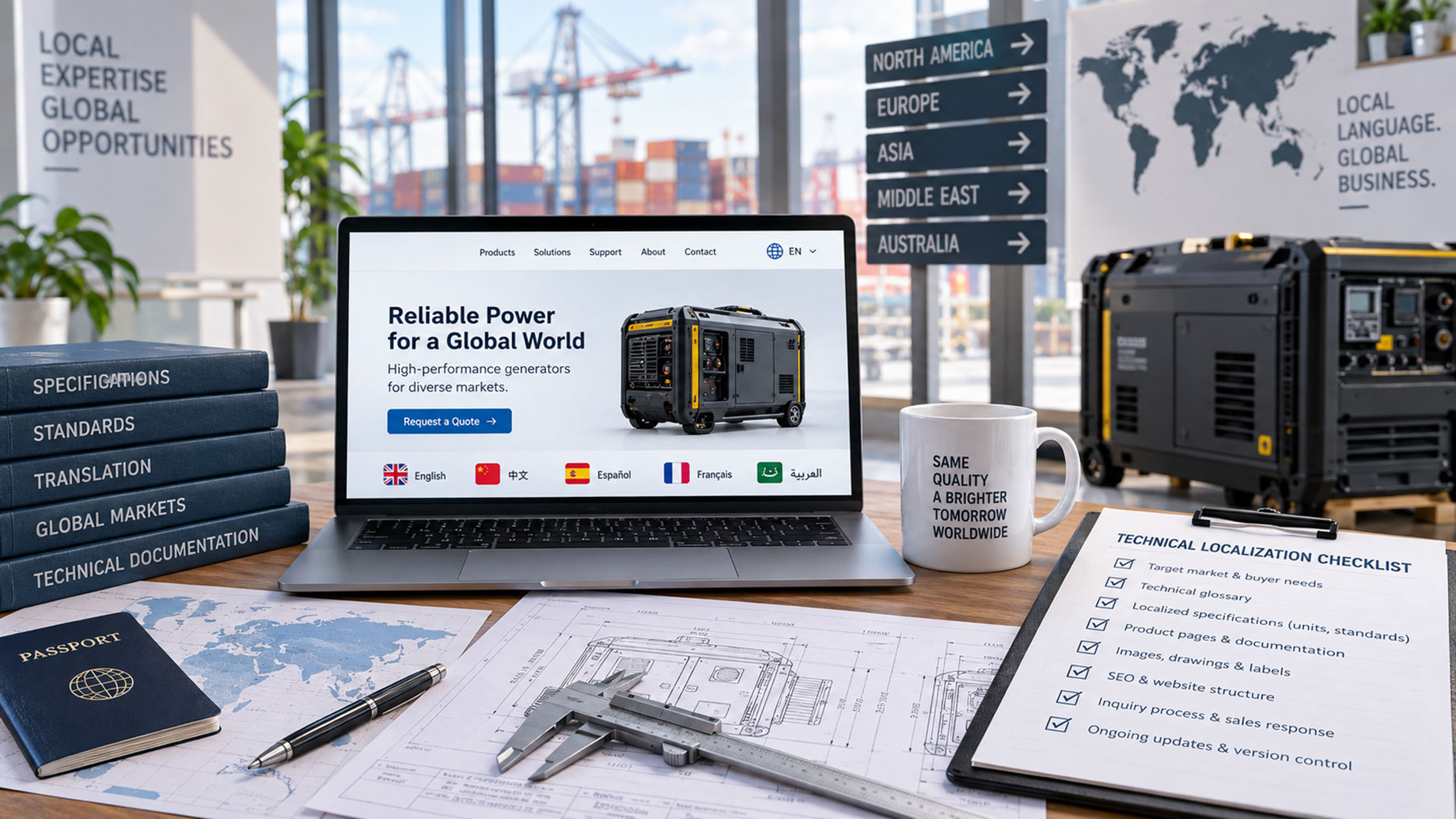
Technical localization is more than translating words. International buyers may use different product names, standards, units, drawing conventions, and purchasing expectations. Content that feels clear in one market can appear incomplete or misleading in another.
Start with the buyer and the market
Specify the target country, industry, and buyer role before translating. Engineers, distributors, and procurement teams need different information. Identify the products and applications your company can actually support in that market, then prioritize the pages buyers need most.
Research the phrases local buyers use to describe those products and applications. Map them to suitable pages instead of forcing the same keyword into every paragraph. An international SEO service can research local search language, while engineers confirm technical accuracy.
Build a consistent technical glossary
Create approved terms for product names, materials, processes, standards, and components. Record terms that must remain unchanged, such as model numbers and trademarks. Use the glossary across website pages, catalogs, drawings, and sales emails.
Ask a technically informed native reader to check whether the terminology is clear and natural. Technical review should also happen after translation, when errors or ambiguities introduced by the translated wording become visible.
Localize specifications without changing their meaning
Show units familiar to buyers, or provide both metric and imperial values clearly. Check pressure, temperature, thread types, electrical frequency, voltage, and dimensions. For example, when localizing a page about gasoline silent inverter generators, make the supported voltage and frequency options clear for each target market.
Do not convert tolerances carelessly. Rounding can change a technical requirement. Explain which certifications or standards apply to the product and market, and do not present different standards as automatically equivalent. Where appropriate, provide the scope, issuing body, and current documentation.
Avoid unsupported claims such as “best” or “guaranteed.” Environmental, performance, and comparative statements may also need review in the target market. Have qualified reviewers check sensitive claims before publication, especially on pages discussing certification or compliance.
Give buyers the information needed to evaluate a product
A localized product page should answer:
- What is the product?
- Which applications does it fit?
- Which sizes, materials, and configurations are available?
- What can be customized?
- Which standards apply?
- How is quality checked?
- How can the buyer inquire?
Replace empty phrases such as “best quality” with measurable evidence. Use case studies relevant to the target industry or application, explaining the problem, solution, and result.
Localize the supporting materials needed for a buying decision: datasheets, drawings, installation instructions, certificates, maintenance information, video captions, and request forms. Review images as well as words. Safety symbols, control panels, packaging labels, and screenshots may contain text or market-specific conventions that need a caption or an updated asset.
Review the complete website journey
Check page titles, headings, descriptions, URLs, internal links, and image text. Specialists in SEO for export websites should also review language annotations, canonical tags, sitemaps, indexing, and page speed. Avoid automatic redirects that prevent search engines or travelers from reaching the right language version.
A translated article should lead to the appropriate regional product page, document, and contact route. Be transparent about factory location and service model; do not imply that a local office exists when it does not. Keep local distributor information accurate and current.
The next step should fit the purchase. “Buy now” may be unsuitable for a custom manufacturing project. Actions such as requesting a quote, sending a drawing, confirming a specification, or asking for a sample may be more useful. Inquiry forms should accept local phone and address formats and carry the relevant product and page information into the submission.
Prepare the sales response
Localized content fails when an inquiry receives a generic reply in the wrong language. Prepare technical files, email templates, and clear response ownership for each market. Account for time zones and local holidays.
Buyers may also evaluate payment terms, delivery expectations, warranty language, service availability, and preferred contact channels differently. Explain what your company offers in clear local terms rather than copying assumptions from the source market.
Test the complete journey from search result to inquiry and reply. Correct confusing language before investing heavily in promotion.
Keep every language version current
Assign an owner for the source content and each localized version. Record approval dates, terminology versions, linked documents, and next review dates. When a specification changes, notify every market owner and update the affected pages and downloads.
Use revision control for catalogs and drawings. Remove old certificates and discontinued products promptly. A simple change log can distinguish urgent technical corrections from optional style improvements.
Track target-country visits, qualified inquiries, quotation rates, and sales feedback. Search rankings are useful, but lead quality shows whether the content reaches the right buyers. Add questions from inquiries to the content plan.
Technical localization connects buyer language, accurate specifications, local standards, search structure, and sales response. Start with priority products, build a glossary, review every technical claim, and test the full buyer journey.
