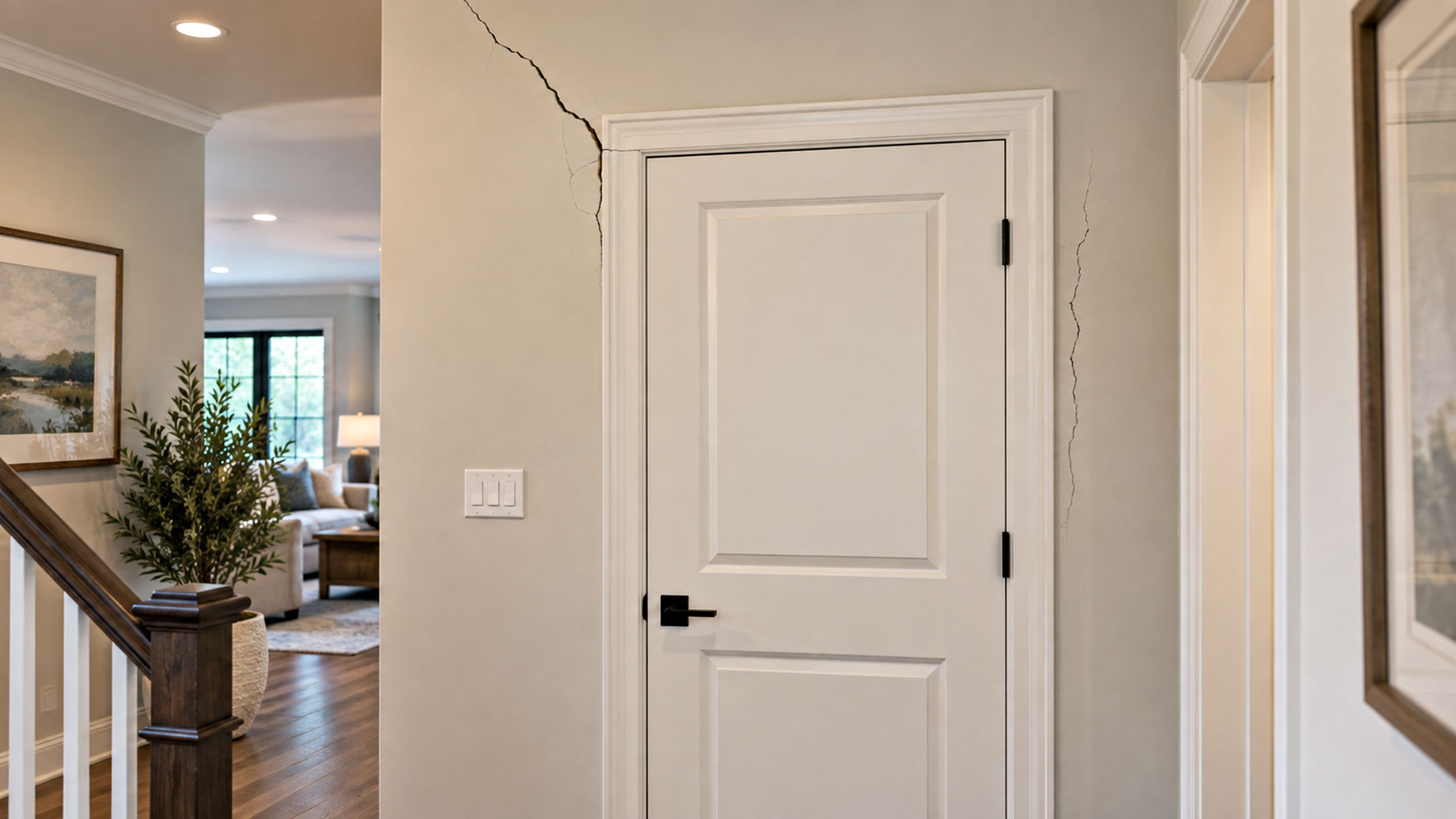
Quick answer first. A thin straight crack going up and down is usually nothing. Just a house settling, which happens to almost every home in its first few years. What actually deserves a second look is a crack running at an angle, a wide one, or one that shows up right when a door or window stops closing properly. That’s the point where it’s worth looking into crawl space solutions near me, because most foundation trouble starts under the house, not in the drywall.
Figuring out which is which isn’t always obvious just from staring at it. A few patterns tend to give the real ones away though.
What Normal Settling Cracks Usually Look Like
Every house settles a bit after it’s built. Usually the first couple years. Soil compacts. Wood framing shifts. Small hairline cracks pop up in drywall or plaster, and that’s really all it is.
Most of these are thin, straight, run up and down. They don’t spread much. Doors still shut fine. Windows too.
Here’s a cheap trick to check one. Grab a coin, measure the width against it. Anything under an eighth of an inch, staying about that size for a few months, is probably just cosmetic. Paint over it and move on.
Warning Signs Worth Taking Seriously
Foundation cracks tend to look different, and they rarely come alone. Worth watching for:
- Diagonal cracks near window or door corners
- Wide cracks, past a quarter inch, or ones that seem to be growing
- Stair-step cracking in brick or block foundations
- Doors or windows suddenly sticking or not latching
- Floors that feel uneven or tilted somewhere in the house
- Gaps opening up between a wall and the ceiling or floor
One crack alone probably isn’t much. A few of these together, especially getting worse over a few months, usually means something’s happening under the house.
Why the Crawl Space Is Often the Real Story
It often results from the crawl space, not the walls. It may be due to moisture accumulation, poor drainage, movement of soil underneath the house, among others. In the long run, this leads to stress on the foundation, which eventually translates into cracks, tilting floors, doors not seating properly, among others.
This is where people usually get it backwards. See a crack, patch it, paint over it, forget about it. Meanwhile the actual cause is sitting under the house the whole time, usually humidity or standing water quietly working against the foundation. Fix the crack and skip the crawl space, and there’s a good chance it comes back, or something worse shows up next.
What to Check Before Calling Someone
Worth doing a few things before reaching out for a professional opinion.
- Photograph every crack. Put a coin or ruler in the shot for scale.
- Check back in a few weeks. See if anything grew.
- Test doors and windows around the whole house, not just near the crack.
- Check the crawl space if it is easily accessible. Presence of standing water, moisture in the insulation, and a musty odor.
- Consider whether the problems arose after any rainfall or wet weather period.
This will make it easier for whosoever has to investigate the property later to know what is happening.
Getting an Honest Opinion
Not every foundation company tells it straight. Some lean toward pushing the most expensive fix they’ve got. Looking for the best crawl space service near me usually comes down to a few basic checks. How long have they actually been doing this locally? Do they explain what’s causing the problem, or jump straight to a sales pitch. Do they hand over a written report, or just talk numbers out loud and leave it at that.
A good inspector walks through both the cracks and the crawl space, and connects the two clearly. Someone who only glances at the walls and skips the crawl space entirely, that’s usually a reason to get a second opinion elsewhere.
Timing and Cost
Foundation problems don’t fix themselves. Waiting almost always makes it pricier, not cheaper. A crack that could’ve been a cheap patch job this year can turn into real structural work if the moisture problem underneath keeps getting ignored for another year or two.
Cost swings a lot depending on what’s actually wrong. A minor drainage fix might run a few hundred dollars. Full foundation stabilization, piers, real structural repair, that climbs into the thousands fast. That gap is exactly why an honest inspection matters this early, since it decides which side of that range someone’s actually looking at. Getting ahead of it before cracks widen or doors stop closing tends to keep crawl space solutions near me on the cheaper side instead of the expensive one.
Frequently Asked Questions
- How can I be sure if a wall crack is dangerous? See if the crack is wide, if it is angled, or if other signs such as sticky doors and tilted floors are present. Small, thin, straight cracks that don’t change are probably harmless. Large, angled or widening cracks require inspection.
- Can moistures in a crawl space create cracks upstairs? Indeed, moisture in the crawl space, as well as soil movements caused by it, lead to the foundation being under different pressure that usually becomes visible in the form of cracks even far from the source, sometimes even in the second floor.
- Should I fix the crack first before the inspection? No, you should leave the crack unattended. The crack’s real dimensions and characteristics can’t be established if the crack is already patched.
- How extensive should a foundation inspection be? The inspection should examine for cracks in walls, the level of floors, the function of doors and windows, and also inspect the crawl space for any presence of moisture or drainage issues.
- Is it common for newer houses to have cracks? Yes, some settling within the first couple of years after construction is normal. However, this becomes an issue when the cracks continue to develop, grow larger, and are accompanied by other signs.
- Is it worth asking a company for references before hiring them? Definitely. A company that’s actually good at this, the kind people mean when they search for a best crawl space service near me, won’t hesitate to share past jobs or connect someone with a previous customer.
Wall cracks alone rarely tell the whole story. Checking the crawl space underneath, and getting an honest read on what’s actually going on, usually saves homeowners from either overreacting to something harmless or ignoring something that’s genuinely getting worse.
