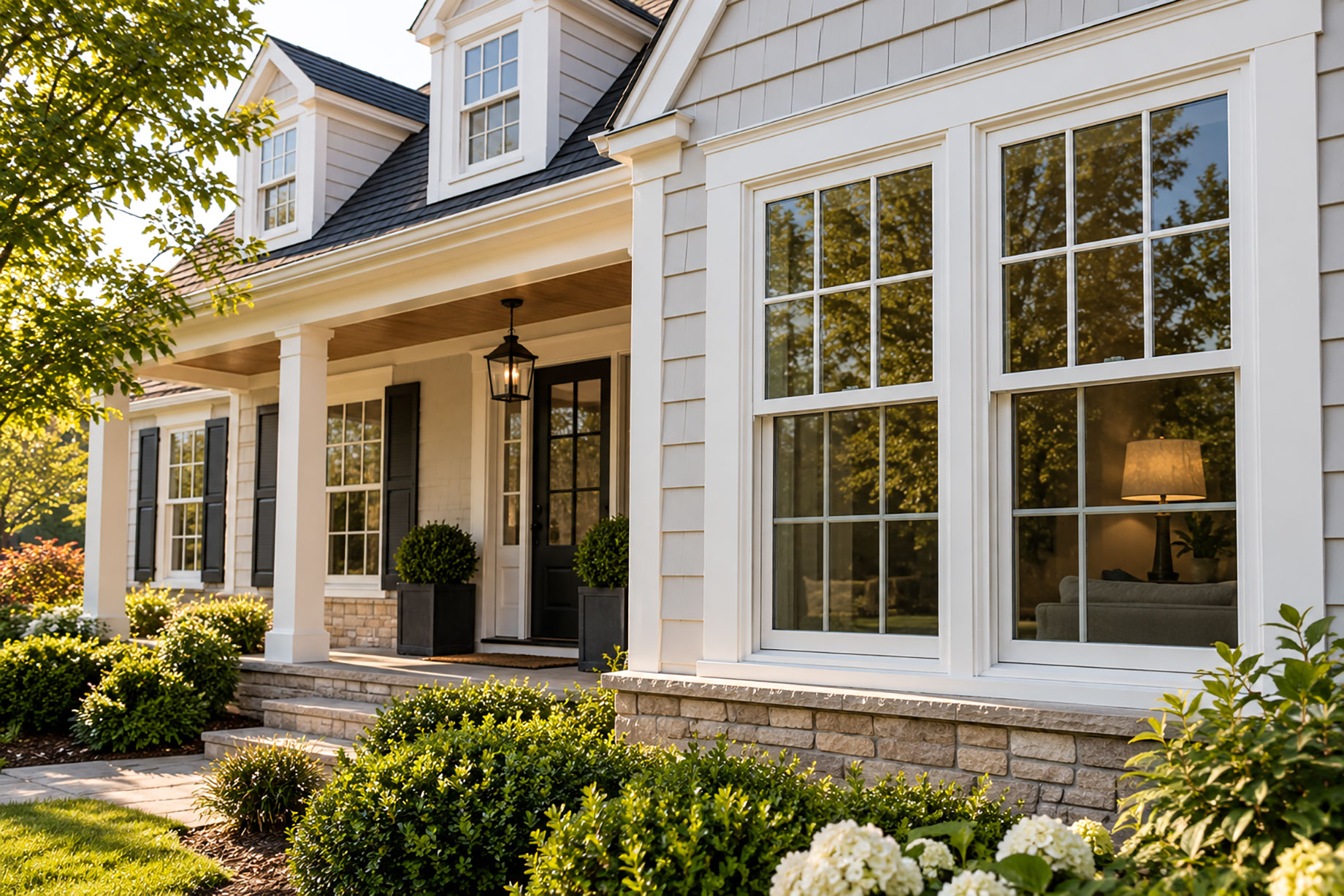
If you are planning a window replacement, it is easy to focus on the big decisions first: the style of window, the color, and the overall budget. Then the smaller choices show up, and suddenly you are staring at samples of grids, glass packages, and hardware finishes wondering what actually “matches” your home. These details matter more than most homeowners expect. Done well, they make new windows look like they belong. Done poorly, even high-quality windows can feel slightly “off,” like a modern insert that never quite fits the architecture.
The good news is you do not need a design degree to make smart, cohesive choices. You just need a practical framework that ties these decisions to your home’s style, your daily life, and your local climate.
Below is a homeowner-friendly guide to choosing grids, glass, and hardware that work together, without overthinking it.
Start With the House, Not the Catalog
Before you pick options, take five minutes to look at your home the way a visitor would. Step back to the curb and ask:
- What is the architectural style or general “era vibe” of the house?
- Are the windows a defining feature or more of a background element?
- Do you have repeated shapes and lines (symmetry, shutters, columns, gables)?
- Are there existing metal finishes that you should coordinate with (door handle, porch lights, railing)?
Then walk inside and notice:
- Do you want brighter rooms, less glare, or more privacy?
- Are certain rooms hotter in summer or drafty in winter?
- Do you have views you want to protect (trees, backyard, farmland, city skyline)?
- Do you often open the windows for fresh air?
Matching your home is not just about copying what is there today. It is about respecting the architecture and improving how the home feels to live in.
Grids 101: What They Are and Why They Matter
“Grids” are the dividing bars that create the look of multiple window panes. Historically, grids existed because large sheets of glass were harder to manufacture. Today, grids are largely aesthetic, but they still carry a lot of visual weight.
The three common grid constructions
You will often hear these terms when looking at options:
- Grilles between the glass (GBG): Grids sealed between panes of insulated glass. Easy to clean because the glass surface is smooth. The look is clean and consistent, though some homeowners feel it can appear flatter than traditional windows.
- Simulated divided lites (SDL): A grid on the exterior (and sometimes interior) that simulates true divided panes. Often paired with a spacer bar between the glass to add depth. This tends to look more “authentic,” especially on traditional homes.
- Removable interior grids: A grid that snaps onto the interior side of the window. Flexible if you want the option to change the look later. Some people dislike the slightly more “added-on” feel.
If your goal is a crisp, low-maintenance look, GBG is popular. If your goal is historical character or stronger curb appeal details, SDL often reads as more classic.
How to Choose the Right Grid Pattern
Grid pattern is where most “matching” decisions happen. A helpful rule is to let the architecture set the tone.
Traditional and colonial-style homes
Many colonials and traditional two-story homes look best with classic, symmetrical grid patterns. Common choices include:
- 6-over-6 (six panes on top, six on bottom)
- 9-over-9 on larger windows
- 6-over-1 (grids only on the top sash) if you want a slightly lighter look
If the home has strong symmetry, consistent grids usually feel right. The windows become part of the rhythm of the facade.
Farmhouse, craftsman, and cottage styles
These styles often look good with grids on the top sash only, or in a simpler pattern that does not fight the trim details.
- 4-over-1 or 6-over-1 often suits craftsman-style homes
- For cottages, small-scale grids can look charming, but keep them consistent
A common mistake is choosing a grid pattern that is too busy for the size of the window. If the panes become tiny, the window can feel more like a pattern than a source of light.
Contemporary and mid-century influences
Modern and mid-century homes often look best with no grids at all, or very minimal grids.
- No grids emphasizes glass and clean lines
- If you want structure, consider a simple vertical pattern that mirrors other lines on the home
When in doubt with modern designs, simpler almost always looks better.
Grid Profiles and Placement: Subtle Details That Change the Look
Two windows can have the same pattern and still look different because of profile and placement.
- Grid width: Thinner grids look more delicate; wider grids look bolder and more traditional. A chunky grid can overpower smaller windows.
- Grid profile: Some grids are flat; others have a contoured profile that mimics wood trim. Contoured profiles tend to feel more classic.
- Interior vs exterior grids: Exterior grids impact curb appeal most. Interior grids impact how the window feels in the room.
If you have existing trim that is detailed and traditional, contoured grids usually feel more natural. If your interior style is clean and simple, flatter grids can blend in better.
Glass: The “Invisible” Choice That Impacts Comfort Every Day
Once grids set the style, glass sets the experience. Glass selection affects temperature, glare, fading, condensation risk, and even sound.
Learn the two numbers that matter most
You do not need to memorize ratings, but you should know what they represent.
- U-factor: How well the window insulates. Lower generally means better insulation.
- SHGC (solar heat gain coefficient): How much solar heat comes through. Lower reduces heat gain; higher allows more warmth from sunlight.
If a room bakes in afternoon sun, SHGC matters. If a room feels chilly in winter, U-factor matters.
Low-E coatings: Not one-size-fits-all
Low-E glass is designed to manage heat transfer. Different Low-E options can be tuned for different needs, such as reducing summer heat gain or improving winter insulation. The “best” Low-E depends on your climate and which direction your windows face.
A practical approach is to think room by room:
- South and west-facing rooms often benefit from glass that reduces glare and heat gain.
- North-facing rooms often benefit from glass that prioritizes insulation and brightness.
- Bedrooms may benefit from better sound control and reduced morning glare.
Double-pane vs triple-pane
Double-pane is common and works well in many climates. Triple-pane can improve insulation and comfort, especially if you are sensitive to drafts or have large expanses of glass.
Triple-pane can be a smart choice for:
- Homes in colder regions or exposed windy sites
- Large windows where you feel temperature differences near the glass
- Bedrooms where comfort is a priority
If your goal is simply “better than what I have,” double-pane with a good Low-E package is often a strong step up from older windows.
Tempered, laminated, and obscure glass
These are specialty glass options worth knowing:
- Tempered glass: Heat-treated to break into safer pieces. Often required by building codes in certain locations, like near doors or low-to-the-floor areas.
- Laminated glass: Similar concept to a car windshield, with a layer that holds glass together. It can help with sound reduction and adds resilience.
- Obscure or privacy glass: Great for bathrooms or sidelights where you want light without a clear view.
If you have a bathroom window facing a neighbor or a street, privacy glass can look more intentional than a curtain that is always closed.
How to Match Hardware to Your Home’s Style
Hardware seems small, but it sits at eye level and gets touched every day. Matching hardware is mostly about choosing a finish and shape that fits your home and your other fixtures.
Finish: Coordinate, do not overmatch
You do not need everything to be identical. You just want it to feel coherent.
- Brushed nickel or satin finishes often suit transitional and contemporary interiors.
- Oil-rubbed bronze or darker finishes often suit traditional homes, rustic styles, and warm color palettes.
- Matte black can work across many styles, but it looks best when it repeats elsewhere (lighting, door hardware, faucets).
If your home has mixed metals already, pick the finish that appears most often on the same floor as the windows, or the finish on your most visible exterior door.
Style: Traditional vs clean-lined
- Traditional homes often look better with slightly curved, classic lever shapes.
- Contemporary interiors often look better with straighter, simpler hardware.
Also consider visibility. Casement and awning windows have more visible hardware than double-hung windows. If you are mixing window styles, make sure the hardware finishes are consistent.
Do Not Forget the Exterior View
Many homeowners choose options from inside the house, then realize the exterior looks mismatched. Before finalizing, consider:
- Grid pattern consistency across the front elevation: The street-facing side should look intentional and balanced.
- Window color and trim contrast: If you have white trim, a white window frame often looks seamless. Dark frames can look striking, but they should align with other exterior accents.
- Shutters and grids: If you have shutters sized for “traditional” windows, grids can help keep the facade proportional. No grids can still work, but sometimes it changes the visual balance.
If possible, ask for visual mockups or sample photos of similar homes. Even simple renderings can prevent regret.
A Simple “Match Test” Before You Commit
Use this quick checklist to pressure-test your selections:
- Style fit: Does the grid pattern match the home’s architecture?
- Scale: Are the panes large enough to look clean from the curb?
- Consistency: Are the most visible windows coordinated, especially on the front?
- Comfort: Does the glass choice address heat, glare, drafts, or noise where it matters?
- Maintenance: Will you be happy cleaning it and living with it for years?
- Hardware harmony: Does the finish coordinate with nearby fixtures inside and outside?
If you can say “yes” to most of these, you are in good shape.
Final Thought: Good Matching Looks Natural, Not Perfect
The goal is not to turn your home into a showroom. The goal is for your new windows to look like they belong, support your comfort, and complement the details you already like about the house.
When grids echo the architecture, glass supports how you live in each room, and hardware feels consistent with the rest of your finishes, the result is subtle but powerful. People may not immediately say, “Nice grids.” They will just feel that the home looks cared for and put together.
That is the difference between simply replacing windows and choosing windows that truly match your home.
