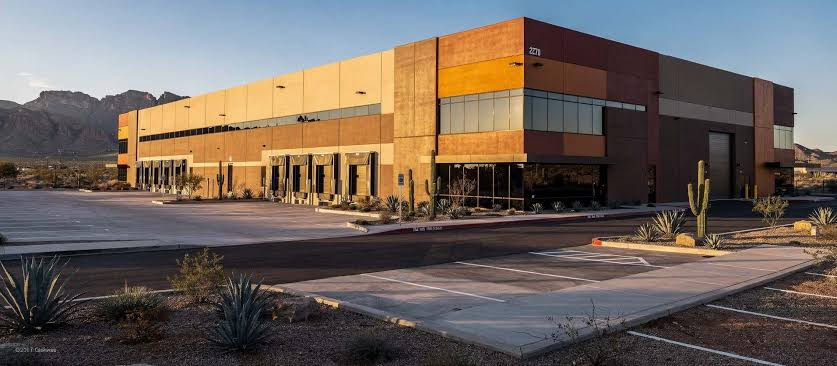
Tucson’s industrial market has always benefited from its position near the U.S.-Mexico border, but the nearshoring wave reshaping North American manufacturing has turned that geographic advantage into one of the region’s biggest economic stories. As global companies move production out of Asia and closer to U.S. consumers, Sonora, Mexico has emerged as one of the top nearshoring destinations on the continent, and Tucson sits directly in the path of that growth. This shift is influencing everything from warehouse demand to lease rates to the types of tenants filling industrial space across the metro. Here is what investors, business owners, and tenants need to understand about how nearshoring and Mexico trade are changing industrial real estate in Tucson, AZ.
What Nearshoring Actually Means for Tucson
Nearshoring refers to the practice of moving manufacturing and sourcing operations closer to the end consumer market, typically shifting production from Asia to Mexico or other nearby countries. The trend has accelerated sharply since 2020, driven by tariff volatility, long ocean transit times from Asia, and a broader push toward supply chain resilience. Mexico has been the primary beneficiary, closing 2025 with a record 40.87 billion dollars in foreign direct investment, up 10.8 percent year over year, and climbing six spots on Kearney’s 2026 FDI Confidence Index.
For Tucson, the relevant piece of this story is Sonora. The state has become the primary nearshoring corridor for U.S. companies, with cities like Hermosillo, Nogales, Guaymas, and Ciudad Obregón offering direct highway and rail access into Arizona. Hermosillo sits roughly four hours from Tucson by truck, which makes Southern Arizona a natural logistics, distribution, and light manufacturing hub for companies building supply chains that straddle both sides of the border.
A few sectors are driving much of this activity in the Sonora-Tucson corridor:
- Automotive suppliers serving Ford’s Hermosillo plant and the Tetakawi manufacturing cluster in Guaymas
- Aerospace component manufacturers supplying U.S. defense and commercial aviation programs
- Medical device and clean room manufacturing serving U.S. healthcare companies
- Electronics assembly, including wiring harnesses and semiconductor packaging
- Third-party logistics and distribution centers supporting cross-border freight
- Energy-related manufacturing, including solar panel assembly and electrical equipment
Why Tucson Benefits More Than Most U.S. Border Cities
Tucson is not the only U.S. metro positioned to benefit from nearshoring, but it has some distinct advantages over other border-adjacent markets. The Nogales-Mariposa port of entry, just south of Tucson, is one of the busiest commercial crossings on the U.S.-Mexico border, and Mexico now holds roughly 16.3 percent of total U.S. trade as of 2026, making it the country’s top trading partner. That volume has to move somewhere, and Tucson’s location along Interstate 19 and Interstate 10 puts it directly in that flow.
Several factors set Tucson apart:
- Direct highway access from the Nogales port of entry along I-19, connecting into I-10 for onward distribution across the Southwest and beyond
- A lower cost basis for industrial real estate compared to Phoenix, which is absorbing much of the broader Arizona semiconductor and advanced manufacturing boom
- An existing base of aerospace, defense, and advanced manufacturing employers that pairs naturally with nearshored supply chain activity
- Established customs brokerage, trade compliance, and logistics expertise built up over decades of cross-border commerce
- Available industrial land and buildings, particularly in the Airport and Northwest submarkets, that can accommodate warehousing, light assembly, and distribution uses
Companies looking for U.S.-side warehousing, final assembly, or distribution operations to complement Mexican manufacturing plants are increasingly finding that Tucson offers the right combination of proximity, cost, and infrastructure.
Current Conditions in Tucson’s Industrial Market
Nearshoring demand is arriving at an interesting moment for Tucson’s industrial sector. After a major wave of speculative construction between 2023 and 2025, vacancy has risen from historic lows near 2.7 percent to a range of roughly 8 to 9 percent in 2026, as the market absorbs recently delivered space. CBRE reported industrial vacancy at 9.0 percent in the second quarter of 2026, up from 4.4 percent just a year earlier.
That headline number, however, understates how tight the market remains for the kind of space nearshoring-driven tenants actually want. When large vacant buildings over 100,000 square feet that cannot be subdivided are excluded, functional vacancy for smaller, well-located industrial space falls to roughly 2.5 percent. In other words, the buildings best suited to light manufacturing, assembly, and distribution operations tied to cross-border trade remain in short supply, even as headline vacancy has climbed.
Other relevant market conditions include:
- Ground-up construction has become highly limited following the completion of major projects, as rising material and labor costs constrain new speculative development
- The Airport submarket has led recent leasing demand, benefiting from its proximity to both the airport and major trade corridors
- Industrial cap rates in Tucson currently range from roughly 5.00 to 6.00 percent, among the tightest of any property type in the market
- Lease rates remain firm for well-located smaller spaces, with landlords continuing to selectively raise rents even as overall vacancy has increased
For companies and investors focused on industrial real estate in Tucson, AZ, this combination of rising headline vacancy alongside tight functional availability creates a nuanced opportunity. Larger bulk logistics buildings may offer near-term value and negotiating leverage, while smaller, well-located flex and light industrial space remains competitive and harder to secure.
Tariffs, USMCA, and What They Mean for Tucson
Trade policy remains one of the biggest variables shaping how much nearshoring activity ultimately lands in Tucson. Several developments are worth tracking:
- The USMCA underwent a formal joint review that launched in March 2026, with technical talks continuing through the year. The outcome is expected to reset rules of origin, tighten China-content limits, and shape North American supply chains for the next six years.
- Tariff volatility, including the end of certain IEEPA tariffs and the introduction of a new 10 percent U.S. import tariff earlier in 2026, continues to push companies to diversify sourcing away from Asia.
- A Deloitte study found that 62 percent of American companies are either considering or already relocating part of their production to Mexico, underscoring how structural this shift has become rather than a short-term reaction to tariffs.
- Elevated tariffs and shifting trade patterns can pressure certain export-oriented sectors, but the depth of existing U.S.-Mexico manufacturing integration makes a full unwinding of these supply chains unlikely, which reinforces Tucson’s role as a strategic U.S. foothold.
For businesses evaluating whether to lease or build industrial space in Tucson, the direction of USMCA negotiations and tariff policy should factor into planning, particularly for companies with supply chains that cross the border multiple times during production. Working with trade compliance experts alongside real estate advisors has become increasingly important given how quickly these rules can shift.
What This Means for Different Types of Users
Nearshoring’s impact on Tucson’s industrial market looks different depending on who is using the space.
Manufacturers and assemblers benefit from Tucson’s proximity to Sonora’s growing industrial base, allowing companies to split operations between lower-cost Mexican manufacturing and U.S.-side final assembly, quality control, or distribution. This dual-footprint model is becoming increasingly common among companies in automotive, electronics, and medical device manufacturing.
Logistics and distribution companies are seeing steady demand tied to the growing volume of cross-border truck traffic. Companies handling transloading, consolidation, and freight forwarding between Nogales and broader U.S. distribution networks are among the most active industrial tenants in the market.
Investors are watching functional vacancy more closely than headline vacancy, since the smaller, well-located buildings best suited to nearshoring-driven tenants remain tightly held. Industrial cap rates in the 5 to 6 percent range continue to attract capital from investors seeking exposure to trade-driven demand without paying premium pricing found in larger gateway markets.
Business owners considering ownership versus leasing should weigh the same broader market dynamics affecting any industrial decision in this environment, including current financing costs, but with added attention to how their specific supply chain might benefit from proximity to the border.
Frequently Asked Questions
Why is Tucson benefiting from nearshoring instead of just Phoenix?
Phoenix is primarily benefiting from semiconductor and large-scale advanced manufacturing investment. Tucson’s advantage is more specifically tied to its direct highway access to the Nogales port of entry and its lower cost basis, which makes it attractive for companies needing U.S.-side warehousing, assembly, or distribution close to Mexican manufacturing operations in Sonora.
Is industrial vacancy in Tucson rising or falling?
Headline vacancy has risen to roughly 8 to 9 percent in 2026 due to a recent wave of speculative construction. However, functional vacancy for smaller, well-located buildings under 100,000 square feet remains far tighter, around 2.5 percent, which is the space type most in demand from nearshoring-related tenants.
What industries are driving nearshoring-related demand in Tucson?
Automotive supply chains, aerospace and defense components, medical device manufacturing, electronics assembly, and third-party logistics are among the most active sectors tied to cross-border trade activity in the Tucson-Sonora corridor.
How does the USMCA review affect Tucson’s industrial market?
The 2026 USMCA review could reset rules of origin and tighten content requirements, which may influence how companies structure their U.S.-Mexico supply chains. A stable outcome would likely reinforce nearshoring momentum, while significant changes could introduce short-term uncertainty for companies planning cross-border operations.
Should investors focus on large bulk warehouses or smaller industrial buildings?
It depends on strategy and risk tolerance. Larger bulk logistics buildings currently offer more negotiating leverage due to elevated vacancy, while smaller, well-located flex and light industrial buildings remain tightly held and better suited to the assembly, distribution, and light manufacturing uses driving nearshoring demand.
How far is Tucson from major nearshoring hubs in Mexico?
Hermosillo, one of the primary nearshoring hubs in Sonora, is approximately four hours from Tucson by truck, giving the metro a meaningful logistics advantage over markets farther from the border.
Final Thoughts
Nearshoring has moved well past the buzzword stage and is now a structural force reshaping supply chains across North America, and Tucson is positioned to benefit more directly than most U.S. metros outside the major border gateway cities. The metro’s proximity to Sonora’s booming industrial base, combined with its highway access through Nogales and its lower cost basis compared to Phoenix, has created durable demand for industrial real estate in Tucson, AZ, even as the market works through a temporary rise in vacancy from recent construction. Investors and business owners who understand the difference between headline vacancy and functional availability, and who stay attentive to how USMCA negotiations and tariff policy evolve, will be best positioned to capitalize on Tucson’s growing role in the cross-border manufacturing and logistics economy.