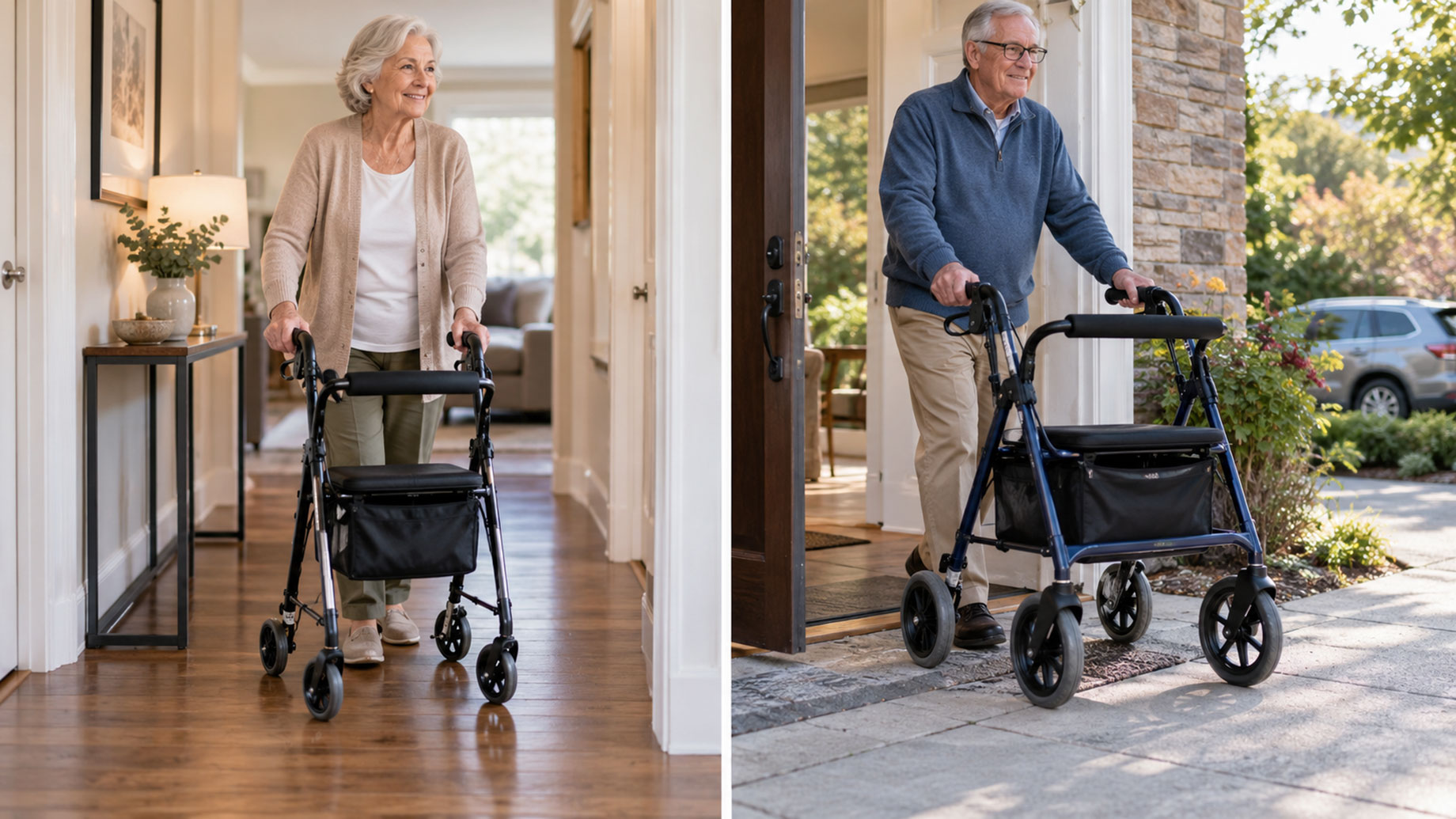
Wheel size can change how a walker or rollator feels during daily use. A 6-inch wheel may feel compact and easy to turn indoors, while an 8-inch wheel may roll more smoothly over thresholds, sidewalks, and outdoor paths. The right choice depends on where the user walks most often, how well they control the frame, and whether the device is mainly for indoor support, daily errands, or longer outdoor movement.
This guide compares 6″ and 8″ wheels for daily walking, including indoor use, outdoor surfaces, safety, brake control, and replacement wheel considerations.
Why Wheel Size Matters for Daily Walking
Wheel size affects how easily a walker or rollator moves across different surfaces. It does not decide safety by itself, but it can influence rolling comfort, turning, and how often the wheels catch on small edges.
How Wheel Size Affects Rolling, Turning, and Control
Smaller wheels are often easier to manage in compact indoor spaces because they keep the frame more compact and easier to turn. Larger wheels can roll more smoothly over small changes in surface height, such as door thresholds, sidewalk seams, or carpet edges. However, larger wheels may also make the device feel different when turning in narrow areas. The user should be able to steer, stop, and turn comfortably, not just choose the largest wheel available.
Why Surface Type Matters More Than the Number Alone
A 6-inch wheel can work well on smooth indoor floors, while an 8-inch wheel may feel more useful for mixed indoor and outdoor walking. The surface matters because daily walking often includes more than one type of ground. A user may move from hardwood floors to carpet, then over a threshold, then onto a driveway or sidewalk. Wheel size should be matched to the surfaces the user actually walks on most often.
6″ vs. 8″ Wheels at a Glance
The main difference is not simply size. It is how each wheel handles indoor space, surface changes, outdoor movement, and daily control.
| Feature | 6″ Wheels | 8″ Wheels |
|---|---|---|
| Best for | Smooth indoor floors and short routes | Mixed indoor and outdoor walking |
| Turning | Often easier in tight indoor spaces | May need slightly more room |
| Thresholds | Can work, but may catch more easily | Usually rolls over small edges more smoothly |
| Outdoor use | Better on smooth, flat surfaces | Better for sidewalks, driveways, and daily errands |
| Common fit | Compact walkers and some indoor-focused models | Many outdoor-friendly rollators and daily walking models |
| Main tradeoff | Compact but less forgiving outdoors | Smoother outdoors but may feel larger indoors |
When 6″ Wheels May Be Enough
Six-inch wheels can be practical when the user mainly walks indoors or on smooth, predictable surfaces. They are often linked with compact walkers or lighter designs that are easier to move in smaller spaces.
Smooth Indoor Floors and Short Routes
If the user mainly walks on hardwood, tile, vinyl, or other smooth indoor floors, 6-inch wheels may be enough for daily support. They can work well for short routes such as moving from the bedroom to the kitchen, bathroom, or living room. This type of use usually does not require the same rolling performance needed for sidewalks or outdoor paths. The user should still check that the wheels do not catch on rugs, floor transitions, or doorway edges.
Smaller Homes, Tight Spaces, and Easy Turning
In smaller homes, narrow hallways, tight bathrooms, or crowded rooms, compact handling can matter more than outdoor rolling performance. A walker or rollator with smaller wheels may be easier to turn, park, and store. This can be helpful for users who mostly need support inside the home. However, the overall frame width still matters, so users should not judge indoor fit by wheel size alone.
Compact Walkers and Simple Daily Use
Six-inch wheels are often suitable for simple daily walking when the user does not need frequent outdoor movement. They may be a practical choice for users who want a lighter, easier-to-store device for indoor support. For users comparing a standard walker with 2 wheels for simple indoor routes, overall width, handle height, and daily handling should still be checked alongside wheel size. If the user plans to go outside often, cross thresholds, or walk longer distances, 8-inch wheels may be worth comparing.
When 8″ Wheels May Work Better
Eight-inch wheels are often a better fit for users who walk outside, cross thresholds, or need smoother movement during daily errands. They can make a walker or rollator feel more comfortable on mixed surfaces, but the user still needs safe control.
Door Thresholds, Sidewalks, and Outdoor Paths
Door thresholds, sidewalk seams, driveway edges, and small surface changes can make smaller wheels feel less smooth. An 8-inch wheel may roll over these areas more easily than a 6-inch wheel. This can reduce the feeling of the device catching or stopping suddenly. Still, users should move slowly over raised edges and avoid forcing the wheels over uneven surfaces.
Daily Errands, Longer Walks, and Travel
For daily errands, doctor visits, shopping trips, and longer walks, 8-inch wheels may offer a more comfortable rolling experience. They are often more suitable for users who move between indoor and outdoor spaces throughout the day. They can also help when a user walks across parking lots, building entrances, or sidewalks. The tradeoff is that the full device may feel larger, so folded size and overall width should still be checked.
Rollators That Need Smoother Outdoor Movement
Many rollators designed for outdoor or mixed daily use have larger wheels for smoother rolling during longer routes. An 8-inch wheel can support daily walking where the user needs a seat, brakes, and easier movement over mixed surfaces. However, wheel size should not be the only reason to choose a rollator. The user should also check frame weight, handle height, brake control, seat height, and whether the rollator fits the spaces they use most.
Compare Wheel Size by Daily Walking Surface
The best wheel size depends on the user’s common walking surfaces. A wheel that works well indoors may feel limited outdoors, while a larger wheel that works well outside may feel less compact in tight spaces.
Indoor Floors, Rugs, and Carpet Edges
Smooth indoor floors are usually easier for both 6-inch and 8-inch wheels. Rugs, carpet edges, and floor transitions can be more difficult because wheels may catch or slow down. Smaller wheels may be more compact, but they may not roll as smoothly over raised edges. Users should also avoid loose rugs or mats that slide, curl, or create trip hazards.
Doorways, Thresholds, and Elevators
Doorways and thresholds are common daily problem areas. A larger wheel may handle small transitions more smoothly, while a smaller wheel may require more careful positioning. Elevators can also have small gaps or uneven edges that affect wheel movement. Users should approach thresholds slowly and keep the frame straight instead of twisting the device at an angle.
Sidewalks, Driveways, and Uneven Ground
For sidewalks, driveways, and light outdoor walking, 8-inch wheels are often more practical than 6-inch wheels. They can feel smoother over small cracks and surface changes. However, neither size makes a walker or rollator suitable for every type of rough ground. Gravel, cobblestones, wet ramps, grass, and broken pavement still require caution and may not be safe for every user.
Does Wheel Size Affect Safety?
Wheel size affects how the device rolls, but safety depends on the full setup. Brakes, handle height, user balance, walking surface, and frame control matter just as much.
Larger Wheels Are Not Always Safer
Larger wheels may roll more smoothly outdoors, but they are not automatically safer for every user. A person who has trouble controlling speed, turning, or braking may not benefit from a larger wheel. In a narrow home, a larger rollator may also feel harder to manage if the frame is wide. The safest choice is the one the user can control confidently in their normal environment.
Brake Control Still Matters
Brake control is essential, especially on rollators with seats. The user should be able to slow down, stop, and lock the brakes without strain. Before sitting, the brakes should be locked and the rollator should be on a stable, level surface. A smoother-rolling wheel is useful only if the user can also stop the device safely.
User Balance and Handle Height Matter Too
A walker or rollator should fit the user’s posture and balance needs. If the handles are too low, the user may lean forward. If they are too high, steering may feel awkward. Poor handle height can make any wheel size harder to control. Users with serious balance problems, weakness, or recent surgery should ask a doctor or physical therapist before choosing a wheeled mobility aid.
Can You Replace 6″ Wheels With 8″ Wheels?
Some users search wheel size because they already own a walker or rollator and want to replace worn wheels. Replacement is possible on some models, but wheel size is not always interchangeable.
Why Rollator Wheels Are Not Always Universal
Rollator and walker wheels are not always universal because models can differ in axle size, mounting style, brake design, front and rear wheel position, and frame clearance. A wheel may have the right diameter but still fail to fit correctly. Changing wheel size can also affect braking or how the device sits on the ground. Users should not assume that a 6-inch wheel can always be replaced with an 8-inch wheel.
What to Check Before Buying Replacement Wheels
Before buying replacement wheels, check the brand, model, wheel diameter, axle or mounting style, front or rear position, and brake compatibility. When comparing rollator wheels, do not rely on diameter alone; confirm that the wheel position and model compatibility match the device. After replacement, test rolling, turning, and braking before regular use. If the frame feels uneven or the brakes do not work properly, the device should not be used until the issue is fixed.
Simple Wheel Size Checklist Before You Buy
Use this checklist before choosing 6-inch or 8-inch wheels.
| Question | Why It Matters |
|---|---|
| Will the device be used mostly indoors? | 6″ wheels may be enough for smooth, short indoor routes |
| Will the user walk outdoors often? | 8″ wheels may be more practical for sidewalks and errands |
| Are there door thresholds or floor transitions? | Larger wheels may roll over small edges more smoothly |
| Is the home narrow or crowded? | Smaller wheels or a compact frame may be easier indoors |
| Does the user need a seat? | Many seated rollators use larger wheels and brakes |
| Can the user control the brakes? | Brake control matters before stopping or sitting |
| Will the wheels be replaced later? | Compatibility should be checked before buying parts |
| Is the return policy clear? | This reduces risk if the wheel size does not fit daily use |
Final Thoughts
The choice between 6-inch and 8-inch wheels should start with the user’s daily walking environment. Six-inch wheels may be enough for smooth indoor floors, short routes, and compact spaces. Eight-inch wheels may work better for daily errands, sidewalks, thresholds, and mixed indoor-outdoor movement.Do not choose by wheel size alone. A good walker or rollator should also match the user’s balance, brake control, handle height, frame width, seat needs, and storage space.
