Bathroom remodeling in Houston can look very different from one home to another. A large primary bathroom may need a spacious shower, double vanity, and additional storage, while a small guest bathroom may need compact fixtures, better lighting, and a more efficient layout. The right approach depends on the bathroom’s size, existing plumbing, layout, materials, and how the space is used every day.
Houston homeowners also have local factors to consider when planning a Bathroom Remodel Houston project. The city’s warm, humid climate makes ventilation, waterproofing, drainage, and moisture-resistant materials important parts of a well-planned bathroom. Older homes may also require updates to plumbing, electrical systems, or outdated layouts before new fixtures and finishes are installed.
Whether you are remodeling a primary bathroom or a small bathroom, the goal is the same: use the available space efficiently, choose durable materials, control moisture, and spend the budget on improvements that provide practical value. Understanding these differences can help homeowners plan the project, estimate costs, and choose the right remodeling solutions for their particular bathroom.
How Much Does a Bathroom Remodel Cost in Houston?
A bathroom remodel in Houston can cost anywhere from about $6,900 to $50,000 or more in 2026. The final price depends on the bathroom size, materials, layout, plumbing, fixtures, and amount of construction involved. Local pricing guides place the average around $12,794, but an average does not tell the full story. A small bathroom refresh and a luxury primary bathroom are very different projects.
| Bathroom Type | Basic Remodel | Mid-Range Remodel | High-End Remodel |
| Small / Powder Room | $3,000–$7,500 | $5,000–$8,000 | $8,000–$15,000 |
| Guest Bathroom | $6,000–$10,000 | $10,000–$18,000 | $18,000–$30,000+ |
| Primary Bathroom | $10,000–$15,000 | $18,000–$30,000 | $35,000–$75,000+ |
These are planning ranges, not fixed quotes. The actual cost can change once the bathroom is inspected and the scope of work is clear.
What Influences the Remodeling Cost?
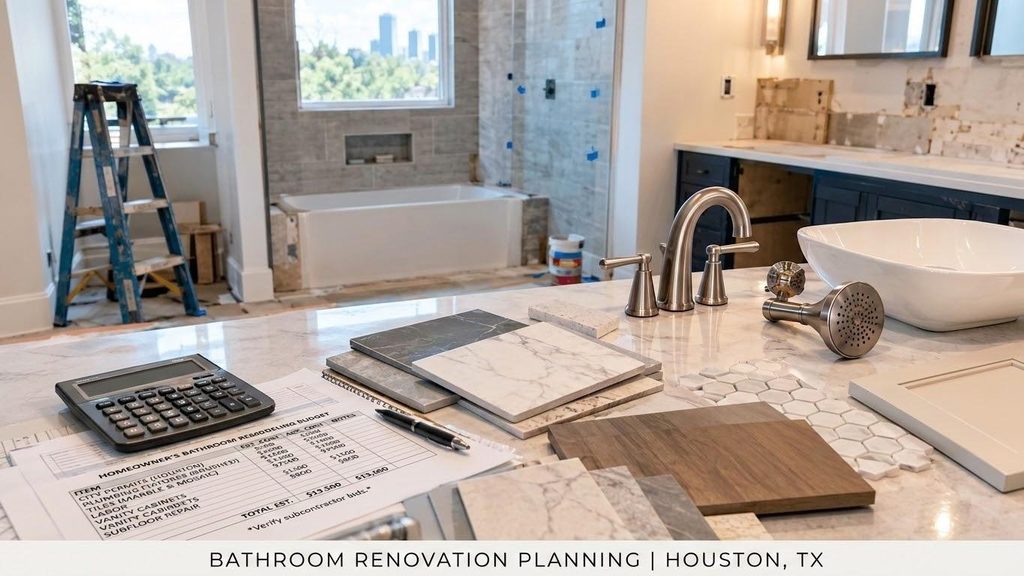
The cost of a bathroom remodel depends on several factors, including the size of the bathroom, existing plumbing, and any structural or layout changes.
Your choice of fixtures, tile, flooring, cabinetry, countertops, shower, and bathtub can also change the price.
Electrical work, lighting, ventilation, and the number of skilled trades needed will add to the total labor cost.
The more changes you make to the existing bathroom, the higher the overall project cost is likely to be.
The biggest difference often comes down to scope. Keeping the existing layout can make a project simpler, while moving plumbing or walls can turn a basic renovation into a larger construction project.
Does Your Neighborhood Affect the Price?
Your neighborhood can affect the final estimate, but the condition of the home is often just as important.
Older homes around the Inner Loop, including areas such as Montrose and the Houston Heights, may have older plumbing, electrical systems, or construction that needs attention during a renovation.
Homes in newer suburban areas such as Katy, Cypress, Sugar Land, and The Woodlands may have newer infrastructure. However, material selections, bathroom size, and layout changes can still make the price vary widely.
In other words, a contractor is pricing the actual bathroom, not just the ZIP code.
In Houston, What Does a Small to Luxury Bathroom Remodel Cost?
A small bathroom remodel can start around $3,000–$7,500 for basic work. A mid-range guest bathroom may fall around $10,000–$18,000.
A larger primary bathroom can start around $10,000–$15,000 for basic improvements and reach $35,000–$75,000 or more for high-end work. Luxury projects can go beyond that when they include custom cabinetry, premium materials, large walk-in showers, or major layout changes.
The important question is not simply how much a bathroom costs per square foot. It is what you are changing inside the room.
Cosmetic Updates vs. Full Bathroom Renovation
A cosmetic update focuses on visible improvements. This may include a new vanity, mirror, lighting, paint, flooring, or fixtures.
A full renovation goes further. It may involve new plumbing, electrical work, waterproofing, tile, shower or bathtub replacement, cabinetry, and layout changes.
If the existing bathroom works well, there may be no reason to move everything. Keeping the toilet, sink, and shower in their current locations can help keep the project more straightforward.
Hidden Costs You Can’t Always Plan For
Some problems only become visible after demolition begins.
A Bathroom may have hidden water damage, damaged subfloors, old plumbing, or a leak behind a wall. Homes with slab foundations can also present additional challenges when plumbing beneath the floor needs attention.
That is why a remodeling budget should include some room for unexpected repairs. A small reserve can prevent an unexpected problem from bringing the entire project to a stop.
How Building Codes Affect Your Remodel Budget
A bathroom remodel may involve plumbing, electrical, mechanical, and structural work. Depending on the project and location, permits and inspections may also be required.
Houston enforces construction codes for residential and commercial work, and the city’s permitting system covers building and trade permits.
Houston’s current code framework includes the 2021 International Building Code and related codes, with local amendments. The exact requirements depend on the type and location of the work.
Code-related work can add time or cost, but it also helps ensure that major parts of the renovation are completed properly.
How to Vet a Contractor’s Licensing
Before hiring a contractor, ask who will perform the plumbing and electrical work.
For electrical work in Texas, non-exempt electrical work must be performed through a licensed electrical contractor. Homeowners can use the Texas Department of Licensing and Regulation’s license search to verify licenses.
Ask for a written estimate that clearly lists labor, materials, demolition, permits when applicable, and any planned subcontractors.
A clear estimate makes it easier to compare contractors and spot costs that may otherwise appear later in the project.
How to Set a Realistic Remodeling Budget
Start with the must-have repairs and improvements. Then decide which upgrades fit comfortably within the remaining budget.
If the existing layout works, keeping the sink, toilet, and shower in place can reduce the amount of plumbing and construction work involved. Moving drains, water lines, or walls can increase the scope and may require additional labor.
Finally, leave some room for unexpected repairs. Once the old bathroom is opened up, hidden problems can change the original plan.
For a Houston bathroom remodel, the most useful estimate is not the cheapest number on a website. It is a detailed estimate based on the actual bathroom, its condition, the chosen materials, and the work you want completed.
Master Bathroom Remodeling Ideas for Houston Homes
A primary bathroom should feel comfortable, easy to use, and built around your daily routine. In Houston homes, homeowners also need to think about ventilation and moisture because of the area’s warm, humid conditions.
Good planning can make the room more useful without adding features you do not really need.
Creating a More Functional Primary Bathroom
Start with how you use the bathroom each day. If the layout feels cramped, improving the placement of the shower, vanity, toilet, or storage may make a bigger difference than simply choosing new finishes. Keep frequently used items within easy reach and leave enough open space to move comfortably.
Walk-In Showers and Larger Shower Areas
Walk-in showers are a popular choice for primary bathrooms because they offer easy access and can make the room feel more open. A larger shower can also provide space for built-in shelves, a bench, or multiple shower fixtures. Proper waterproofing and drainage should be part of the plan, especially in a humid Houston environment.
Double Vanities and Additional Storage
A double vanity can make a busy morning routine easier when two people share the bathroom. It also provides more counter and cabinet space. If a double vanity does not fit comfortably, a well-designed single vanity with deep drawers or additional wall storage can be a better use of the space.
Lighting and Mirror Placement
Good lighting makes a bathroom easier to use and can change how the room feels. Combine general lighting with task lighting around the vanity and mirror. Place mirrors where they provide useful reflection without creating awkward glare. If possible, make use of natural light while maintaining privacy.
Choosing Durable, Moisture-Resistant Materials
Bathrooms deal with water and humidity every day, so materials should be chosen with moisture in mind. Porcelain or ceramic tile, moisture-resistant cabinetry, quality grout, and properly sealed surfaces can help the bathroom hold up over time. A good exhaust fan is also important for moving humid air out of the room and helping the space dry between uses.
Small Bathroom Remodeling Ideas That Make a Big Difference
A small bathroom does not need a major addition to become more useful. The biggest improvements often come from choosing the right fixtures, storage, lighting, and layout. Before buying anything, measure the room and decide where you need the most space.
Space-Saving Shower Designs
A standard tub can take up a large part of a small bathroom. Replacing it with a compact walk-in or corner shower can free up useful floor space. A clear glass shower panel can also keep the room visually open while still separating the wet area.
Wall-Mounted and Compact Fixtures
Wall-mounted sinks, toilets, and floating vanities can reduce the amount of floor space used by fixtures. A smaller vanity with drawers may also provide better storage than a bulky cabinet. Choose fixtures based on the actual measurements of the room rather than simply picking the smallest option available.
Using Mirrors and Lighting Strategically
A well-placed mirror can make a small bathroom feel less closed in, but its position matters. A wider mirror above the vanity can reflect more of the room and provide useful daily lighting. Add bright, even lighting around the vanity instead of relying on a single ceiling fixture.
Vertical Storage Solutions
When floor space is limited, look upward. Recessed wall shelves, tall cabinets, medicine cabinets, and shelves above the toilet can add storage without taking up much floor area. Keep everyday items within easy reach and use higher shelves for items you rarely need.
Choosing the Right Tile Size and Pattern
Tile selection affects both the appearance and maintenance of a small bathroom. Larger tiles can reduce the number of grout lines and create a cleaner look. A simple pattern can also prevent the room from feeling too busy. For floors, choose a surface with enough grip for a wet bathroom rather than selecting tile based only on appearance.
Bathroom Materials to Consider for Houston’s Climate
The right materials can make a bathroom easier to maintain and help finishes last longer. In Houston, moisture management should be part of the planning process. Good ventilation, proper installation, and moisture-resistant materials can help protect surfaces from constant exposure to water and damp air.
Flooring
Bathroom floors should handle water, daily foot traffic, and regular cleaning. Porcelain and ceramic tile are common choices because they are durable and relatively easy to maintain. For safety, choose a flooring surface with enough grip when wet.
Shower and Wall Surfaces
Shower walls need materials that can handle regular water exposure. Porcelain tile, ceramic tile, and other properly installed waterproof systems can work well. The quality of waterproofing and grout installation matters just as much as the surface material.
Cabinet Materials
Bathroom cabinets are exposed to moisture every day, so material choice matters. Moisture-resistant finishes and properly sealed surfaces can help prevent swelling, peeling, and premature wear. Good ventilation also helps cabinets and other surfaces stay drier.
Countertops and Vanity Surfaces
A vanity countertop should be durable, easy to clean, and able to handle water and everyday use. Quartz, granite, and other non-porous or properly sealed surfaces can be practical choices. Consider how much maintenance you are willing to do before choosing a material.
How to Plan Your Bathroom Remodeling Project ?
A bathroom remodel is easier to manage when you make the main decisions before the work starts. You do not need every detail figured out on day one, but you should know what you want to change, what you can spend, and which features matter most.
Define Your Priorities
Start by looking at what is not working in the current bathroom. Is the layout awkward? Is there not enough storage? Does the shower need an upgrade? Make a short list of the changes that would improve your daily routine.
Establish a Budget
Set a realistic budget before choosing materials or fixtures. Keep some money aside for unexpected repairs, especially if you are remodeling an older bathroom. A clear budget also helps you decide where to spend more and where to keep things simple.
Decide Which Features Matter Most
Not every upgrade needs to be included. You might care more about a larger shower than a luxury bathtub, or better storage than expensive tile. Focus your budget on the features you will use regularly.
Select Materials
Choose materials based on durability, maintenance, appearance, and moisture resistance. Order samples when possible and check that the materials work well together before making a final purchase.
Compare Remodeling Contractors
Get estimates from more than one contractor and compare what each estimate actually includes. Look at labor, materials, demolition, permits, cleanup, and any subcontracted work. Do not compare contractors based only on the lowest price.
Confirm the Project Scope and Timeline
Before work begins, make sure you have a clear written scope of work. It should explain what will be removed, installed, repaired, and finished. Confirm the expected start date, completion timeline, payment schedule, and how unexpected changes will be handled.
Bottom Line
A successful bathroom remodel comes down to good planning and making choices that fit your space, budget, and daily needs. Whether you are updating a small bathroom or completely renovating a primary bathroom, focus on a practical layout, durable materials, proper ventilation, and quality workmanship.
Once you have a clear idea of what you want to change, the next step is to find the best bathroom remodeling company in Houston and discuss your project, budget, and remodeling goals with a professional.
Homeowner’s Questions About Bathroom Remodeling
Is it cheaper to remodel a small bathroom?
Usually, a small bathroom needs fewer materials, which can lower the overall cost. However, labor, fixtures, plumbing, and electrical work do not always become cheaper just because the room is smaller.
What adds the most cost to a bathroom remodel?
Moving plumbing, changing walls or the layout, premium materials, custom cabinetry, and major electrical work can quickly increase the budget. The more construction involved, the more the project is likely to cost.
How long does a bathroom remodel usually take?
A bathroom remodel can take anywhere from a few weeks to longer, depending on the project scope. Material delays, inspections, and unexpected problems behind walls or under floors can also affect the timeline.
What should I consider when remodeling a bathroom in Houston?
Consider ventilation, moisture-resistant materials, the condition of the plumbing, the existing layout, and any permits required for the work. Planning these details early can help avoid costly changes once the remodel begins.