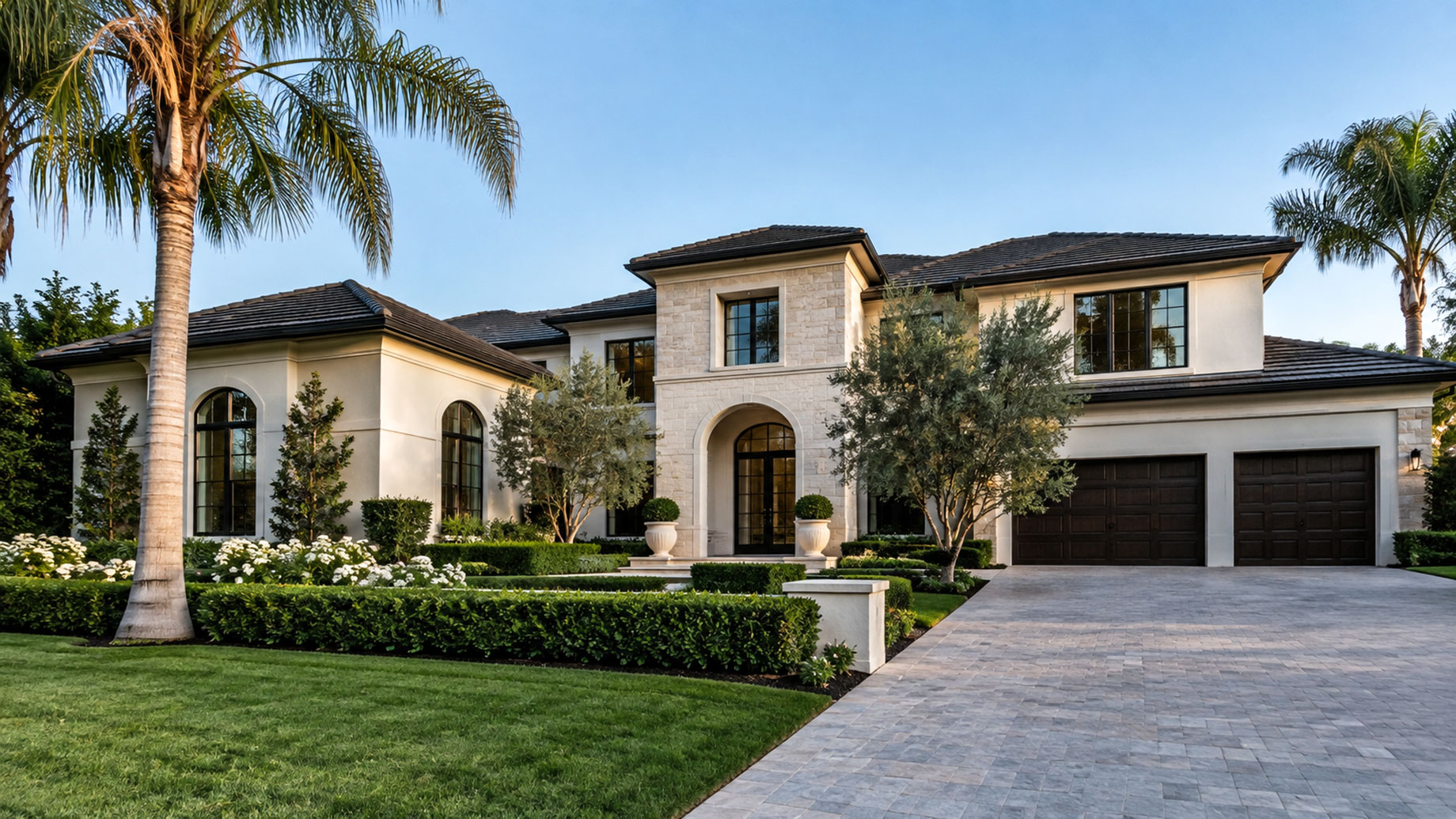
Large homes come with a scale of maintenance that smaller properties simply do not require, and pest management is no exception. A luxury home with expansive square footage, multiple outbuildings, and professionally landscaped grounds offers far more territory for termites, rodents, ants, and cockroaches to establish themselves unnoticed than a modest single-story house ever would. The same features that make these properties impressive, guest wings, outdoor kitchens, custom millwork, and extensive gardens, also create more places for pest activity to develop quietly, often in areas that see far less regular attention than a home’s main living spaces.
Protecting a property of this size requires a more deliberate approach than routine residential pest control. The sheer number of low-traffic rooms, outbuildings, and specialized spaces means that a pest problem can persist for months in one wing while remaining completely undetected in another.
Why Expansive Properties Present More Places to Hide
A larger footprint simply means more square footage where pests can settle without disturbance. Guest suites used only a few times a year, formal rooms reserved for entertaining, and storage areas tucked into finished basements or attached outbuildings all share a common trait: they receive far less foot traffic than a kitchen or primary living area, which gives pests considerably more time to establish themselves before anyone notices.
This dynamic changes how homeowners need to think about inspection frequency. A standard-sized home benefits from regular activity throughout most of its square footage simply because daily life touches nearly every room. Luxury properties, by contrast, often have entire sections that go unused for extended stretches, and those sections deserve deliberate, scheduled attention rather than relying on incidental discovery during normal household activity.
Multiple structures on a single property add another layer of complexity. Detached garages, guest houses, pool houses, and storage buildings each function as a separate structure requiring their own inspection routine, rather than being covered incidentally when the main house is checked.
Landscaped Grounds and Outdoor Kitchens as Pest Entry Points
Professionally landscaped grounds, while a defining feature of many luxury properties, create extensive habitat for pests if not managed with pest pressure in mind. Mature trees, dense plantings, and irrigation systems covering large areas all provide the moisture and shelter that termites, ants, and rodents rely on. A property with several irrigation zones running on independent schedules can develop persistently damp areas near the foundation without anyone noticing, particularly if landscaping crews and homeowners are not communicating about which zones may need adjustment.
Outdoor kitchens, increasingly common in higher-end properties, introduce concentrated food residue and grease in an exterior setting, conditions that reliably attract ants, flies, and occasionally rodents if not cleaned thoroughly after each use. These structures often sit some distance from the main house, which means they receive less routine attention than an indoor kitchen and can develop pest activity that goes unnoticed until it has become well established.
Homeowners working with pest control Torrance, California providers on large properties often find that landscaping maintenance needs to be coordinated specifically with pest prevention goals, since a beautifully maintained garden can still create the exact damp, sheltered conditions that draw pests toward the home if irrigation and mulch placement are not managed with that risk in mind.
Garages, Guest Areas, and Low-Traffic Rooms Requiring Regular Checks
Attached and detached garages on large properties frequently double as storage space for seasonal items, sporting equipment, and household overflow, creating exactly the kind of cluttered, undisturbed environment rodents and cockroaches favor. The scale of storage in a luxury home’s garage often exceeds what a smaller property would accommodate, which means more potential hiding spots and a greater chance that pest activity goes unnoticed for longer stretches.
Guest suites and formal entertaining spaces present a different challenge, since these rooms are specifically designed to look pristine but are used infrequently enough that pest activity can develop without anyone present to notice early signs. A guest bedroom used only during holiday visits offers months of uninterrupted opportunity for pests to settle into closets, behind furniture, or within wall cavities before the next occupant arrives.
A focused inspection routine for these spaces helps catch problems before they become extensive:
- Check detached garages and storage buildings for droppings, gnaw marks, or nesting material every few months
- Inspect guest suites and rarely used formal rooms seasonally, paying attention to closets and behind large furniture
- Walk outdoor kitchen areas after each significant use, checking for food residue in seams and corners
- Review irrigation zones near the foundation for signs of persistent dampness or oversaturation
- Examine outbuildings such as pool houses and workshops on the same schedule as the main residence
Treating these spaces as part of a coordinated inspection calendar, rather than checking them only when something seems obviously wrong, closes the gap that a large property’s low-traffic areas would otherwise create.
Protecting Custom Interior Finishes From Pest Damage
Luxury homes frequently feature custom millwork, hardwood flooring, and built-in cabinetry that represent significant investment and are considerably more costly to replace than standard building materials. These finishes are just as vulnerable to termites, wood-boring beetles, and rodents as any other wood surface in a home, and the higher cost of repair makes early detection especially valuable on a property where these materials are used extensively.
Pest control Torrance specialists working with high-value properties often recommend a more frequent inspection schedule for custom woodwork than would be standard for a typical residential property, given both the extent of the material used and the financial stakes involved in catching an issue early rather than after significant damage has occurred. Checking for small holes, frass, hollow-sounding wood, or unexplained staining near baseboards and trim should become a routine part of maintaining these finishes, not an afterthought addressed only when damage becomes visually obvious.
Comprehensive Monitoring as the Foundation of Long-Term Protection
Given the scale of a luxury property and the number of areas where pests can establish themselves unnoticed, a one-time inspection or occasional treatment rarely provides adequate long-term protection. Comprehensive monitoring, covering the main residence, outbuildings, landscaped grounds, and outdoor living spaces on a coordinated schedule, gives homeowners a far more complete picture of pest activity across the entire property rather than isolated snapshots of individual areas.
This kind of monitoring works best when it accounts for the specific vulnerabilities of each part of the property, recognizing that a guest suite, an outdoor kitchen, and a detached garage each face different risks and require different inspection priorities. A pest management plan built around this level of detail tends to catch problems considerably earlier than a generic approach applied uniformly across a property that, by its nature, is anything but uniform.
Final Analysis
Large homes with landscaped grounds, outdoor kitchens, multiple outbuildings, and custom interior finishes offer significantly more territory for termites, rodents, ants, and cockroaches to establish themselves without detection than a standard residential property. The scale that makes these homes impressive also means low-traffic rooms and outdoor structures need scheduled, deliberate attention rather than incidental checks during normal household activity. Comprehensive monitoring across the entire property, paired with careful attention to landscaping, moisture control, and the custom materials that define a luxury home’s interior, gives homeowners a realistic way to protect both the property’s value and the peace of mind that comes with knowing every corner of an expansive home is being watched.
