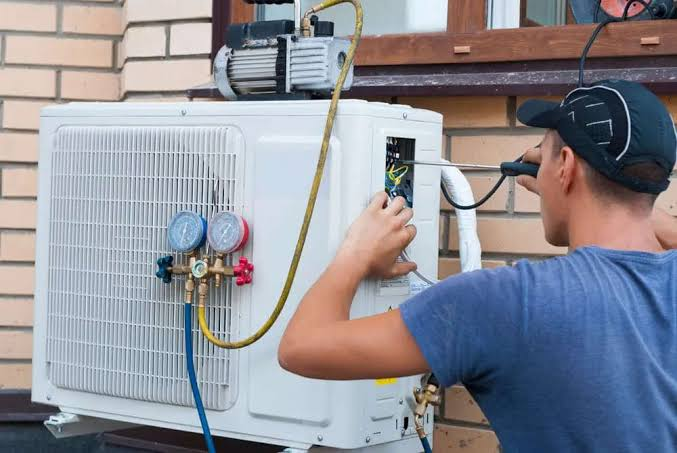
A heat pump making an unfamiliar noise or blowing lukewarm air rarely means the whole system is done for. Most repair calls trace back to one of five or six specific issues, and knowing what a technician actually checks during that first visit takes a lot of the guesswork out of what happens next.
Refrigerant Levels Get Checked First
The visit typically starts with refrigerant levels, checked using gauges attached directly to the service ports on the outdoor unit. A system running 10 to 15 percent low on charge will still blow air, just noticeably less cold or less warm than it should, and that gap tends to widen slowly over 6 to 12 months rather than showing up all at once. Catching it at the 10 percent mark is a straightforward recharge costing $150 to $300; waiting until it hits 30 percent low often means diagnosing and sealing a leak first, which can run $400 to $1,200 depending on where the leak is located.
Ice on the Outdoor Unit Isn’t Always Normal
Anyone searching for heat pump repair in Sunnyvale, CA after noticing ice buildup on the outdoor unit is usually dealing with one of two things: a genuinely failed defrost control board, which runs $300 to $600 installed, or a refrigerant issue serious enough to disrupt the normal defrost cycle. A quarter-inch of frost during a scheduled defrost is normal. Ice that is still there three hours later is not, and that distinction is usually the first thing a technician checks visually before opening anything up.
Electrical Parts Fail in Predictable Ways
Electrical components come next on the list — contactors, capacitors, and the reversing valve that switches the system between heating and cooling modes. A failing capacitor is one of the most common repairs in this category, typically running $150 to $350 parts and labor, and it often announces itself through a system that hums but will not start, or that starts and stops within a few seconds repeatedly. A worn reversing valve is less common but pricier to fix, usually landing between $450 and $800 once diagnosis and labor are factored in.
When Repair Turns Into a Replacement Conversation
Sometimes the repair conversation shifts into a replacement one, particularly on units past the 10-year mark facing a second major repair within a year. Homeowners weighing a heat pump installation in Saratoga, CA against another round of repairs on an aging unit usually find the math tips toward replacement once a single repair estimate climbs past 40 to 50 percent of what a new system would cost installed.
Airflow Problems Can Mimic a Failing Compressor
Airflow gets checked last but matters just as much as anything mechanical. A blower motor working against a clogged filter or blocked return vent can look identical to a failing compressor from the thermostat’s perspective — the house just is not getting warm or cool fast enough. Swapping a filter costs under $20 and takes five minutes; replacing a blower motor that burned out from running against that resistance for a year runs $400 to $700, which is exactly why a five-minute filter check happens before anything more invasive gets diagnosed.
How Long the Actual Visit Takes
Most single-issue repairs get diagnosed and completed within a two-hour appointment window, assuming the part needed is common enough to carry on the truck. Repairs requiring a specialty part — certain control boards or a specific compressor model — sometimes need a second visit once the part arrives, usually within two to three business days, and a good technician will quote both scenarios upfront rather than waiting to see which one applies.
What Helps Before the Technician Arrives
None of this requires a homeowner to diagnose anything beforehand. Noting when the symptom started, whether it is constant or intermittent, and any sounds or smells involved gives a technician a real head start before they even open the unit, which frequently means a shorter, more accurately priced visit than starting from scratch with no context at all.