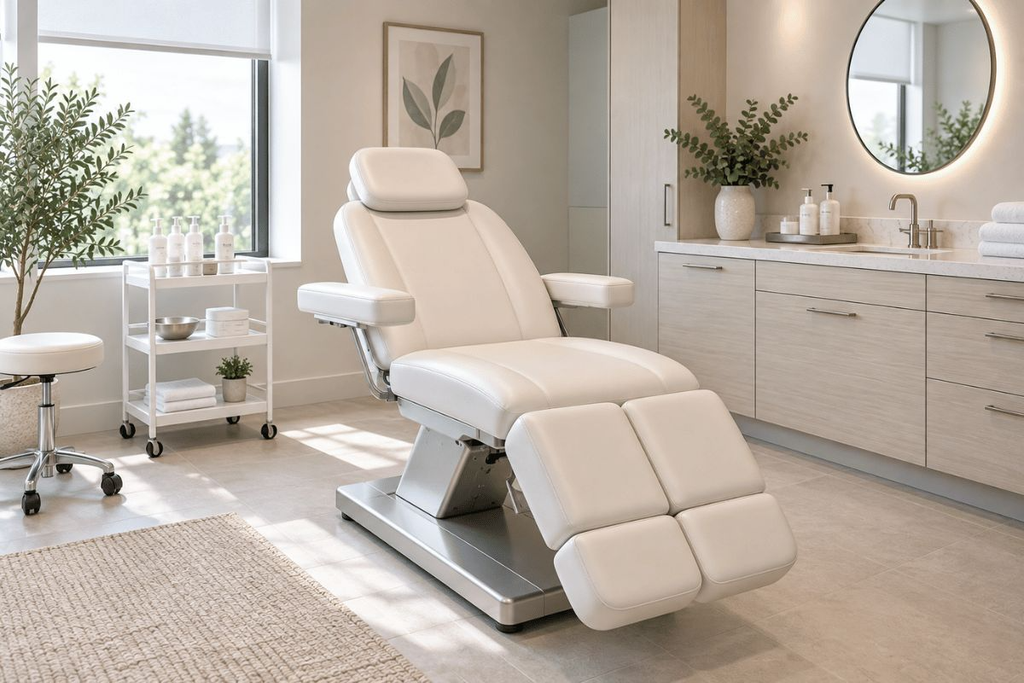
Choosing the right medical spa chairs comes down to five things: motor count, weight capacity, upholstery, rotation range, and how the chair fits the treatments you actually perform. Get these right and the chair earns its cost back in faster turnover and fewer replacements. Get them wrong and you end up shopping again within a year.
This guide breaks down what to check before you buy, so you can compare options with confidence instead of guessing based on photos and price alone.
What Makes a Chair a “Medical Spa Chair”?
A medical spa chair, often grouped under the broader category of treatment chairs, is built for clinical and aesthetic work, not general seating. It needs to support a client comfortably through longer appointments, give the practitioner full access to the treatment area, and hold up to disinfecting between every single client. Standard furniture cannot do any of that reliably.
The upholstery is usually vegan leather or medical grade vinyl, both of which wipe clean with standard disinfectants without cracking or staining over time. The frame is rated for repeated daily use rather than occasional sitting, which matters more than it sounds once you are running back to back appointments.
How Many Motors Does a Medical Spa Chair Need?
Three motor chairs typically control height, backrest, and leg rest. That is enough for most facial and esthetic treatments where the practitioner is not repositioning the client constantly.
Four motor chairs add independent tilt, including Trendelenburg positioning, a slight head down angle used in many injectable, laser, and body contouring treatments. If your practice runs injectables or laser work regularly, the fourth motor pays for itself in faster repositioning between clients.
Electric or Hydraulic, Which One Fits Your Practice?
Electric chairs use motors and a hand remote or foot pedal to adjust position, which keeps the practitioner’s hands free during treatment. This matters most for injections, extractions, and laser work where breaking sterile technique to adjust a chair by hand is not ideal.
Hydraulic chairs use a manual pump instead. They cost less, have a smaller footprint, and work well for facials, waxing, and lash services where hands free movement during the treatment itself is not critical. Many practices run both, hydraulic for esthetic services and electric for anything closer to a clinical procedure.
What Weight Capacity Should You Look For?
Weight capacity is not something to estimate. Look for a published number on the product page, not a general claim. Most medical spa and exam chairs built for clinical use support 400 to 450 pounds, and this figure affects both client comfort and how long the frame holds up under daily use.
A chair rated well below your average client weight will wear out faster and can become a liability question if it fails during a treatment. This is one of the first specs to confirm, not one to check after the fact.
How Rotation and Foot Pedal Controls Affect Daily Workflow
Many electric medical spa chairs rotate 120 to 240 degrees, which lets the practitioner swing the chair for better access instead of walking around it or repositioning the client. In a busy treatment room, this small feature saves real time across a full day of appointments.
Foot pedal controls let the practitioner adjust height or tilt without reaching for a hand control, which keeps both hands available during the treatment itself. Chairs with a memory preset or a one touch return to seated position add up to further time saved on turnover between clients.
Matching the Chair to Your Treatment Menu
The right chair depends on what is actually happening in the room. Med spas running injectables or body contouring benefit most from a four motor electric chair with Trendelenburg tilt and a wide rotation range. Practices focused mainly on facials, waxing, and lash work can often get by with a hydraulic chair at a lower price point.
Clinics running outpatient exams alongside spa services usually need a higher weight capacity, a wider seat, and a lower minimum seat height for easier patient transfer. Suppliers like Source One Beauty, which was started by former med spa owners, list published weight capacity and motor count on every product page, which makes comparing models across these practice types easier before you commit to one.
If your practice offers more than one type of treatment, an esthetician chair bed with a reversible armrest and a facial cutout can often cover both esthetic and light medical aesthetic work in a single piece of equipment, which keeps costs down for smaller treatment rooms.
Frequently Asked Questions About Medical Spa Chairs
What is the average cost of a medical spa chair?
Hydraulic facial chairs typically start under $1,000, while four motor electric medical spa chairs with Trendelenburg tilt and foot pedal controls generally range from $1,500 to $3,500 depending on features and rotation range.
Do medical spa chairs need to be ADA compliant?
Specific accessibility requirements depend on your state, facility type, and local building codes. Many practices look for a minimum seat height around 19 inches to support easier patient transfer, but you should confirm exact requirements with your local regulations or a compliance professional.
What upholstery is best for medical spa chairs?
Vegan leather and medical grade vinyl are the standard choices. Both wipe clean with standard disinfectants and hold up to the between client cleaning that treatment rooms require throughout the day.
How long do medical spa chairs typically last?
A well built medical spa chair with a manufacturer warranty on motors, electronics, and frame construction commonly lasts 7 to 10 years under regular daily use, though this varies by build quality and how consistently it is maintained.
Can one chair handle both facials and injectables?
Yes. An electric medical spa chair with a facial cutout, adjustable headrest, and Trendelenburg tilt can typically cover both esthetic treatments and light medical aesthetic work, which is useful for smaller practices that do not have room for separate equipment.
What is the difference between a medical spa chair and a regular exam chair?
A medical spa chair is designed to flex between spa and clinical use, combining medical grade durability with comfort features clients expect from an esthetic treatment. A regular exam chair is typically built for clinical use alone, with less focus on the comfort and finish expected in a spa setting.
Conclusion
Buying a medical spa chair comes down to matching motor count, weight capacity, and upholstery to the treatments your practice actually performs, not the features that look best in a photo. Confirm the published specs before you order, and compare a few models from a supplier that lists this information clearly, such as Source One Beauty’s medical spa chairs collection. A chair chosen this way earns its cost back quickly in fewer replacements and faster turnover between clients.