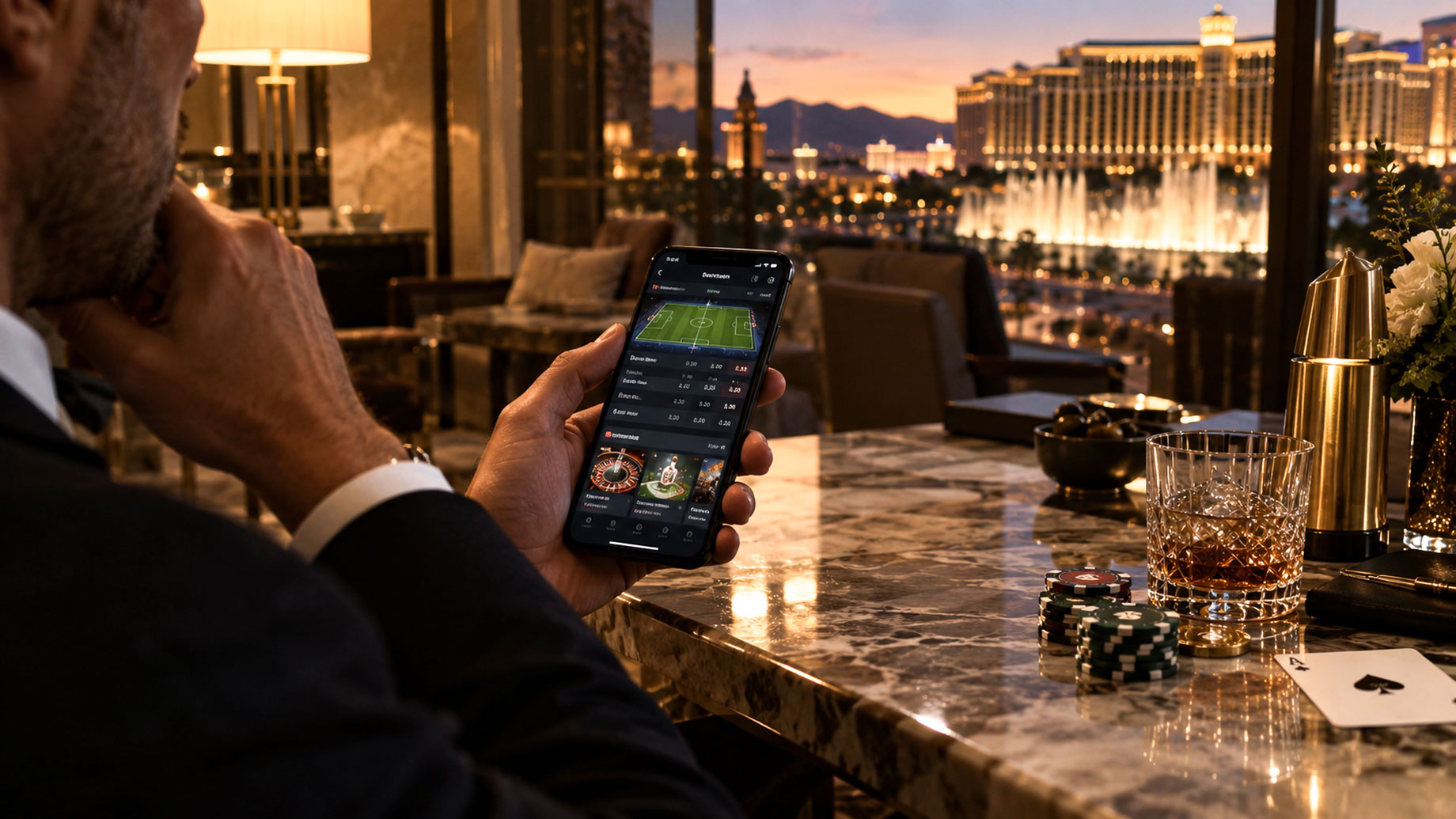
An evening at a grand casino can begin with a dinner reservation and end with a walk back to a hotel. The gaming floor sits within a larger experience: architecture, hospitality, conversation, and the anticipation of an uncertain outcome. On a smartphone, that same uncertainty can arrive between appointments or during a quiet evening at home.
The psychology of gambling involves the appeal of unpredictable rewards, the feeling of control, and the influence of the surrounding environment. Online casinos and online sports betting have changed how those forces operate by making gambling more accessible, more private, and easier to repeat throughout the day.
For a luxury audience, this raises a question that extends beyond the size of a wager: how much space should gambling occupy in a well-lived life? The emphasis on privacy and discretion in luxury living offers a useful starting point. Enjoying an experience and retaining the freedom to leave it are equally relevant considerations.
Why Casino Gambling Can Feel So Compelling
The anticipation of an uncertain reward
Gambling places a decision, a period of uncertainty, and a result close together. The next outcome might be rewarding even when the previous one was disappointing. This pattern of intermittent reinforcement helps explain why people may continue playing through a sequence of losses.
The experience is not identical for everyone. Someone may be drawn to the social ritual of a table, another to the suspense of a result, and another to the challenge they believe a game presents. A useful explanation therefore considers the person, the product, and the setting together.
Near misses and the feeling of control
A near miss can feel different from an ordinary loss. In a 2009 laboratory study published in Neuron, near misses increased participants’ reported desire to continue under certain conditions involving personal choice. Later experiments have not consistently found that near misses reinforce continued play, so the effect should not be treated as universal.
The practical distinction is between how an outcome feels and what it predicts. On an independent random spin, an almost-winning result does not make the next win more likely. Likewise, choosing a favourite number does not give someone control over where a fair roulette ball lands.
The gambler’s fallacy introduces a related error: believing that a run of one outcome makes the opposite outcome due. An independent game does not compensate a player for having been unlucky.
The influence of the room
The physical casino adds a social and sensory setting. A table offers shared attention; a private room offers separation; attentive service can make a guest feel recognised. In a luxury resort, gambling may sit alongside restaurants, performances, and a carefully designed hotel experience.
These elements help explain why the appeal can extend beyond winning money. They also make it useful to distinguish the value of the hospitality from the financial outcome of the game. A memorable evening and a profitable session are separate things.
How Online Casinos Changed the Dynamic
Online gambling is an umbrella term covering several activities, including casino games, poker, and sports betting. They differ in rules, pace, and the role of skill. Moving them onto a connected device changes where and when participation is possible.
The World Health Organization identifies near-continuous online access as a feature of the modern gambling environment. A physical visit requires someone to reach a venue and eventually leave it. A mobile account can remain available after dinner, during travel, or late at night. Several brief sessions can accumulate into substantial time and spending.
Online casinos can also reproduce parts of a venue’s atmosphere. Live-dealer formats bring a human presence to the screen, while visual design and account services can suggest exclusivity. Yet a polished interface does not change the mathematics of a game or establish the quality of its consumer protections.
The pace of play matters. The UK Gambling Commission’s 2023 evaluation of online-slot design changes found indications of reduced play intensity after measures addressing speed, autoplay, and misleading celebratory effects. The findings underline that design choices can influence the experience, although no single feature explains every player’s behaviour.
Digital access also allows account histories, spending controls, reminders, and self-exclusion tools to be presented within the service. Their availability and effectiveness vary. Online gambling is not one uniform experience, and a safeguard is only useful if it is accessible and works as intended.
For readers accustomed to technology that makes a home feel effortless, the relevant question is whether convenience supports their intentions. Removing the effort required to begin an activity can also remove a useful moment to reconsider it.
Why Online Sports Betting Feels Different
Sports betting adds personal knowledge and emotional allegiance to financial uncertainty. A supporter may understand a team’s tactics, injuries, and recent form. That familiarity can make a wager feel like an expression of expertise.
Knowledge can inform a prediction, but predicting a likely winner and identifying a profitable wager are different tasks. The price offered matters, as does the bookmaker’s margin. Research on sporting expertise and forecasting has produced mixed results across different tasks; confidence alone does not establish an advantage.
In-play betting changes the rhythm further by allowing wagers after an event has started. A match can become a succession of decisions as play unfolds. The Gambling Commission identifies the rapid, repeated opportunities available in some in-play products as a risk characteristic.
For someone watching from a stadium suite, a hotel lounge, or a home cinema, this can divide attention between the sporting occasion and the betting interface. The event continues, but the viewer’s experience may increasingly revolve around changing prices and personal results.
The main differences can be understood through the boundaries each format creates:
| Format | What shapes the experience | Where boundaries can weaken |
|---|---|---|
| A physical casino visit | The venue, other players, hospitality, and the pace of the chosen game | Extending the visit or spending more to remain involved |
| Online casino games | Immediate access, interface design, and repeated opportunities to play | Returning frequently or continuing without a planned stopping point |
| Online sports betting | Fandom, perceived expertise, event schedules, and changing odds | Turning a match into repeated bets or following one event with another |
This comparison describes different experiences; it is not a ranking of safety. Product design, intensity of use, and individual circumstances all matter.
Wealth, VIP Status, and the Limits of Financial Confidence
Wealth changes the amount someone may be able to spend. It does not remove the psychological mechanisms involved in gambling. The UK Gambling Commission has explicitly challenged the assumption that wealthy customers are insulated from gambling-related harm.
Success in business or investing also does not alter the odds of a chance-based casino game. The house edge describes the casino’s expected mathematical advantage over repeated play. A published return-to-player percentage is a long-run average, not a promise about what someone will recover during an evening.
VIP status deserves similar clarity. In gambling, “high value” commonly describes a customer’s commercial value to the operator. Hospitality, gifts, and personalised service may accompany that status. They do not certify the customer’s skill, financial resilience, or ability to control their play.
This matters because luxury service can make recognition feel personal. A considered approach evaluates the entertainment and its cost independently of the attention received. There is little value in increasing expenditure simply to retain a tier, an invitation, or preferential treatment.
Financial capacity is also only one part of wellbeing. Gambling can affect relationships, sleep, and daily priorities even when losses remain financially manageable. Assessing its place in a lifestyle requires looking at those costs as well.
What Quiet Luxury Brings to the Conversation
Quiet luxury generally favours craftsmanship, discretion, and lasting quality over conspicuous display. The restrained materials and unhurried atmosphere of Viglostasi Residence on Syros offer an architectural expression of that outlook.
Applied to leisure, this suggests valuing experiences for the satisfaction they provide, with less importance attached to demonstrating spending power. A larger wager does not make an evening more sophisticated. Access to a private room does not create an obligation to use it.
There is also a distinction between choosing privacy and becoming isolated. Playing from home can reduce public visibility, but it can also make changes in behaviour less noticeable to others. Discretion is compatible with honest conversations about time, spending, and whether an activity still feels optional.
Digital marketing complicates that freedom. A 2026 randomised study published in Addiction found that Australian sports and race bettors who opted out of direct marketing reported lower betting expenditure and fewer short-term harms during a two-week study. The limited duration means it cannot establish lasting effects, but it provides evidence that messages and notifications can influence participation.
The connection with wellness architecture in luxury real estate is a question of consistency. A home designed around rest and restoration benefits from digital habits that support those priorities. Quiet surroundings alone cannot protect an evening from repeated interruptions.
Giving Gambling a Deliberate Place in a Luxury Lifestyle
For adults who choose to gamble where it is legal, clear boundaries make the decision more concrete:
- Decide the cost and duration beforehand. Use money that can be lost without affecting commitments or savings, and set a stopping time. Neither limit guarantees protection from harm.
- Keep the result separate from the next decision. A loss creates no obligation to recover it through further play, and a win creates no obligation to continue.
- Control invitations to return. Review marketing permissions and use available account limits or blocking tools when needed. Look at total time and spending across services.
- Respond when the experience changes. Hiding activity, chasing losses, or repeatedly exceeding intended limits are reasons to stop and seek support from a qualified professional or local gambling-support service.
Choosing not to gamble is equally compatible with enjoying a casino resort, a major sporting event, or an evening of exceptional hospitality.
The arrival of online casinos and sports betting has made the boundary around gambling more personal and more important to define. For a luxury lifestyle built around discretion, comfort, and freedom, the lasting consideration is whether an activity leaves enough room for everything else that makes life rewarding.
