Think about how you clean things. Dishes get water. Laundry gets water. Your car, your floors, your hands, your hair, all of it gets water. At some point, as a species, we collectively decided that water was the superior cleaning agent for virtually everything we own and everything on our bodies, with one curious exception. The one moment in the day when cleaning is most obviously necessary, we reach for dry paper instead. When you write it out like that, it does seem a little strange.
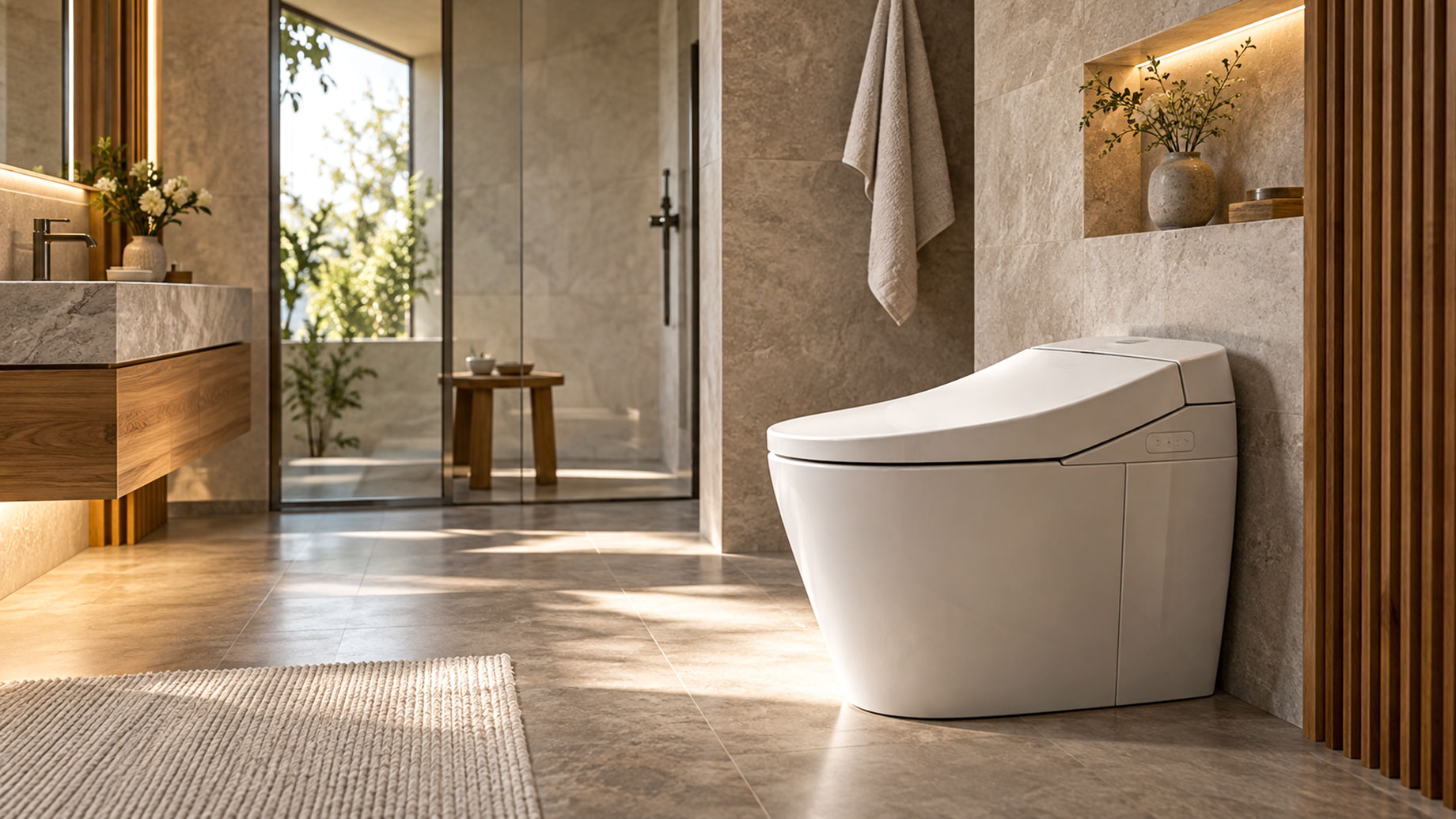
The TOTO bidet is, at its core, a correction to this logic. TOTO, the Japanese company that essentially introduced the modern bidet seat to the world back in 1980 with their original Washlet, has spent four decades refining what it means to clean properly after using the toilet. The rest of the world is now catching up, and the reasons are more practical than you might expect.
A quick history, because it’s actually interesting
Bidets in some form have existed since the 1700s, originating in France as a separate basin you’d straddle after using the toilet. For most of Western history they stayed in that form, confined largely to European bathrooms and occasionally the subject of confused jokes from American tourists.
Japan changed everything. TOTO launched the Washlet in 1980, a bidet function built directly into the toilet seat. By the 1990s it was common in Japanese homes. By the 2000s, roughly half of all Japanese households had one. Today that number sits closer to 80 percent, and in public restrooms across Japan, the bidet seat is as standard as a hand dryer. It went from novelty to infrastructure in a single generation.
Meanwhile, most of the Western world was still buying 12-packs of toilet paper without thinking much about it. That’s starting to shift, and it’s worth understanding why.
The hygiene case is the obvious one
Water cleans more effectively than paper. This is not a controversial statement. Paper, even high-quality soft paper, is a mechanical wipe rather than a proper clean. It moves material around but doesn’t remove it the way water does. Dermatologists and colorectal surgeons have pointed this out for years, noting that excessive wiping with paper can cause irritation, microtears, and aggravate conditions like hemorrhoids. Water, applied gently at the right pressure, does the job with no friction and no residue.
For people managing conditions like IBS, Crohn’s disease, or post-surgical sensitivity, this isn’t a comfort preference, it’s a clinically relevant difference. But even for people with no particular health concerns, the cleanliness comparison isn’t really close.
The environmental numbers are uncomfortable
The global toilet paper industry uses roughly 27,000 trees per day. Per day. The average American gets through about 100 rolls per year, and the US is the world’s largest per-capita consumer of toilet paper by a significant margin. Manufacturing it requires water, bleach, and energy in quantities that don’t hold up well to environmental scrutiny, particularly for a product that exists solely to be used once and thrown away.
A bidet uses roughly an eighth of a litre of water per use. Compare that to the estimated 140 litres of water that goes into producing a single roll of toilet paper, and the calculus shifts quickly. For households that care about their environmental footprint, a bidet is one of the more impactful bathroom changes available, and one of the least discussed.
The objections, answered honestly
The most common hesitation is simple unfamiliarity. If you’ve never used one, the idea feels odd, and there’s a tendency to treat that unfamiliarity as a reason to avoid it. It isn’t. Most people who try a bidet for the first time report that the transition takes about two days before it just feels normal, and that going back to paper only feels noticeably worse afterward.
The second hesitation is mess or inconvenience. Modern bidet seats are not the freestanding basins of the 1970s. They attach to your existing toilet, include a dryer function that means you use minimal paper or none at all, and clean themselves between uses on most models. The process is simpler than people imagine.
The third hesitation is cost. Entry-level bidet attachments start around $30. A quality bidet seat with warm water, adjustable pressure, and a dryer runs between $200 and $600. A premium all-in-one unit costs more. All of these compare favourably to what a household spends on toilet paper over two or three years, and the bidet keeps working for a decade or more.
What to look for in a bidet seat
Water temperature is the feature most people prioritise after their first use. Cold water works fine in summer; in winter it is considerably less pleasant. A seat with a built-in water heater, either tank-based or instant-heat, is worth the step up in price for year-round comfort.
Pressure control matters more than most product descriptions suggest. The right pressure is personal, and having a range of settings rather than a single fixed stream makes a meaningful difference to the experience.
Nozzle positioning is a feature that sounds minor until you need it. Adjustable positioning, where the nozzle moves forward or back, accommodates different users and body types far better than a fixed position.
A dryer is not strictly necessary but becomes convenient quickly. It doesn’t replace towel-drying completely at lower settings, but on higher settings most people find they need very little paper, sometimes none at all.
Self-cleaning nozzles are standard on most decent models and worth confirming before buying. A nozzle that rinses itself before and after each use is considerably more hygienic than one that doesn’t.
Starting simpler than you think
You don’t need to replace your toilet. You don’t need a plumber. Most bidet seats install in under an hour with a standard wrench, connect to the existing water supply line via a simple T-valve adapter, and plug into a standard wall outlet. The process is covered step by step in any installation guide that comes with the unit, and for most bathrooms it is a straightforward weekend job.
The habit change on the other side of it takes a few days. Then it just becomes the way you use the bathroom, and the previous method starts to feel like something you’d rather not return to.
Given that we’ve already figured out that water is the right tool for cleaning everything else, it turns out the bathroom upgrade most worth making was available the whole time.
