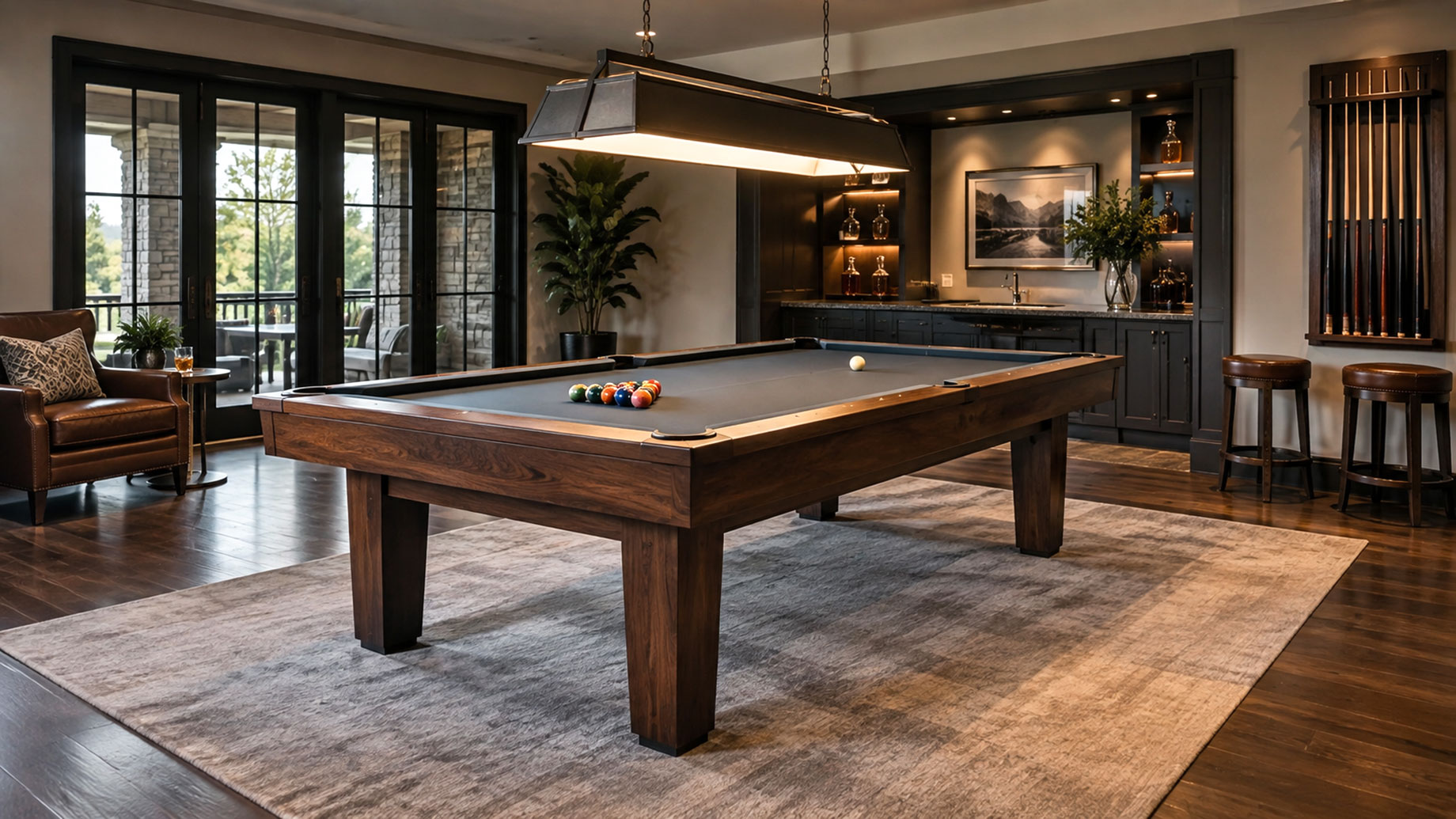
A pool table often becomes the room’s main gathering point, so selection requires more than comparing finishes or prices. Available floor area, table dimensions, slate quality, cushion response, lighting, and maintenance needs all influence long-term satisfaction. Buyers should also consider playing frequency, household age ranges, and preferred game types. A thoughtful choice supports comfortable movement, accurate ball travel, safer use, and an inviting setting for everyday recreation.
Measure the Area
Before choosing a model, households should assess the room’s measurements, flooring, entry points, and intended use. Pool tables at Family Leisure Kansas City can be compared in person, allowing buyers to examine cabinet construction, cloth texture, rail response, and available accessories.
Room Size and Clearance
Available floor space should guide the decision from the start. Players need enough room beyond each rail to execute a full cue stroke and move comfortably. Most layouts require about five feet of clearance around the playing area. Doorways, columns, cabinets, seating, and ceiling fixtures also need attention. Measuring the complete space first helps prevent cramped play and difficult delivery conditions.
Choosing the Right Table Size
Seven-foot tables suit compact rooms and casual matches. Eight-foot models provide a balanced choice for many homes. Nine-foot versions offer tournament proportions but require substantially more clearance. The playing surface matters more than the cabinet’s outside dimensions, so buyers should compare interior measurements before ordering.
Room proportions affect visual balance as well as movement. A large model may dominate a narrow area, even with adequate cue clearance. Smaller equipment can appear undersized inside a spacious entertainment room. The appropriate size leaves space for spectators, seating, and other activities.
Slate Versus Alternative Surfaces
Slate offers the most consistent foundation for regular play. Its dense, level surface resists warping and supports predictable ball movement. Three-piece systems can simplify transport through tight entrances. Buyers should ask about slate thickness, support framing, leveling procedures, and installation before comparing prices.
Alternative surfaces weigh less and usually cost less, which may suit occasional recreation. Temperature, moisture, and uneven flooring can affect their response. Regular players often prefer slate because stable conditions support accurate practice and reduce frustration during repeated matches.
Rails, Cushions, and Cloth
Cushions control rebound speed, angle accuracy, and playing rhythm. Quality rubber should return balls predictably without dead spots or excessive bounce. Buyers can test contact from several angles and listen for consistent sound. Cloth also affects speed, spin, cue response, and replacement intervals.
Wool or wool-blend fabric generally performs better than thin synthetic material. Faster cloth supports advanced shots, while slower fabric may feel easier for beginners. Dark colors can highlight chalk dust and marks, so cleaning habits should influence the final selection.
Style and Room Coordination
Appearance should complement existing furnishings. Traditional wood finishes suit classic interiors, while clean-lined cabinets fit contemporary rooms. Neutral stains may provide flexibility if decorations change later. Leg profiles, pocket details, metal accents, and cabinet depth also affect the overall impression.
Lighting deserves equal consideration. A dedicated fixture should illuminate the entire surface without casting light into players’ eyes. It must sit high enough for free cue movement while preventing shadows. Balanced placement improves visibility and gives the room a finished, functional appearance.
Delivery and Installation
Pool tables are heavy, awkward, and difficult to move without suitable equipment. Before ordering, households should confirm doorway widths, stair access, elevator limits, and placement restrictions. Delivery teams may need to remove doors or use lifting equipment. Early planning reduces the risk of damage and unexpected charges.
Installation should cover assembly, leveling, cloth inspection, and a final play test. Buyers can confirm whether those services are included or billed separately. A written delivery plan should also clarify scheduling, access requirements, and responsibility for flooring or nearby furniture.
Matching the Table to Players
Household habits should shape the final selection. Frequent competitors may prioritize tournament dimensions, responsive cushions, and professional cloth. On the other hand, occasional hosts may value storage, appearance, and simple upkeep above advanced specifications.
The best table serves the people who use it most. Buyers should consider match frequency, preferred games, player ages, and storage needs. Those details create a practical fit between equipment and lifestyle, helping the room remain useful rather than becoming decorative furniture.
Conclusion
Selecting a pool table requires balancing available space, construction, playing quality, appearance, budget, and service. Room measurements should come first, followed by size and cue clearance. Slate, dependable cushions, quality cloth, solid framing, and professional leveling support consistent results. Buyers should also plan for lighting, maintenance, delivery, and future repairs. Considering these factors together helps create a comfortable game room with reliable performance and lasting household value.
