The dock, seawall, access route and shore-side systems deserve the same scrutiny as the residence itself.
A waterfront estate should be evaluated as both a residence and a working base for the yacht it is meant to serve.
A waterfront estate can look perfectly suited to yacht ownership: a private dock, sheltered water and open views from the terrace. Yet the details that determine whether the property truly works for a particular yacht are often invisible during a conventional showing.
The critical questions begin below the waterline and continue beyond the property boundary. Can the yacht reach open water without waiting for a bridge? Is there sufficient depth under realistic tidal conditions? Can it turn safely near the berth? Are the dock, seawall and utilities suited to its dimensions and systems?
For yacht owners, these are not secondary amenities to inspect after falling in love with the house. They are part of the property’s core functionality. Before making an offer, the residence and its marine infrastructure should be evaluated as one connected asset.
1. Verify the Yacht’s Operating Dimensions
Begin with accurate vessel specifications rather than the approximate length used in casual conversation. The relevant measurements include length overall, beam, draft, air draft and displacement. Swim platforms, anchors, tenders and davits can change the space required at a berth, while antennas and radar equipment may affect overhead clearance.
Compare those figures with the property’s actual marine conditions. A dock that has accommodated a similar-looking yacht is not automatically suitable; two vessels of comparable length may have very different drafts, beams and maneuvering needs. Owners considering an upgrade should repeat the exercise using the likely dimensions of the next yacht, not only the boat they own today.
A qualified local marine professional can help translate the measurements into a realistic operating envelope. Establishing that envelope before evaluating finishes, views and entertaining spaces prevents the house from dictating compromises that only become apparent after closing.
2. Trace the Entire Route to Open Water
A suitable berth is only useful when the yacht also has a consistently navigable route to its intended cruising grounds. Map the journey from the dock to open water and note every possible constraint, including fixed bridges, scheduled bridge openings, overhead cables, locks, narrow channels, idle-speed zones and shallow turns.
Published chart depths are a starting point, not a guarantee of present conditions. Shoaling, storms and deferred dredging can change a channel, while tidal variation may leave a deeper-draft yacht with only limited departure windows. Bridge clearance likewise needs to be understood in relation to the applicable water level, rather than treated as a permanent number.
Travel time is part of the lifestyle calculation. A residence may appear close to the coast on a map yet require a long passage through restricted waterways. If spontaneous evening trips matter, that delay may influence how often the yacht is used. When possible, travel the route with a captain or another professional familiar with the waterway.
3. Measure the Berth and Maneuvering Area
The advertised dock length tells only part of the story. Measure the usable mooring length, water width, piling positions and clearance from neighboring docks or vessels. Confirm whether any portion of the yacht would extend beyond the permitted berth area, and allow working room for fenders, lines, boarding equipment and routine service.
Then evaluate how the yacht will approach, turn and depart. Wind, current and nearby structures can make a generously sized berth difficult to use. Boarding should remain safe as water levels change, and guests, crew, provisions and maintenance equipment need a practical route between land and vessel. A captain’s review before purchase is far more useful than discovering a handling problem on the first arrival.
4. Inspect the Dock and Seawall as Major Structures
A conventional home inspection may not provide the specialist assessment required for marine structures. An appropriately qualified professional should examine the dock, pilings, decking, fasteners, gangways, lifts and mooring hardware for deterioration, movement, corrosion or impact damage.
The seawall or bulkhead deserves equal attention. Settlement, cracks, soil loss, leaning sections and erosion may be subtle from the landward side but significant when viewed from the water. Ask for records of repairs and permitted improvements, and determine who is responsible when a dock, seawall or access channel is shared or managed by an association.
If the yacht requires alterations, investigate feasibility before relying on them. Extending a dock, adding pilings or changing a seawall may involve engineering, approvals and site-specific environmental limits. A proposed improvement should not be treated as certain until the relevant specialists and authorities have evaluated it.
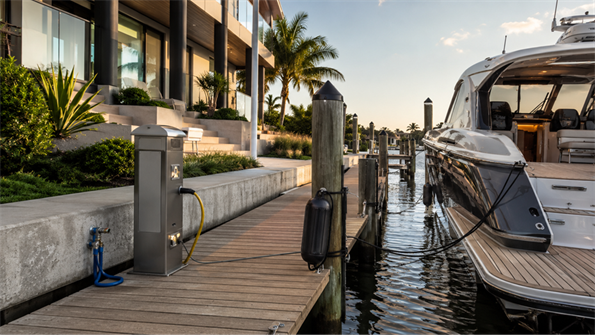
Shore power, freshwater access, pilings, fendering and seawall condition all influence whether private berthing feels effortless in daily use.
5. Confirm That Shore Utilities Match the Yacht
A private berth becomes far more useful when the shore-side systems support the yacht’s normal operation. Have the electrical supply reviewed for compatibility with the vessel, including service capacity, receptacles, protection equipment, cable routing and distance to the connection. An outlet near the dock does not necessarily mean the infrastructure can support the intended load safely.
Check freshwater availability, lighting, connectivity and security. Discuss practical arrangements for waste handling, pump-out, fueling, deliveries and emergency access. Consider, too, how technicians and crew will reach the vessel without disrupting the residence. These details rarely define the beauty of an estate, but they strongly influence whether keeping a yacht there feels seamless or burdensome.
6. Compare the Private Dock With a Full-Service Marina
A private dock offers immediate access and the pleasure of keeping the yacht within view, but it does not always replace the functions of a professionally operated marina. Larger or more complex yachts may benefit from managed security, fuel, waste services, technical support and facilities for crew. A marina may also provide a more protected berth or a clearer severe-weather plan.
The best arrangement is sometimes a hybrid: the yacht remains at the estate during favorable periods and moves to a marina for maintenance, severe weather or longer absences. In other cases, the property dock is better suited to a tender or smaller day boat while the primary yacht stays nearby.
Compare convenience, available support and yacht berthing costs and marina fees before assuming that private mooring removes the need for marina services. The right choice depends on the vessel, local conditions and how actively the owner wants to manage day-to-day operations.
7. Review Permits, Use Rights and Insurance
Waterfront ownership can involve several layers of public regulation and private restrictions. Request available surveys, plans, permits and records for the dock, seawall, dredging and other marine improvements. Confirm that the structures correspond with the documents, and ask whether relevant rights and approvals transfer with the property.
Local rules may affect vessel length, dock modifications, lighting, living aboard, commercial activity, fuel storage or additional pilings. Community associations and private waterways may impose separate requirements. Property-specific advice should come from local legal counsel and qualified professionals, not solely from a listing description or informal assurance about what a neighbor has done.
Insurance should be discussed early. The residence, marine structures and yacht may sit under separate policies with different underwriting requirements. Insurers may ask about the dock’s condition, navigation area, storm exposure and plans for relocating or securing the vessel. The aim is not to predict every future condition, but to identify anything that materially changes the property’s suitability.
8. Let the Property Define the Yacht Shortlist
Buyers who do not yet own a yacht should still begin with vessel parameters. Establish the largest practical length, beam, draft and air draft that the berth and access route can support, then define the intended use: short coastal trips, entertaining, fishing, extended cruising or seasonal relocation.
A shallow approach may favor one type of vessel, while bridge clearance can rule out another. Limited turning space may make handling characteristics more important than additional interior volume, and local service capacity can affect the appeal of particular systems or configurations.
With those limits confirmed, buyers can compare pre-owned yachts by size and type without shortlisting vessels the future home cannot accommodate. This reverses a common mistake: choosing a yacht emotionally and expecting the property to adapt later.
A Practical Pre-Offer Checklist
- Confirm length overall, beam, draft, air draft and displacement for the present yacht and any likely upgrade.
- Verify water depth, tidal limits, bridges, cables, locks and channel restrictions along the complete route.
- Measure berth dimensions, piling clearance, turning room and safe access for guests, crew and service providers.
- Commission specialist inspections of the dock, seawall and associated marine structures.
- Review shore power, freshwater, security, pump-out, fueling and maintenance arrangements.
- Check permits, use rights, association restrictions, insurance conditions and severe-weather plans.
- Treat any proposed dock or seawall alteration as unconfirmed until feasibility and approvals are verified.
The View Should Also Be a Working Waterfront
The finest waterfront estates offer more than an exceptional outlook. They create a dependable connection between life on land and time at sea.
For a yacht owner, that connection must be tested through measurements, navigation, structural inspection and operational planning. A beautiful dock is valuable only when the yacht can reach it, use it safely and receive the support it requires.
Completing this work before making an offer allows the buyer to judge the estate on its full potential—not simply as a home beside the water, but as a functioning base for the yachting life it is intended to support.