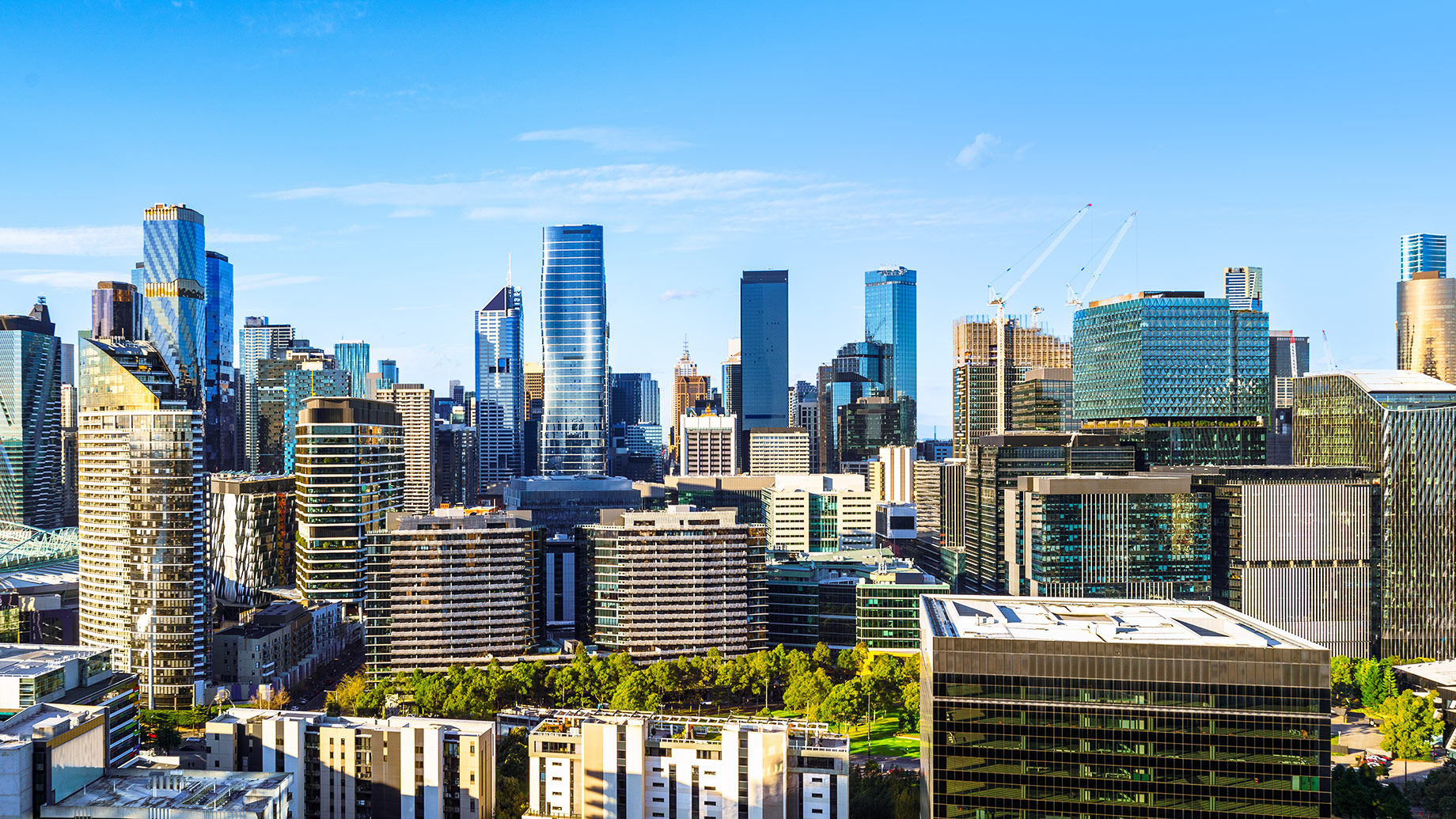
Most guides to buying in a global city work at the level of the suburb. In Melbourne’s central grid, that resolution is far too coarse.
Two apartments a hundred metres apart, in towers completed within a few years of each other, can behave like entirely different assets. Different resale patterns, different rental histories, different owners corporation costs, different buyer pools.
The skyline is not one market. It is several dozen, stacked vertically and priced independently.
Why Melbourne Rewards Building-Level Analysis
Melbourne’s CBD and Southbank went vertical faster than almost any comparable Australian market, and the result is a dense cluster of towers built to sharply varying briefs. Some were designed around owner-occupiers, others around investor stock, and the two age very differently.
That variation is the whole story for a buyer. A tower’s floor plate efficiency, its glazing, its amenity, the ratio of one-bedroom to three-bedroom stock, and the quality of its owners corporation management all feed into what the apartment is worth in a decade.
Cities elsewhere have arrived at the same conclusion from a different direction. Coverage of newer waterfront communities makes the point that buyers increasingly assess the whole destination rather than the view, and Melbourne buyers are running the same calculation one building at a time.
The Data Most Buyers Never See
Here is the practical problem. Portal listings show you asking prices for what is currently available, which tells you almost nothing about how a specific tower has performed over time.
What you actually want is the sales history of comparable stock within that building, the rental record, and how both moved through the last few cycles. That data exists, but it is rarely assembled and published building by building.
A handful of Melbourne agencies have started to. Melcorp Real Estate publishes individual profiles covering roughly forty CBD and Southbank towers, among them Australia 108, Eureka Tower, Prima Pearl, Freshwater Place, Victoria One, Swanston Square and Shadow Play, each with market trends and sales data attached.
The firm has operated in Melbourne for two decades across three offices, and that concentration matters more than size here. The real estate agents in Melbourne are the ones who can tell you how a particular building has actually traded, rather than describing the neighbourhood.
Reading the Grid
The CBD proper divides in ways that are not obvious from a map. The eastern end around Collins Street and Russell Street carries a different tenant and buyer profile from the northern end near La Trobe and Franklin Streets, where student and investor stock is heavily concentrated.
Southbank operates as its own submarket again. Its towers were largely built later and taller, with river and Port Phillip Bay outlooks that the grid cannot match, and it holds a disproportionate share of the city’s genuinely premium apartment stock.
South Yarra and Toorak sit outside the CBD entirely and behave more like traditional prestige suburbs, with lower density and older buyer demographics. Buyers comparing a Southbank tower against a South Yarra address are comparing two different propositions, not two versions of the same one.
International purchasers are central to how this market trades, a point Melcorp makes directly in describing Melbourne property as built on overseas and multicultural buyers and investors. Agencies operating seriously in the central grid tend to run multilingual teams for that reason rather than as a courtesy.
That international weighting also explains why a good deal of the better stock never reaches a portal. An off-market listing circulates privately through an agency’s own database and is matched to a buyer before it is advertised anywhere, which means the publicly visible inventory understates what is actually changing hands.
The Penthouse Tier Is a Separate Market
The gap between a good apartment and a landmark penthouse in Melbourne is wider than most international buyers expect, and it is not simply a matter of price per square metre.
The upper floors of the city’s better towers trade thinly, often off-market, and frequently without a published price. Melcorp Luxe currently lists two penthouses at 35 Queens Bridge Street in Southbank, one with three bedrooms and one with four, both offered on application rather than at an advertised figure.
That building illustrates the point neatly. Standard two-bedroom stock in the same tower has traded recently around the high five hundred thousands, while the top-floor residences sit in an entirely separate conversation with a different buyer pool.
Anyone evaluating a penthouse in Melbourne should expect limited public inventory at any given moment and should plan around private access rather than portal browsing. Melcorp Luxe also runs a corporate and executive leasing arm, which matters if the purchase is partly an investment rather than solely a residence.
What to Verify Before You Commit
Owners corporation fees are the cost most often underestimated, and they vary enormously between towers depending on amenity. A building with a pool, gym, concierge and rooftop garden carries a permanently higher cost base than one without.
Beyond the purchase price, budget for stamp duty, conveyancing, mortgage registration and pro-rata council and water adjustments. Overseas purchasers face additional approval requirements and duty surcharges, which should be confirmed with a professional adviser before bidding rather than after.
Auction mechanics deserve attention too, because they differ from most international markets. The highest bidder signs on the spot and pays a ten per cent deposit, and there is no cooling-off period at auction.
Conclusion
Buy the building before you buy the apartment. In a market this vertically concentrated, the tower determines most of what happens to your capital over the following decade.
Ask for the building’s own sales and rental history rather than suburb-level averages. Ask what the owners corporation actually costs and what it covers. Ask how the upper floors trade compared with the standard stock below them.
The answers exist for Melbourne’s landmark towers. They are simply not on the listing.
FAQ
1. Why do apartments in neighbouring Melbourne towers sell for such different prices?
Buildings were designed to different briefs, some for owner-occupiers and some as investor stock, and they age accordingly. Floor plate quality, amenity, outlook and the standard of owners corporation management all separate towers that look comparable from the street.
2. Which parts of central Melbourne hold the most premium apartment stock?
Southbank concentrates a large share of the city’s genuinely premium towers, helped by river and bay outlooks and a later, taller generation of construction. The eastern CBD around Collins Street also carries a distinct prestige profile.
3. Why are Melbourne penthouses often listed without a price?
Upper-floor residences trade thinly and to a narrow buyer pool, so agents commonly market them on application. Buyers should expect limited public inventory and should approach specialist agents directly rather than relying on listing portals.
4. What ongoing costs should apartment buyers budget for?
Owners corporation fees and building insurance are the main recurring costs, and they scale with the amenity a tower provides. Upfront, buyers should also account for stamp duty, conveyancing and legal fees, mortgage registration and pro-rata council and water rate adjustments.
