Deciding between repairing and replacing a furnace is one of the most significant home HVAC decisions. Here’s a clear framework for making the right call based on your specific situation.
Furnace problems rarely announce themselves at a convenient time. The heating system that’s been running quietly in the background for years tends to fail at the beginning of a cold snap, when you need it most and have the least time to make a careful decision. In that moment, the pressure to just fix the immediate problem and restore heat is understandable — but the repair-vs-replace decision is worth getting right rather than rushing, because the consequences extend for years.
A furnace that’s repaired and kept running will need another repair eventually — possibly soon, possibly years from now, but almost certainly again. A replacement furnace comes with a new equipment warranty, better efficiency than older systems, and a predictable service life of 15 to 20 years. The question isn’t which option sounds more appealing in the abstract — it’s which option makes financial and practical sense for your specific furnace, in its current condition, at this point in its life.
The Age-and-Repair-Cost Formula
HVAC professionals commonly use a straightforward formula for evaluating the repair-vs-replace decision: multiply the age of the unit in years by the estimated repair cost. If the result exceeds $5,000, replacement typically makes more financial sense than repair. This rule isn’t absolute — it’s a starting point for a more nuanced conversation — but it captures the core economic logic. An older unit with a significant repair cost combines a high probability of future failures with a repair investment that won’t extend the equipment’s remaining useful life proportionally.
Consider the specific example: a furnace that’s 16 years old and needs a heat exchanger replacement quoted at $1,200. The calculation (16 × $1,200 = $19,200) suggests replacement is worth serious consideration. The same repair on a 6-year-old furnace (6 × $1,200 = $7,200) is closer to the threshold but might still favor repair, particularly if the manufacturer’s warranty covers some of the parts cost.
Understanding Your Furnace’s Actual Age and Efficiency
Gas furnaces have a typical service life of 15 to 20 years with proper maintenance. If you don’t know your furnace’s age, the serial number on the nameplate can be decoded to find the manufacture date — the manufacturer’s website or customer service line can provide the decoding information for their specific serial number format. Age alone doesn’t determine whether replacement is the right choice, but it provides important context: a 12-year-old furnace and an 18-year-old furnace are in very different positions in their expected service life. A professional evaluation for furnace replacement Waco TX should include an honest assessment of the unit’s current condition and likely remaining service life.
Efficiency is equally important context. Furnaces manufactured before 2012 were produced to efficiency standards that allowed as low as 80% AFUE (Annual Fuel Utilization Efficiency) — meaning 20% of the fuel burned escaped as waste heat. Current high-efficiency condensing furnaces achieve 96-98% AFUE. On a moderate gas bill, the efficiency improvement alone from replacing an 80% AFUE unit with a 96% unit can reduce heating costs by 15-20% annually, which meaningfully affects the financial calculation for replacement.
Warning Signs That Point Toward Replacement
Certain symptoms indicate that a furnace has reached end-of-life territory where continued repair is buying time rather than solving the fundamental problem. Increasing frequency of repair calls — if you’ve had service visits two or more times in the past two heating seasons — suggests a system in the decline phase of its service life. Yellow or flickering burner flames (they should be blue and steady) can indicate combustion problems. Strange new noises — banging, rattling, squealing — often indicate mechanical wear that’s progressing.
The most serious warning sign is a cracked heat exchanger — the metal component that separates the combustion gases from the air circulated through your home. A cracked heat exchanger is a carbon monoxide risk and is generally considered a replacement-indicating repair rather than a cost-effective fix on an older unit, because the repair cost is high, the remaining service life is limited, and the safety risk of continued operation is serious.
What a New Furnace Installation Involves
A furnace replacement isn’t simply swapping one unit for another. The new equipment needs to be correctly sized for the home’s heating load — which may have changed since the original installation if insulation has been improved, windows have been replaced, or additions have been made. An undersized replacement furnace will run constantly and fail to keep the home comfortable in extreme cold; an oversized unit will short-cycle, wearing out components faster and delivering uneven heating.
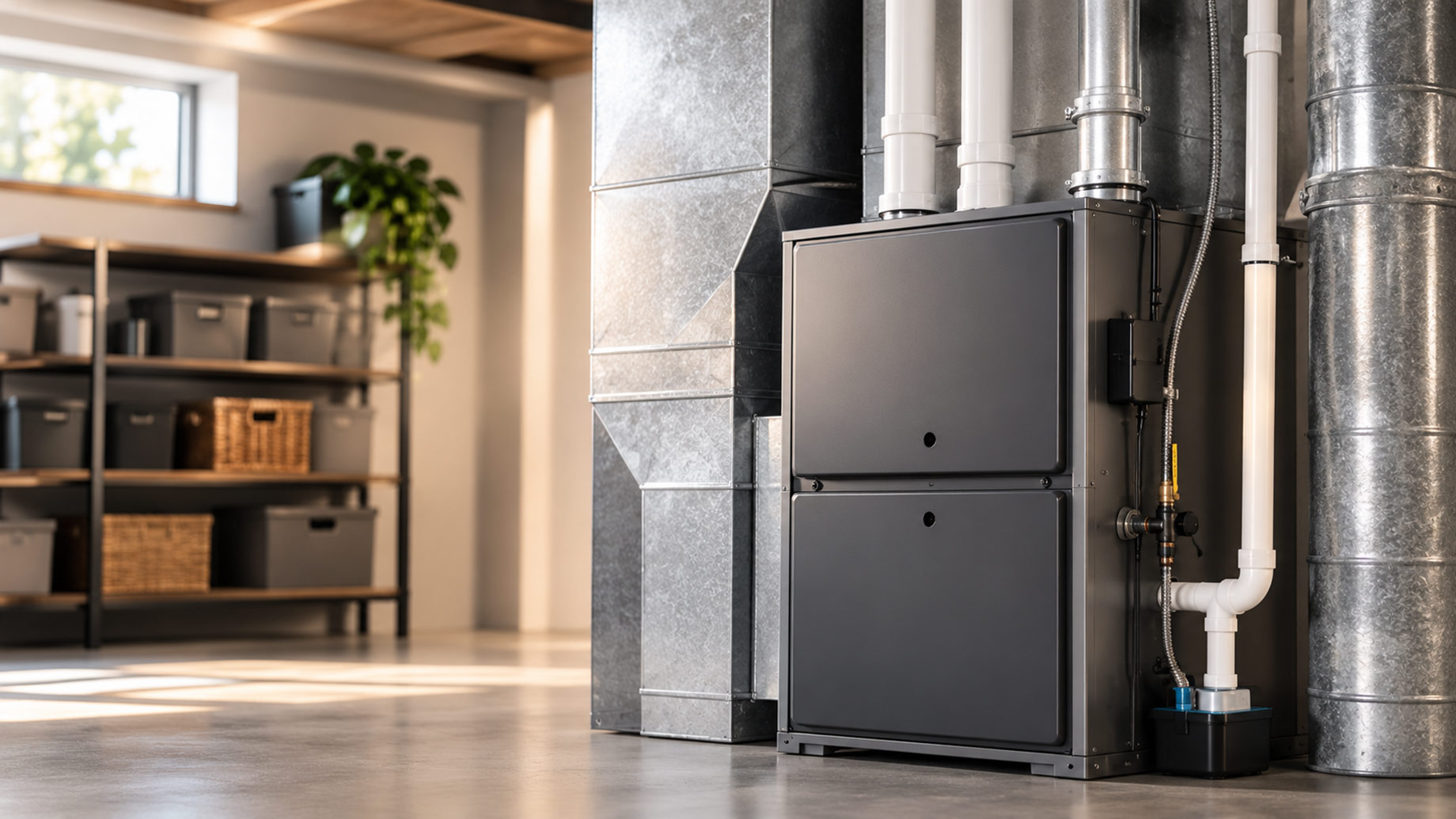
Proper installation includes updating or modifying the gas line connection, venting (which may need modification for high-efficiency units that vent with PVC instead of metal flue), electrical connections, and integration with the existing thermostat and ductwork. A complete installation typically takes four to eight hours for a straightforward replacement in an accessible location; more complex installations may take longer. The contractor should pull the appropriate permit and the work should be inspected.
Financing and Energy Incentives for New Equipment
The upfront cost of furnace replacement is a real barrier, particularly when the need arises unexpectedly. Most HVAC contractors offer financing options, and high-efficiency equipment may qualify for federal tax credits — currently the Inflation Reduction Act provides a 30% tax credit (up to $600) on qualifying high-efficiency heating equipment. Some state programs and utility rebates add to these savings. Understanding available incentives before making the purchase can meaningfully reduce the effective cost of new equipment.
Gas utility companies and electric utilities often offer rebates for replacing old equipment with high-efficiency alternatives as part of energy efficiency programs. These rebates vary by utility and by year as program funding changes. Your HVAC contractor should be familiar with the current programs available in your area and factor them into your replacement cost estimate.
Preventive Maintenance to Extend Furnace Life
Whether you repair or replace, preventive maintenance is the most effective tool for maximizing the remaining service life of any furnace. Annual professional maintenance — which should include inspecting the heat exchanger, cleaning the burners, checking and calibrating the ignition system, inspecting the flue and venting, and testing the safety controls — catches developing problems before they become failures. Many HVAC contractors offer maintenance agreements that bundle annual maintenance with priority service scheduling.
The air filter is the one maintenance item that homeowners control directly: a clogged filter restricts airflow through the system, forces the blower motor to work harder, and reduces heat exchanger life by causing overheating. Replacing the filter every one to three months during the heating season (depending on filter type and household conditions) is one of the most important things a homeowner can do for furnace longevity.
Wrapping Up
The repair-vs-replace decision for a furnace comes down to a combination of the unit’s age, the cost of the needed repair, the unit’s efficiency, and your assessment of the risk that further repairs will be needed soon. The formula gives you a starting point; the specifics of your equipment and situation determine the right answer. When a replacement is the right call, the combination of modern efficiency, a new equipment warranty, and the end of repair uncertainty typically justifies the investment over the medium term — especially with available tax credits and utility rebates that reduce the net cost.
Frequently Asked Questions
How much does furnace replacement typically cost?
Furnace replacement costs vary with equipment size (measured in BTU capacity), efficiency rating, brand, and local labor rates. A mid-efficiency (80% AFUE) replacement in a typical home might cost $2,500 to $4,000 installed; a high-efficiency (96%+ AFUE) condensing furnace in the same home might run $4,000 to $7,000. Premium brands and more complex installations push costs higher. Getting two or three quotes from reputable contractors is the best approach to understanding what’s appropriate for your specific situation.
Can I replace just the furnace and keep my existing air conditioning unit?
Yes, in many cases. Furnaces and air handlers are separate components and can be replaced independently. However, if the air conditioning system is also aging, replacing both at the same time may make financial sense because the labor cost of a combined replacement is less than two separate installations, and matching new equipment may qualify for efficiency rebates that mismatched new-and-old combinations don’t. Your HVAC contractor can evaluate the AC system’s condition and advise on whether combined replacement makes sense.
