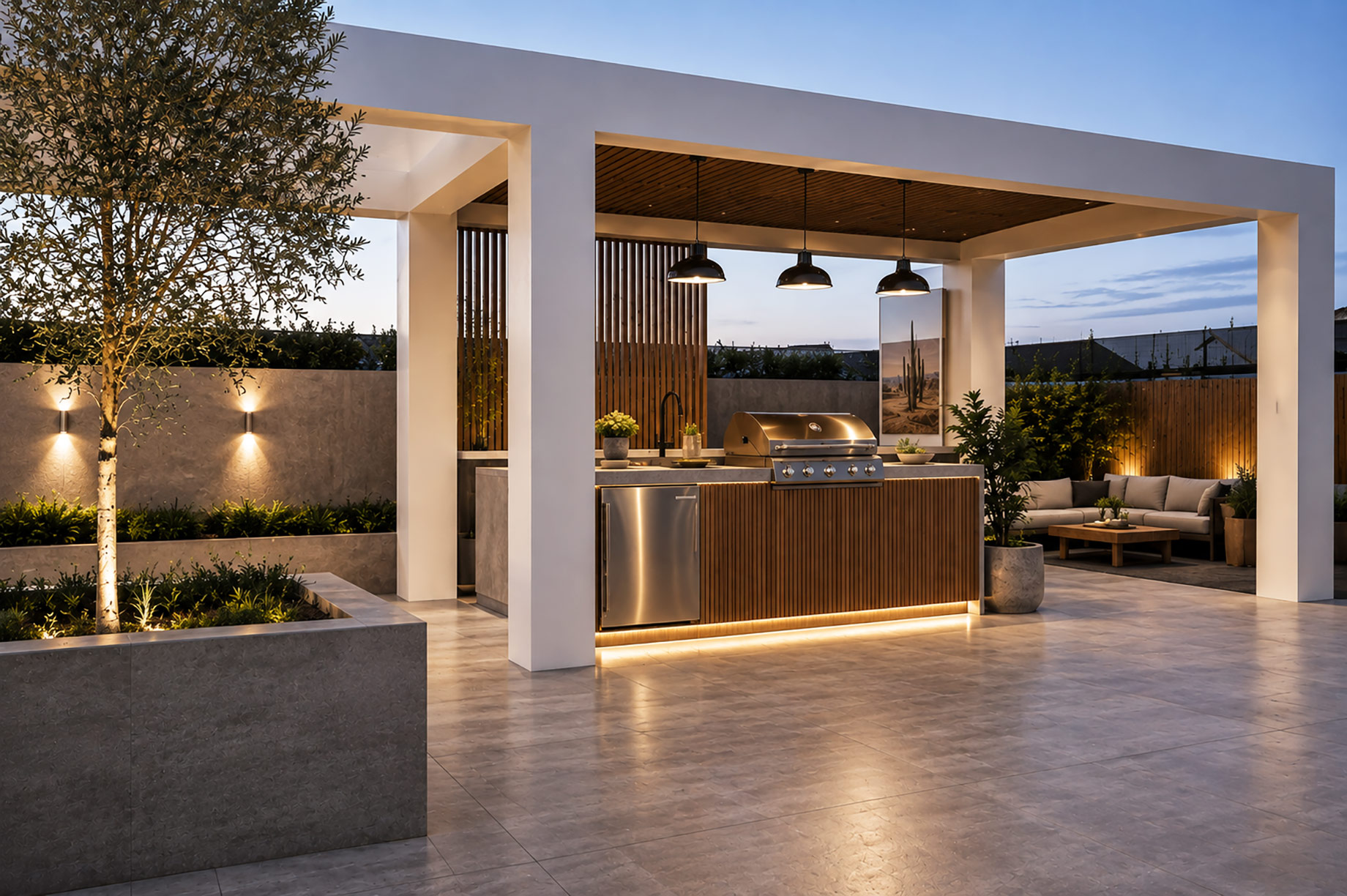
Most Australian backyards get used properly for about four months of the year. The rest of the time, the space sits empty because it is either too hot, too cold, or missing the one thing that would make people want to stay out there.
Fixing that is less about spending more and more about sequencing the decisions correctly. Get the zoning and the utilities right first, and the equipment choices become much simpler.
Key Takeaways
- Map your cooking, seating, and serving zones before you shortlist any equipment.
- Choose a cooking method based on how you actually entertain, not on what looks impressive.
- Heating is the single biggest factor in whether a space gets used across winter.
- Ventilation clearance around outdoor fridges is a safety requirement, not a suggestion.
- Fixed gas and hardwired electrical work needs a licensed tradesperson in every state.
- Check delivery terms and returns windows before you buy, since large items are awkward to send back.
Start with zones, not products
Walk the space and decide where three things will happen: cooking, sitting, and serving. These want to be near each other but not on top of each other, because nobody enjoys eating in smoke.
Prevailing wind matters more than most people expect. Position the cooking zone downwind of the seating area, and check where smoke will drift on a still evening before you pour a slab or run a gas line.
Think about traffic flow between the kitchen and the outdoor area too. If people have to squeeze past a hot grill carrying plates, the layout is wrong regardless of how good the equipment is.
Choose the cooking method before anything else
This is the decision everything else hangs off. A gas grill suits weeknight cooking and quick turnaround, while charcoal and Argentine-style parrilla grills reward people who enjoy the process and have time to spend on it.
Spit rotisseries occupy a different niche entirely. They are built for volume, which makes them worth considering if you regularly feed twenty or more people rather than four.
Pellet smokers sit somewhere in between, offering set-and-forget temperature control for long cooks.
Pizza ovens are the most single-purpose option, though rotating-stone models have made home pizza far more consistent than it used to be.
Be honest about frequency. A specialist unit used three times a year takes up permanent space, whereas a portable option can be stored between uses and taken camping or on the boat.
Heating decides whether the space gets used in winter
Radiant heat is what works outdoors, because convection heat simply blows away. Infrared and gas patio heaters warm people and surfaces directly, which is why they perform in spaces that are open on one or more sides.
Fire pits do something different. They create a gathering point rather than a heated zone, and people will happily sit around one in conditions where they would otherwise go inside.
Gas, bioethanol and electric fireplaces each suit different setups. Bioethanol needs no flue and no gas connection; electric works in covered areas with power, and gas delivers the most heat output but usually requires proper installation.
Specialist retailers such as OLA carry the full spread across these categories, and browsing the range of outdoor living essentials in Australia side by side is a faster way to understand the trade-offs than reading individual product pages.
Heat output, coverage area, and whether a unit is rated for open or covered spaces are the three specifications that actually matter.
Cold storage is the part people underestimate
An outdoor fridge is not an indoor fridge moved outside. Alfresco and tropical-rated units are built to hold temperature in Australian ambient conditions, and a standard indoor bar fridge will struggle badly in a Queensland summer.
Sizing is where most people get caught out. Measure the width, height and depth of the cavity, then confirm the ventilation clearance the manufacturer specifies, because a fridge boxed in without airflow will run hot and fail early.
Some retailers now offer online sizing tools that account for clearances automatically. OLA has a free bar fridge sizing tool that takes your dimensions and returns the units that will actually fit, which saves a great deal of measuring back and forth.
Think about door configuration as well. Single door units suit small alfresco runs, double and triple door models suit larger entertaining areas, and upright fridges make sense where floor space is tight but height is available.
Sort the utilities before the equipment arrives
Nothing derails an outdoor build faster than discovering the power or gas is not where it needs to be.
Work out your requirements at the planning stage and get quotes before anything is delivered.
Fixed gas appliances must be installed by a licensed gas fitter, and hardwired electrical work requires a licensed electrician.
This is a legal requirement across Australia, and it also protects your insurance position if something goes wrong later.
Outdoor power points need to be weatherproof and RCD protected. Plan more outlets than you think you need, because heaters, fridges, lighting and speakers all compete for the same circuit.
Practicalities worth checking before you buy
Delivery is a genuine consideration with heavy items. Confirm whether the price includes freight to your postcode, whether it is a depot collection or a door delivery, and whether the item will fit through your access point.
Returns windows matter more with outdoor equipment than most categories, because you often cannot tell if something suits the space until it is installed.
OLA offers a 60-day returns policy, ships Australia-wide with free delivery on some items, and runs a price match guarantee.
If you only need a large cooker occasionally, hire is worth investigating. OLA runs a rotisserie spit hire service in South East Queensland, which can make more sense than buying for a one-off event.
Conclusion
The backyards that get used year-round are not the expensive ones. They are the ones where somebody thought about wind direction, worked out where the power was going, and picked heating that suited an open or covered space rather than buying whatever was on special.
Start with zones, choose your cooking method, then solve heating and cold storage around it. Do it in that order, and you end up with a space people actually want to sit in during July, which is the whole point.
Frequently asked questions
What is the best heating option for an uncovered patio?
Radiant options work best in open spaces, so infrared or gas patio heaters and fire pits are the practical choices. Convection heaters lose most of their output to moving air outdoors.
Can I use a regular bar fridge outside?
Not reliably. Alfresco and tropical-rated units are built for outdoor ambient temperatures, whereas standard indoor fridges tend to struggle and fail early in Australian conditions.
How much clearance does an outdoor fridge need?
It varies by model, so check the manufacturer’s figure rather than guessing. Sizing tools that factor ventilation into the calculation remove most of the risk here.
Do I need a licensed tradesperson for outdoor gas or electrical work?
Yes. Fixed gas appliance installation requires a licensed gas fitter, and hardwired electrical work requires a licensed electrician anywhere in Australia.
Is it worth buying a pizza oven or a smoker if I entertain rarely?
Consider frequency honestly, since specialist equipment takes permanent space. Portable models or hiring for one-off events are often the better call.
