Homeowners assume their roof wears out from sun, wind, and storms alone. In reality, what happens inside the attic can shorten a roof’s life long before any outside damage shows up. Most people never connect those early repairs to poor attic ventilation.
That’s why solar attic ventilation experts rarely treat airflow as a standalone fix. Achieving longer roof life means pairing solar ventilation with the right insulation levels, moisture control, and a few routine checks along the way. This article walks through the key ways these pieces work together, and what actually makes the difference for a roof that holds up over time.
Solar Ventilation Handles the Heat Problem
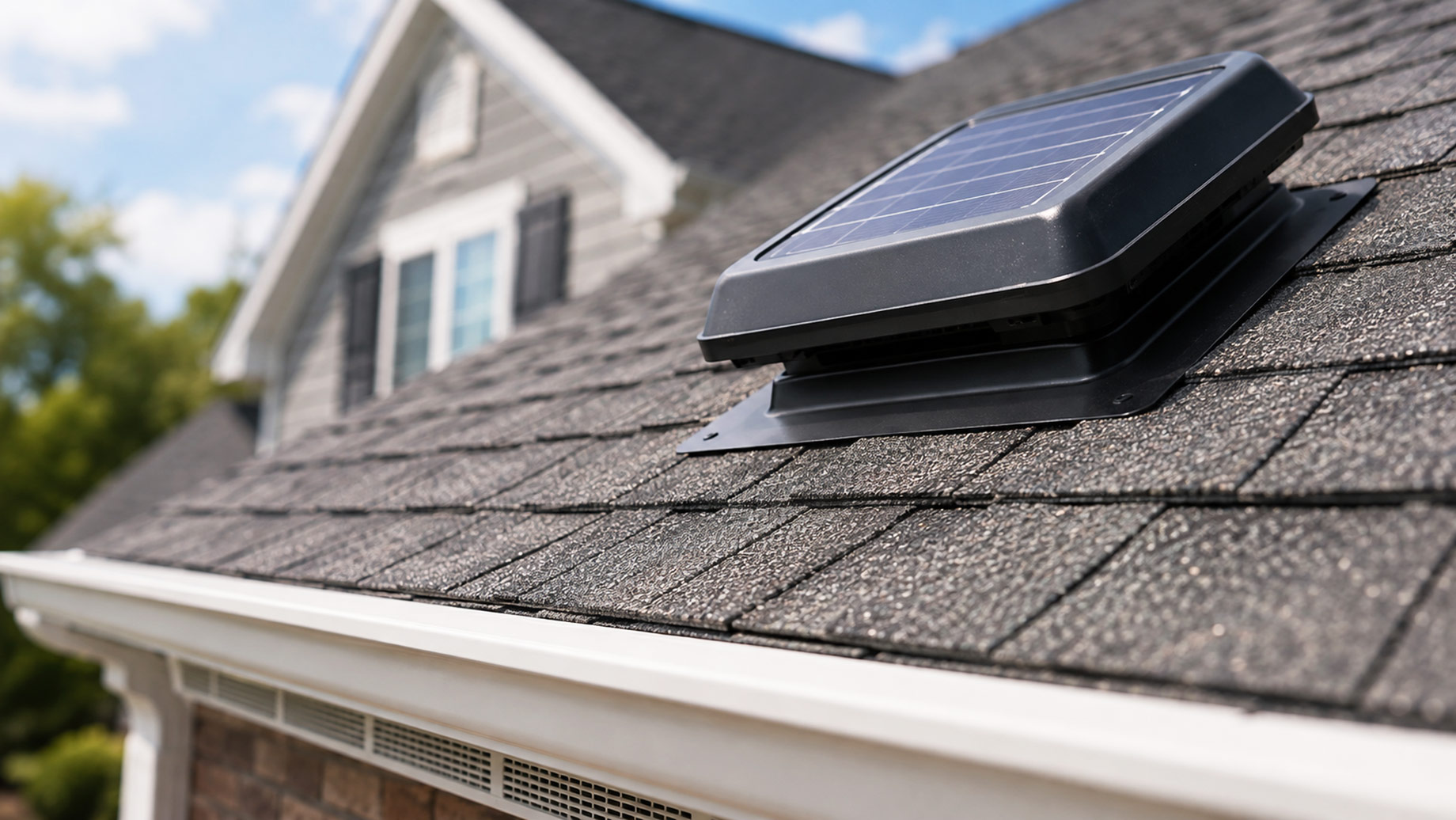
Trapped attic heat bakes the underside of shingles, speeds up granule loss, and can dry out plywood decking until it cracks. Solar-powered fans address this directly by actively pulling hot air out using a small panel that runs the motor at no added electric cost. They work hardest on sunny afternoons, which happens to be when attic temperatures spike the most. This makes solar attic fan installation one of the more effective single upgrades for heat-related roof wear, though it works best alongside the other steps below.
Insulation Plays an Equal Role
Ventilation alone can’t fully offset a roof that’s under-insulated, since heat from living spaces rises into the attic and adds to the load a fan has to manage. Older homes especially tend to have insulation that’s settled or thinned over the years. Pairing fresh insulation with proper airflow gives both systems less work to do individually. Solar attic ventilation experts typically check insulation depth before recommending fan size, since the two factors are directly connected.
Moisture Control Deserves Its Own Attention
In cooler seasons, poor ventilation may also allow moisture to accumulate in the attic, since warm, humid indoor air rises and condenses against a cold roof deck. Over time, this can lead to mold growth or softened wood in the rafters. Ridge and soffit vents help manage this year-round, while solar exhaust fans mainly address the summer heat side of the equation. A roof that’s protected from both extremes tends to hold up longer than one addressing heat alone.
Routine Checks Homeowners Can Do Themselves
A few simple checks can catch ventilation problems before they turn into roof damage:
- Look for blocked soffit vents, often covered by insulation or debris
- Check for musty odors or visible mold near the roof deck
- Feel for excessive attic heat on a mild day, a sign airflow is inadequate
- Look for rust or discoloration on roofing nails, which points to trapped moisture
Catching these early often means a smaller fix instead of a full roof repair down the line.
Sizing and Installation Affect the Outcome
A powerful exhaust fan without enough intake air can pull conditioned air up from the living space, working against the air conditioner instead of helping it. Correct sizing depends on attic square footage, existing soffit venting, and roof pitch. Skipping this step is a common reason homeowners feel underwhelmed by results. According to industry estimates, proper attic ventilation can extend shingle lifespan by several years by reducing the heat cycling that causes granule loss.
Where Professional Help Adds the Most Value
A qualified contractor measures attic cubic footage, checks existing intake venting, and calculates fan capacity for the specific space rather than installing a standard unit everywhere. Many also flag insulation gaps or moisture issues that a homeowner might miss during a casual inspection. This matters for warranty purposes too, since manufacturers including CertainTeed, GAF, and Owens Corning specify ventilation requirements that must be met for shingle warranties to remain valid.
Roof longevity rarely comes down to one upgrade. Balanced airflow, adequate insulation, moisture control, and routine checks all work together, and solar attic ventilation professionals typically assess all four before recommending a fix. Addressing heat without the rest of the system in place tends to produce only partial results.
