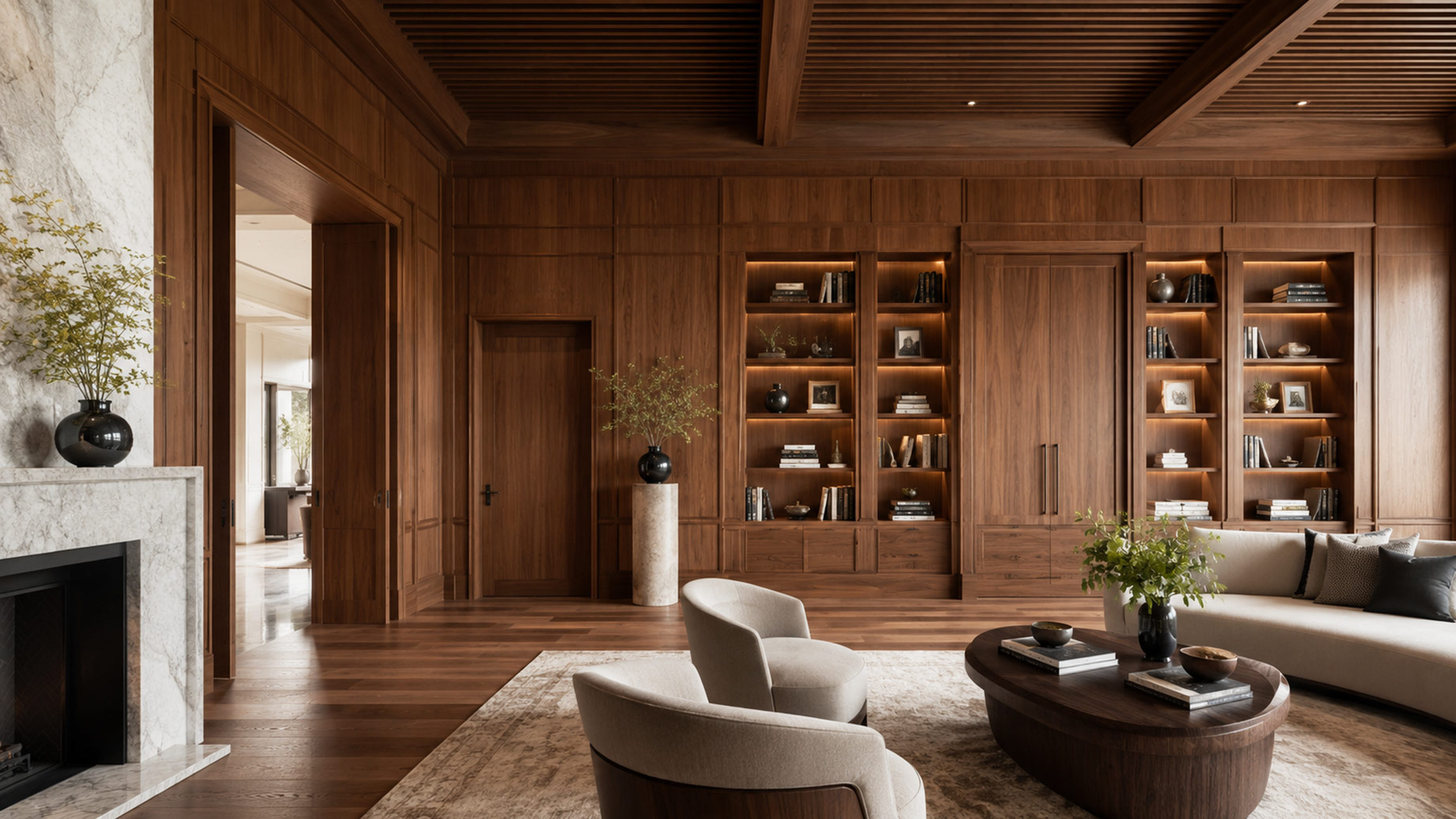
When crafting luxury estates and high-end residential spaces, discerning property owners and interior designers often turn to a skilled custom made wooden furniture maker to infuse authenticity, warmth, and structural harmony into their living environments. Architectural millwork and bespoke woodwork represent the absolute pinnacle of interior craftsmanship, transforming empty architectural volumes into richly layered, highly personalized homes that reflect sophisticated lifestyles and timeless design standards.
1. The Evolution of Architectural Millwork in Modern Luxury Design
Architectural millwork encompasses any custom-built wood elements produced in a workshop and installed within a structure, ranging from intricate crown moldings and wainscoting to custom wall paneling, libraries, and coffered ceilings. Over the past decade, luxury interior design has witnessed a profound revival of traditional woodworking techniques fused with contemporary minimalism. Rather than relying on mass-produced cabinetry or standardized fixtures, today’s high-end architectural projects demand custom elements that harmonize perfectly with the structural geometry of the building.
Integrating Structural Woodwork with Interior Architecture
The synergy between architecture and interior millwork ensures that every transition room, hallway, and primary living area flows seamlessly. Custom woodwork acts as the connective tissue of a residence, bridging structural elements like support posts or window frames with functional elements such as built-in seating and architectural doors. This seamless integration requires meticulous precision during the design and fabrication phases, ensuring that wood grain patterns, species selection, and finishing tones remain completely consistent throughout the entire home.
Selecting Premium Hardwoods for Longevity and Aesthetic Depth
A crucial factor in high-end millwork is the careful curation of timber species. Walnut, European white oak, American cherry, and exotic hardwoods offer distinct tactile qualities, chromatic richness, and long-term durability. Artisans evaluate each timber board for grain continuity, moisture content, and structural stability before shaping it into panels, beams, or cabinetry. This careful material selection guarantees that the millwork not only looks stunning upon installation but also develops a rich, sophisticated patina over decades of residential use.
2. Bespoke Woodwork as a Definitive Statement of Personalized Luxury
Bespoke woodwork goes beyond standard millwork by creating unique, freestanding or integrated furniture pieces and feature installations tailored explicitly to the client’s spatial dimensions and aesthetic preferences. In ultra-luxury real estate, off-the-shelf furnishings rarely capture the exact proportions or functional requirements of custom-designed rooms. Commissioning tailored woodwork allows homeowners to dictate every detail, from ergonomic dimensions and hardware integration to complex marquetry and hidden storage compartments.
Custom Cabinetry, Libraries, and Statement Shelving
One of the most profound expressions of bespoke woodwork is found in custom home libraries, executive studies, and architectural kitchens. Floor-to-ceiling bookshelves with integrated rolling ladders, concealed doorways leading to private chambers, and fluted kitchen islands demonstrate how woodwork can serve both highly functional and deeply theatrical purposes. These installations require exceptional engineering to support heavy loads of books or stone countertops while maintaining clean, elegant sightlines.
Comparison of Mass-Market Furniture vs. Bespoke Woodwork
| Feature / Criteria | Mass-Market Furniture | Bespoke Woodwork & Millwork |
|---|---|---|
| Material Integrity | Particle board, MDF veneers, synthetic finishes | Solid hardwoods, premium veneers, natural oils/waxes |
| Spatial Fit | Standardized dimensions leaving dead spaces | Custom-engineered to the millimeter for exact fit |
| Joinery & Durability | Cam locks, staples, and light adhesives | Mortise-and-tenon, dovetails, reinforced internal frames |
| Aesthetic Uniqueness | Mass-produced identical replicas | One-of-a-kind artistic creations tailored to interior themes |
3. The Collaborative Design Process: From Concept to Installation
Bringing a complex millwork project to life requires a structured, multi-stage collaborative workflow involving architects, interior designers, master woodworkers, and the homeowner. Effective communication during the initial schematic design phase prevents technical discrepancies and ensures that aesthetic visions translate successfully into physical reality. Every phase—from 3D modeling and shop drawings to prototype sampling and final finishing—demands rigorous attention to detail.
Key Milestones in Custom Woodworking Projects
- Initial Architectural Consultation: Analyzing blueprints, spatial lighting, and structural load-bearing parameters.
- Digital Rendering & Shop Drawings: Developing precise CAD models and full-scale shop drawings for client approval.
- Material Selection & Mock-ups: Hand-selecting timber slabs, testing stain samples, and verifying grain alignment.
- Workshop Fabrication & Joinery: Executing traditional hand joinery and advanced CNC machining for flawless execution.
- On-Site Installation & Finishing: Professional fitting by master installers followed by protective sealing and hand-polishing.
4. Sustainability and Ethical Sourcing in High-End Timber Craft
As environmental consciousness permeates the luxury real estate sector, discerning clients increasingly demand transparency regarding the origin of their timber. Sustainable forestry management, ethical harvesting practices, and non-toxic finishing products are now fundamental pillars of high-end bespoke woodwork. Utilizing certified reclaimed timber or supporting responsibly managed European and North American forests ensures that luxury aesthetics do not come at the expense of ecological degradation.
Eco-Friendly Finishes and Indoor Air Quality
Modern architectural woodwork places immense emphasis on healthy indoor living environments. Traditional solvent-based lacquers often emit volatile organic compounds that compromise indoor air quality. In response, master craftsmen now utilize natural hardwax oils, organic linseed oils, and water-based sealers that enhance the natural warmth of the wood grain while maintaining a zero-emission profile, ensuring a safe, luxurious atmosphere for residents.
5. Conclusion: Elevating Architecture Through Timeless Timber Craftsmanship
Architectural millwork and bespoke woodwork remain the defining elements that elevate a standard house into an extraordinary, character-rich residence. By combining rigorous engineering, exquisite material selection, and uncompromising hand craftsmanship, custom timber installations anchor spaces with enduring elegance and functional perfection. For those seeking to curate exceptional interiors defined by uncompromising quality and tailored artistry, exploring
