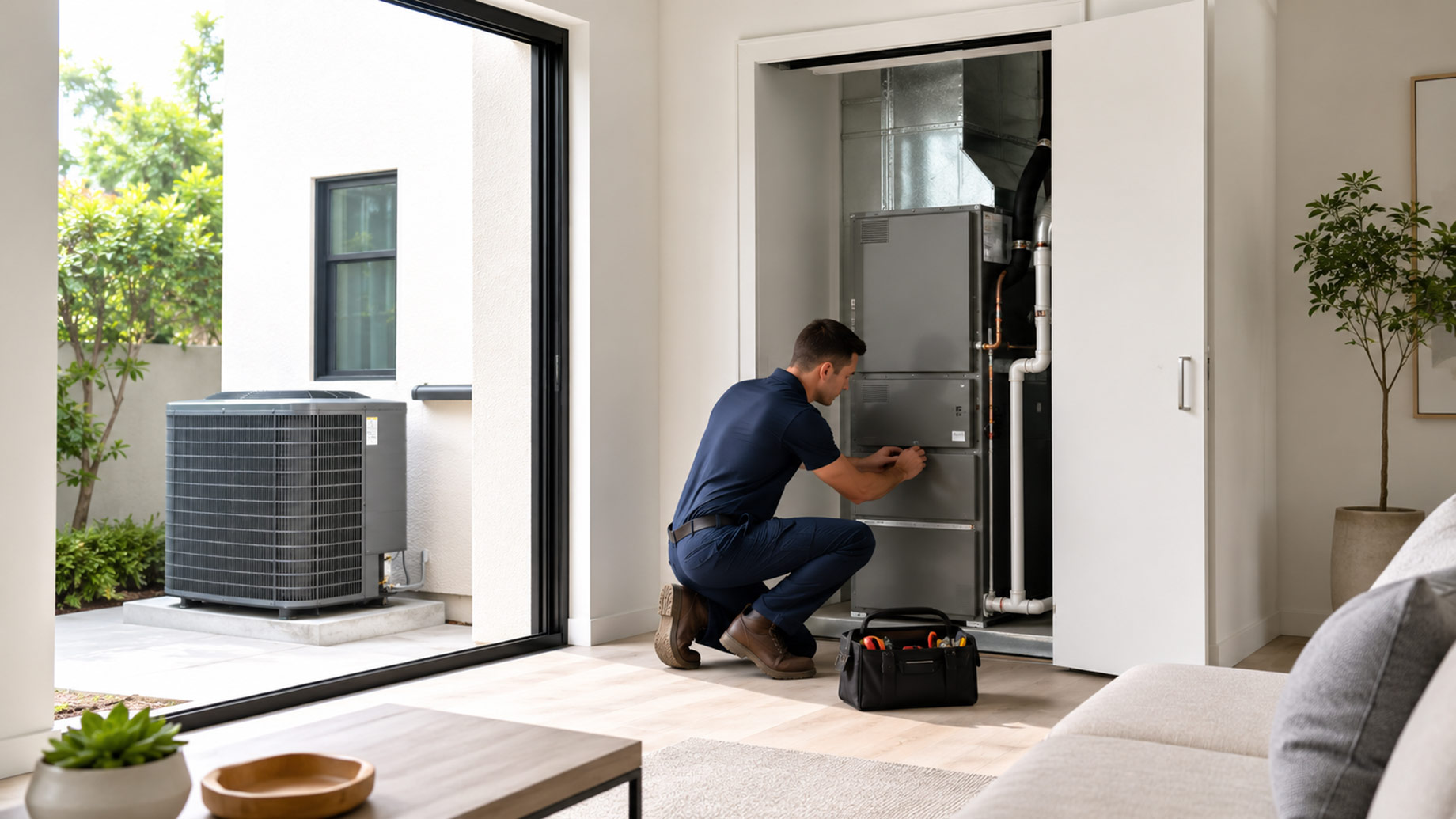
Replacing or installing a central air conditioning system is one of the more significant home improvement decisions a homeowner will make. Unlike smaller repairs, it involves upfront planning, technical work inside and outside the home, and a period of adjustment afterward. Understanding what actually happens at each stage helps homeowners set realistic expectations, ask better questions, and avoid common pitfalls. This article walks through the process from initial assessment to post-installation care, with attention to the factors that influence comfort, cost, and long-term performance.
Before the Installation Begins: Planning and Assessment
Before any equipment is installed, a proper assessment of the home is necessary. According to the U.S. Department of Energy, an oversized or undersized air conditioner can reduce comfort and efficiency, since a unit that’s too large will cycle on and off too frequently without adequately controlling humidity, while an undersized unit will struggle to keep up during peak heat.
A qualified technician typically performs what’s known as a Manual J load calculation, an industry-standard method developed by the Air Conditioning Contractors of America (ACCA). This calculation accounts for:
- Square footage and ceiling height of the space being cooled
- Insulation levels and window type/orientation
- Local climate data and typical humidity levels
- Number of occupants and heat-generating appliances
- Existing ductwork condition and layout
This step matters more than many homeowners realize. A system that isn’t properly sized won’t perform as expected, regardless of its rated efficiency. Homeowners considering a premium high-efficiency AC installation should be especially attentive to this stage, since higher-efficiency equipment is engineered to perform best when matched precisely to the home’s actual cooling load rather than estimated by square footage alone.
During this phase, contractors also inspect existing ductwork for leaks or damage. The Environmental Protection Agency has noted that duct leakage can account for a substantial portion of energy loss in forced-air systems, so sealing or repairing ducts before installation is often recommended rather than treated as optional.
Choosing the Right System for Your Home
Air conditioners are rated by SEER2 (Seasonal Energy Efficiency Ratio 2), a metric that reflects how efficiently a unit cools a space over a typical season. As of 2023, the Department of Energy raised minimum SEER2 standards for new residential central air conditioners, meaning most equipment sold today already meets a higher efficiency floor than units manufactured a decade ago.
Higher-efficiency systems generally cost more upfront but can reduce cooling-related energy consumption over time, particularly in regions with long, hot summers. That said, efficiency gains are not universal; a highly rated system installed in a poorly insulated or leaky home will underperform its rated efficiency. This is one reason technicians often recommend addressing insulation and duct sealing alongside equipment upgrades rather than treating them as separate projects.
Homeowners should also consider:
- The system’s compatibility with existing ductwork or the need for modifications
- Noise ratings, particularly for outdoor units near bedrooms or shared property lines
- Warranty terms, which vary by manufacturer and often depend on professional installation and registration
- Whether a variable-speed or single-stage compressor better suits the home’s cooling patterns
What Happens on Installation Day
Installation timelines vary depending on system complexity, but a straightforward central AC installation with existing compatible ductwork typically takes one full day. Projects requiring new ductwork, electrical upgrades, or removal of an older incompatible system can take two to three days.
On the day of installation, technicians generally follow a sequence that includes disconnecting and removing the old unit (if applicable), setting the new outdoor condenser on a stable, level pad, connecting refrigerant lines, and installing or connecting the indoor evaporator coil and air handler. Electrical connections are made according to local code, and the system is charged with refrigerant according to manufacturer specifications. Because this work can involve handling regulated refrigerants, federal law requires technicians who install or service stationary air-conditioning equipment to hold EPA Section 608 certification.
Common Steps in a Professional Installation
While every job differs slightly based on home layout and system type, most professional installations follow a similar sequence:
- Site preparation — clearing the area around the outdoor unit and protecting indoor flooring and walls near the air handler.
- Removal of old equipment (if replacing a system), including proper refrigerant recovery as required by law.
- Placement of the outdoor condenser on a level surface with adequate clearance for airflow.
- Installation or inspection of indoor components, including the evaporator coil and air handler.
- Connection of refrigerant lines, electrical wiring, and condensate drainage.
- System charging and pressure testing to confirm refrigerant levels match manufacturer specifications.
- Startup and calibration, including thermostat configuration.
- Final walkthrough, where the technician demonstrates system operation and answers questions.
This structured approach reduces the risk of installation errors, which studies cited by the Building Performance Institute have linked to reduced system lifespan and higher long-term energy use. A rushed or incomplete installation can undermine even a premium high-efficiency AC installation, since correct refrigerant charge and airflow calibration matter as much as the equipment itself.
After Installation: Testing, Adjustments, and Maintenance
Once installed, the system should undergo testing before the technician leaves. This typically includes checking airflow at each vent, verifying the thermostat communicates properly with the system, confirming condensate drainage is working to prevent water damage, and measuring the temperature differential between return and supply air to confirm the system is cooling as expected.
Homeowners should expect a brief adjustment period. It’s common for a new system, especially a variable-speed model, to run for longer stretches at lower intensity rather than cycling on and off like older units. This is generally a sign of proper operation rather than a malfunction, though homeowners unfamiliar with variable-speed systems sometimes mistake it for inefficiency.
Ongoing maintenance plays a large role in sustaining the benefits of a premium high-efficiency AC installation over its expected lifespan, which is typically 15 to 20 years according to ENERGY STAR estimates. Recommended maintenance includes:
- Replacing or cleaning air filters every one to three months
- Scheduling annual professional inspections, ideally before peak cooling season
- Keeping the outdoor unit clear of debris, leaves, and overgrown vegetation
- Monitoring for unusual noises, odors, or inconsistent cooling, which can indicate developing issues
Skipping routine maintenance is one of the most common reasons efficient systems underperform their rated specifications over time. A well-installed system that isn’t maintained will still lose efficiency gradually, sometimes without an obvious symptom until a larger failure occurs.
Final Analysis
Installing a new air conditioning system is a multi-stage process that extends well beyond the day equipment is physically placed in a home. Proper load calculations, ductwork assessment, and correct system sizing before installation lay the groundwork for performance. The installation itself follows a fairly standardized sequence when handled by qualified technicians, and the period afterward, including testing, calibration, and ongoing maintenance, determines whether the system delivers on its rated efficiency over the long term. Homeowners who understand each of these stages are better positioned to evaluate contractor recommendations, recognize proper installation practices, and maintain their system in a way that protects both comfort and equipment lifespan.
